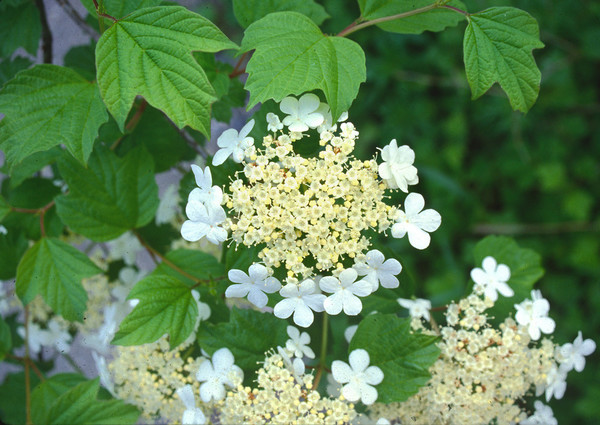
Viburnum opulus
Cramp bark, guelder rose, bark elder, highbush cranberry. · Plant · Adoxaceae
Specifically a women’s remedy, Viburnum best suits those who feel depressed, stupid, and disoriented, and are unable to decide where they are or what they should do.
The classic symptom picture for this remedy is of uterine problems, including painful menstruation, false labor, pains following labor, threatened abortion, and recurrent miscarriage. Menstrual pain may be so severe that it feels as if breathing and the heartbeat will stop. Pain extends into the thighs.
Key symptoms
- Spasmodic cramps and colicky pains in pelvic organs
- Often prevents miscarriage; relieves false labor-pains
- Menses too late, scanty, lasting only a few hours
- Crampy pains extending down thighs during menstruation
- Spasmodic and membranous dysmenorrhea
- Frequent and very early miscarriage causing seeming sterility
- Cannot hold urine on coughing or walking
- Constant nausea relieved by eating
Worse (aggravation)
Better (amelioration)

High Cranberry
A general remedy for cramps. Colicky pains in pelvic organs. Superconscious of internal sexual organs. Female symptoms most important. Often prevents miscarriage. False labor-pains. Spasmodic and congestive affections, dependent upon ovarian or uterine origin.
Head
Irritable. Vertigo; feels as if falling forward. Severe pain in temporal region. Sore feeling in eyeballs.
Stomach
Constant nausea; relieved by eating. No appetite.
Abdomen
Sudden cramps and colic pains. Tender to pressure about umbilicus.
Female
Menses too late, scanty, lasting a few hours, offensive in odor, with crampy pains, cramps extend down thighs (Bell). Bearing-down pains before. Ovarian region feels heavy and congested. Aching in sacrum and pubes, with pain in anterior muscles of thighs (Xanthox); spasmodic and membranous dysmenorrhœa (Borax). Leucorrhœa, excoriating. Smarting and itching of genitals. Faint on attempting to sit up. Frequent and very early miscarriage, causing seeming sterility. Pains from back to loins and womb worse early morning.
Urinary
Frequent urging. Copious, pale, light-colored urine. Cannot hold water on coughing or walking.
Rectum
Stools large and hard, with cutting in rectum and soreness of anus.
Extremities
Stiff, sore feeling in nape of neck. Feels as if back would break. Sacral backache. Lower extremities weak and heavy.
Modalities
Worse, lying on affected side, in warm room, evening and night. Better, in open air and resting.
Relationship
Compare: Virburnum prunifolium-Black Haw--(habitual miscarriage; after-pains; cancer of the tongue; obstinate hiccough; supposed to be a uterine tonic. Morning sickness; menstrual irregularities of sterile females with uterine displacements). Cimicif; Cauloph; Sep; Xanthox.
Dose
Tincture, and lower potencies.

Viburnum opulus. High Cranberry Bush. Cramp Bark. Water Elder. (The Gueldres Rose, or Snowball-tree of our gardens, is the cultivated and sterile variety.) N. O. Caprifoliaceæ. Tincture of the fresh bark.
Clinical
After-pains. Cough, of pregnancy. Cramps. Dysmenorrhœa; spasmodic; neuralgic; membranous. Ears, painful. Epididymitis. Headache. Hysteria. Labour pains, false. Lumbago. Menstruation, painful. Miscarriage. Ovaries, pain in. Paralysis. Uterus, cramps in; bearing down in.
Characteristics
Viburnum opulus, a native of Great Britain, is widely distributed over the northern parts of the continent and America. In America (says Hale) the wild species is called "Cramp bark," and the knowledge of its curative virtues in painful spasmodic diseases, especially in dysmenorrhœa, is derived from the American aborigines. The tincture has a strong odour of Valerianic acid (as also has that of Vib. tinus). Hale derived his knowledge from domestic sources. He gives these indications and directions: (1) In …
Female Sexual Organs
Pains beginning in the back and going around the loins to the pubic bone like labor pains.

Phatak's chapter on Viburnum opulus is available in the app.
Read Phatak in the appClassical texts are in the public domain. Educational reference only — not medical advice.
