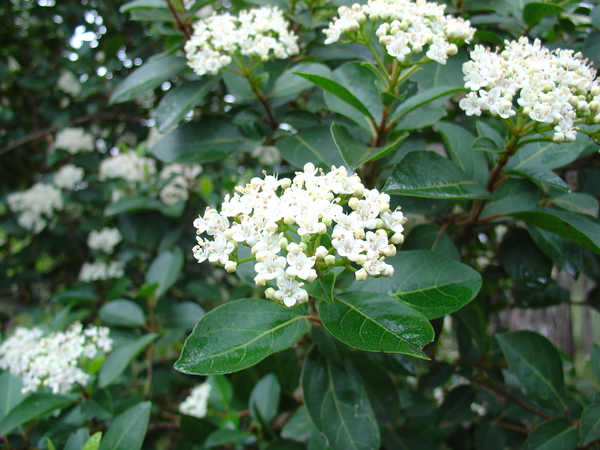
Viburnum tinus
Plant · Adoxaceae
Hypochondriasis is a leading indication for Viburnum tinus. Suited to cases analogous to those requiring Viburnum opulus, with depression and ovarian or uterine complaints. Cooper, who investigated it, used single doses of the Ø tincture.
Key symptoms
- Pain in ovary with depression and hypochondriasis
- Deafness with sufferings in lower abdomen and dysmenorrhœa
- Erosions about the os uteri
- Cramp in diaphragm
- Horrible headache all over head, worse on right side with right-sided deafness
- Headache coming on at 7 and 11 a.m. and 4 and 7 p.m. with great sinking in pit of chest
- Waking at 4 a.m. with horrid depression of spirits lasting till noon
- Weight on chest and back; must hold herself up to breathe

Viburnum tinus. Laurustinus. N. O. Caprifoliaceæ. Tincture of fresh leaves.
Clinical
Deafness. Diaphragm, cramp in. Hypochondriasis. Ovary, pain in.
Characteristics
Viburnum tinus is the beautiful evergreen shrub known in our gardens as Laurustinus. Cooper has investigated it, giving always single doses of the Ø tincture in cases analogous to those for which Vib. o. is given. He has cured with it: (1) Pain in ovary with depression. [He considers hypochondriasis an indication for Vib. t.] (2) Deafness, with sufferings in lower segment of abdomen and dysmenia; erosions about the os uteri. (3) Cramp in diaphragm. (4) Horrible headache all over head, < on right side with right-sided deafness, coming on at 7 and 11 a.m. and 4 and 7 p.m., with great sinking in pit of chest. (5) Waking at 4 a.m. with horrid depression of spirits that lasts till noon, with a weight on chest and back; has to hold herself up in order to breathe.
Classical texts are in the public domain. Educational reference only — not medical advice.
