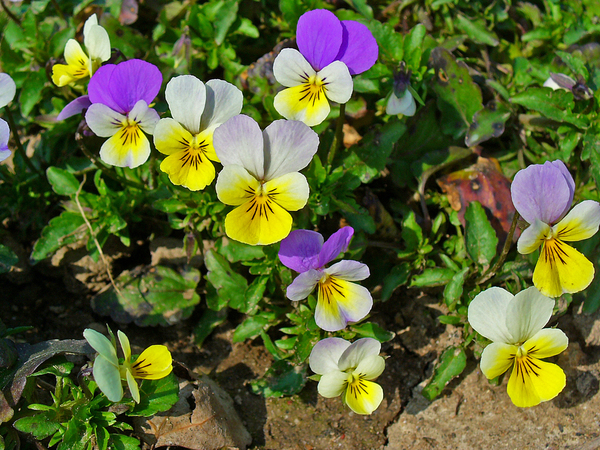
Viola tricolor
Heartsease, wild pansy. · Plant · Violaceae
Viola tri. is best suited to those who feel discontented and capricious, and to children who are prone to disobedience.
Obstinate skin problems are typically treated with Viola tri. These include impetigo, rashes, eczema, rosacea, and pustular eruptions. The typical symptom picture is of intolerable itching and burning, especially at night. The skin does not heal easily, and is prone to thick scabs, which may crack and discharge yellow pus or fluid.
Viola tri. is particularly suited to skin symptoms in conjunction with urinary problems. Typical urinary symptoms may include cloudy, foul-smelling urine (like the urine of a cat), frequent, profuse urination, bedwetting at night, and sharp pains in the urethra.
Key symptoms
- Eczema of face and scalp in childhood
- Thick scabs cracking and exuding tenacious yellow pus
- Intolerable itching of eruptions, worse at night
- Nocturnal seminal emissions with very vivid dreams
- Involuntary seminal emissions at stool
- Urine with disagreeable cat-like odor
- Impetigo; eczema impetigonoides of the face
- Worse in winter and at 11 am
Worse (aggravation)
Better (amelioration)

Pansy
The principal uses of this remedy are for eczema in childhood and nocturnal emission accompanied by very vivid dreams.
Head
Heavy, pressing-outward pain. Eczema of scalp, with swollen glands. Face hot and sweating after eating.
Throat
Much phlegm, causing hawking; worse in the air. Swallowing difficult.
Urinary
Copious; disagreeable, cat-like odor.
Male
Swelling of prepuce, burning in glans. Itching. Involuntary, seminal emissions at stool.
Skin
Impetigo. Intolerable itching. Eruptions, particularly over face and head, with burning, itching; worse at night. Thick scabs, which crack and exude a tenacious yellow pus. Eczema impetigonoides of the face. Sycosis.
Modalities
Worse, winter; 11 am. Compare: Lycop.
Relationship
Compare: Rhus; Calc; Sepia.
Dose
Lower potencies.

Viola tricolor. Jacea. Pansy. Heartsease. N. O. Violaceæ. Tincture of fresh plant in flower.
Clinical
Crusta lactea. Eczema. Enuresis. Gonorrhœa, suppressed. Gout. Impetigo. Leucorrhœa. Ophthalmia, scrofulous. Orchitis. Plica polonica. Rheumatism. Ringworm. Seminal emissions. Syphilis. Throat, ulceration of.
Characteristics
The Pansy was proved by Hahnemann and his provers. It had an ancient reputation in asthma and epilepsy, and especially in obstinate skin diseases. Teste quotes from old observers (Starck, Haase, Murray, &c.) the following as cured by V. tri.: (1) Milk-crust in children at the breast, [or] recently weaned. (2) Milk-crust with violent cough and excessive oppression. (3) Impetigo of hairy scalp and face in children and adult females. (4) Favus and serpiginous crusts in children and adults, with swelling and induration of cervical glands. (5) Large boils all over body in a scrofulous child. (6) Pustules and ichorous exanthema of feet. (7) Squamous spots on skin. (8) …

Phatak's chapter on Viola tricolor is available in the app.
Read Phatak in the appClassical texts are in the public domain. Educational reference only — not medical advice.
