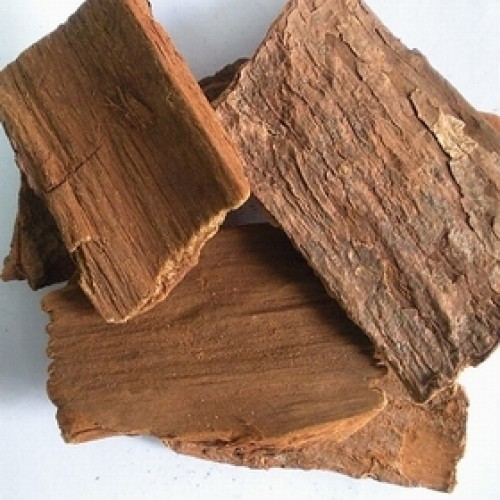
Yohimbinum
Yohimbine (alkaloid of Pausinystalia johimbe) · Plant · Rubiaceae
Thin, anaemic, and nervous individuals with partial impotence or sexual neurasthenia; the remedy excites sexual organs and acts on the central nervous system and respiratory centre, especially in men with neurasthenic impotence.
Key symptoms
- Strong and lasting erections without increased desire; neurasthenic impotence
- Intense agitation with trembling; hands tremble so badly writing is illegible
- Flying sensations of heat in face, back, heart region, and lower abdomen
- Congestive states and hyperaemia of the sexual organs
- Heart-beats more intense and more frequent; palpitation
- Complete sleeplessness; thoughts of past life keep patient awake all night
- Rigor; waves of heat and chilliness with tendency to sweat
- Disagreeable metallic taste; tongue coated yellow; copious salivation
- Stimulates lactation; causes hyperaemia of milk glands
- Menorrhagia; bleeding piles; intestinal haemorrhage

Coryanthe Yohimbe
Excites sexual organs and acts on central nervous system and respiratory center. An aphrodisiac, used in physiological doses, but contraindicated in all acute and chronic inflammations of abdominal organs. Homeopathically, should be of service in congestive conditions of the sexual organs. Causes hyperæmia of the milk glands and stimulates the function of lactation. Menorrhagia.
Head
Agitation, with flying sensations of heat in face. Disagreeable, metallic taste. Copious salivation. Nausea and eructation.
Sexual
Strong and lasting erections. Neurasthenic impotence. Bleeding piles. Intestinal hæmorrhage. Urethritis.
Fever
Rigor; intense heat, waves of heat and chilliness, tendency to sweat.
Sleep
Sleepless. Thoughts of events of whole past life keep him awake.
Dose
As a sexual stimulant, ten drops of a one per cent solution, or hypodermic tablets of 0. 005 gm. Homeopathic dose, third potency.

Johimbin. A crystalline alkaloid obtained from the bark of the Yohimbeha, or Yumbehoa tree, of the Cameroons. N. O. Rubiaceæ (?). C23H32N2O4, or C22H30N204. Trituration.
Clinical
Diuresis. Heart, palpitation of. Impotence. Priapism.
Characteristics
The natives of West Africa discovered a potent aphrodisiac in the bark of the Yohimbeha tree, and from this an active principle, Yohimbin, has been isolated and tested in Europe (Therapist, December 15, 1900). It is a powerful stimulant of the genital function in males. In animals it causes increased liveliness and cheerfulness, hyperæmia of the conjunctiva, heat and redness of the ears, and of the nose also in dogs. Lambreghts (J. Belge d'H., viii. 188) relates the case of a young man, 28, "thin, anæmic, nervous, and partially impotent," who took a 5-mgr. tablet one morning, another in the evening, and a third the following, morning. The symptoms of the Schema are his, and they were so severe that he discontinued the drug in spite of a certain amelioration of …
Classical texts are in the public domain. Educational reference only — not medical advice.
