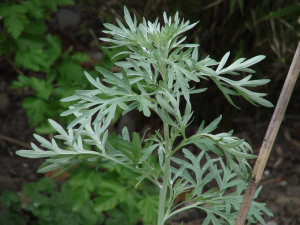
Absinthium
Artemisia absinthium · Common wormwood, green ginger,Artemisia absinthium · Plant · Asteraceae
Those who respond best to Absinthium are prone to nervous overexcitement, experiencing terrifying, horrible dreams and dreadful hallucinations. A kind of brutal stupor or stupidity may even be apparent in them.
Absinthium is primarily associated with the nerves, and key symptoms include trembling, grimacing, and unsteadiness, possibly linked to alcoholism. In children the remedy may be given for terrible dreams, nervousness, insomnia, vertigo, fits or seizures, and epilepsy.
Key symptoms
- Epileptiform seizures preceded by nervous tremors
- Vertigo with tendency to fall backward on rising
- Hallucinations, frightful visions, and delirium with loss of consciousness
- Loss of memory after attacks; forgets recent events
- Spasmodic facial twitching and grimacing
- Bites tongue during convulsions; jaws firmly fixed
- Nervousness, excitement, and sleeplessness in children
- Urine deep orange with very strong odor
- Tremor of the heart felt toward the back
- Cerebral and spinal congestion with persistent tremors
Worse (aggravation)
Better (amelioration)

Common Wormwood
A perfect picture of epileptiform seizure is produced by this drug. Nervous tremors precede attacks. Sudden and severe giddiness, delirium with hallucinations and loss of consciousness. Nervous excitement and sleeplessness. Cerebral irritation, hysterical and infantile spasms come within range of this remedy. Poisoning by mushrooms. Chorea. Tremor. Nervousness, excitement, and sleeplessness in children.
Mind
Hallucinations. Frightful visions. Kleptomania. Loss of memory. Forgets what has recently happened. Wants nothing to do with anybody. Brutal.
Head
Vertigo, with tendency to fall backward. General confusion. Wants head low. Pupils dilated unequally. Face blue. Spasmodic facial twitching. Dull occipital headache (Gelsem, Picric ac).
Mouth
Jaws fixed. Bites tongue; trembles; feels as if swollen and too large; protruding.
Throat
Scalded sensation; as of a lump.
Stomach
Nausea; retching; eructation. Bloated around waist and abdomen. Wind colic.
Urine
Constant desire. Very strong odor; deep yellow color (Kali phos).
Sexual
Darting pain in right ovary. Spermatorrhœa, with relaxed, enfeebled parts. Premature menopause.
Chest
Sensation of weight on chest. Irregular, tumultuous action of heart can be heard in back.
Extremities
Pain in limbs. Paralytic symptoms.
Relationship
Compare: Alcohol; Artemisia; Hydrocy acid; Cina; Cicuta.
Dose
First to sixth potency.

Artemisia absinthium, Linn. Common Wormwood. (Europe.) Not to be confounded with Artemisia vulgaris, which is also called Wormwood. N. O. Compositæ. Tincture of fresh young leaves and flowers.
Clinical
Brain, congestion of. Chlorosis. Dyspepsia. Epilepsy. Nervousness. Otorrhœa. Restlessness. Sleeplessness. Spine, congestion of. Typhoid.
Characteristics
Absinthium has been proved, but a number of the symptoms are taken from observations made on absinthe drinkers. The convulsions of Absinth. are preceded by trembling; the patient makes grimaces; bites tongue; foams. Halbert regards Absinth. as of especial service in cases of minor epilepsy, where consciousness is not entirely lost. The characteristic is "a peculiar vertigo on rising, with a tendency to fall backward." In a case of epileptoid vertigo, signs of constant cerebral and spinal congestion; nausea and tendency to frequent vomiting, persistent tremors; epileptoid attacks of hysterical character and opisthotonos, Absinth. first in Ø, and later in 3, …

Phatak's chapter on Absinthium is available in the app.
Read Phatak in the appClassical texts are in the public domain. Educational reference only — not medical advice.
