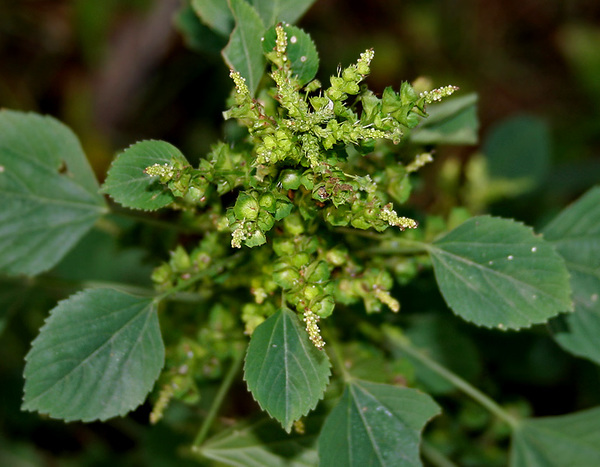
Acalypha indica
Plant · Euphorbiaceae
Acalypha indica suits patients with incipient phthisis or tuberculosis, characterized by progressive emaciation and profound morning weakness that gradually improves during the day. The typical picture includes pathological hemorrhages from lungs and rectum with a marked morning aggravation of all complaints.
Key symptoms
- Dry, hard cough followed by hemoptysis; worse morning and night
- Blood bright red and not profuse in morning; dark and clotted in afternoon
- Very weak in the morning, gains strength during the day
- Spluttering diarrhea with forcible expulsion of noisy flatus
- Rectal hemorrhage worse in the morning
- Progressive emaciation with constant severe chest pain
- Burning in pharynx, esophagus, and stomach
Worse (aggravation)
- Morning (hemorrhages, cough, weakness most pronounced)
- Night (cough)
Better (amelioration)
- As the day progresses; gains strength during the day

Indian Nettle
A drug having a marked action on the alimentary canal and respiratory organs. It is indicated in incipient phthisis, with hard, racking cough, bloody expectoration, arterial hæmorrhage, but no febrile disturbance. Very weak in the morning, gains strength during day. Progressive emaciation. All pathological hæmorrhages having notably a morning aggravation.
Chest
Cough dry, hard, followed by hæmoptysis; worse in morning and at night. Constant and severe pain in chest. Blood bright red and not profuse in morning; dark and clotted in afternoon. Pulse soft and compressible. Burning in pharynx, œsophagus, and stomach.
Abdomen
Burning in intestines. Spluttering diarrhœa with forcible expulsion of noisy flatus, bearing down pains and tenesmus. Rumbling distention, and griping pain in abdomen. Rectal hæmorrhage; worse in morning.
Skin
Jaundice. Itching and circumscribed furuncle-like swellings.
Modalities
Worse in morning.
Relationship
Compare: Millefol; Phosphor; Acetic acid; Kali nit.
Dose
Third to sixth potency.

Cupameni. Indian acalypha. (East Indies.) N. O. Euphorbiaceæ. Tincture of fresh plant.
Clinical
Cough. Diarrhœa. Flatulence. Hæmoptysis.
Characteristics
The chief employment of this Euphorbian has been in violent dry cough followed by bloody expectoration. Expectoration of pure blood in the morning, and dark clotted blood in the evening. Cough most violent at night. Dulness of chest on percussion; constant severe pain in chest. Progressive emaciation. A proving by several Indian physicians has brought out a number of symptoms in the alimentary tracts characterised by: burning, sense of weight at stomach, flatulence, and sputtering diarrhœa.
Classical texts are in the public domain. Educational reference only — not medical advice.
