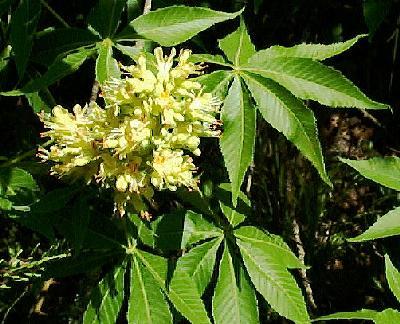
Aesculus glabra
Plant · Sapindaceae
Aesculus glabra suits individuals with painful rectal and hemorrhoidal complaints accompanied by lumbosacral weakness and heaviness of the lower extremities. A characteristic feature is the combination of dark purple, exquisitely painful external hemorrhoids with thick speech, vertigo, and heavy-headed dullness without actual head pain.
Key symptoms
- Very painful external hemorrhoidal tumors, dark purple in color
- Constipation with hard, knotty, very painful stools
- Lame back and weakness of lower limbs with hemorrhoids
- Fullness and heaviness of head without pain
- Thick speech and tongue as if lame
- Vertigo with staggering, reeling, and possible unconsciousness
- Cough from feather-tickling sensation in throat
- Dim or lost sight; eyes fixed and expressionless
Worse (aggravation)
- Toward evening (vertigo and general symptoms)

Fetid or Ohio Buckeye. (States of North America watered by Ohio River.) N. O. Sapindaceæ. Part employed, whole ripe fruit.
Clinical
Constipation. Cough. Cramp in stomach. Hæmorrhoids. Meningitis. Paralysis. Speech, thick. Vertigo. Wry-neck.
Characteristics
Æsculus glabra, like the Horse-chestnut, has a marked action on the rectum. It produces hard, knotty stools; very painful. Dark purple hæmorrhoidal tumours, with lame back and lower limbs. Hale gives the indication: "Very painful external tumours, dark purple, with constipation and vertigo; weakness of sacrum and lower limbs." At the same time there is fulness and heaviness of the head without pain; the sight may be dim or lost; eyes fixed and expressionless. The speech is thick and the tongue as if lame. In cattle it produces wry-neck and paresis of hind limbs. There is a cough produced by sudden irritation of throat, sensation as of a feather tickling the throat, causing hawking and raising of mucus finally streaked with blood.
Classical texts are in the public domain. Educational reference only — not medical advice.
