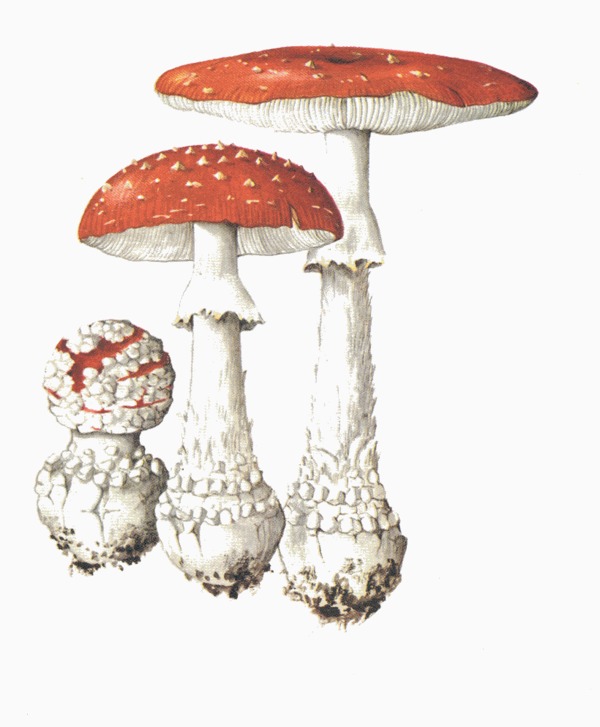
Agaricus muscarius
Amanita muscaria · Fly agaric, bug agaric. · Fungus · Amanitaceae
Those in need of Agaricus may be anxious, insecure, or fearful, and have morbid thoughts about death. Anxiety about health may lead to an obsessive fear of having conditions such as cancer. Symptoms typically include great lethargy and an aversion to conversation, or delirium and loquacity to the point of ecstasy, elation, or hypomania, and disturbed sense of perspective.
People for whom Agaricus is most suitable are particularly sensitive to the cold when ill. Some symptoms are worse prior to thunderstorms and after sexual intercourse.
Agaricus is taken as a remedy for disorders of the nervous system that cause trembling, itching, and twitching and jerking of the limbs. Such conditions include epilepsy, chorea, and multiple sclerosis. Agaricus can be prescribed for the treatment of the delirium tremens associated with alcoholism, and for the effects of senile dementia. It is also used to treat chilblains.
Key symptoms
- twitching and spasms
- chilblains
- depression or overexcitement
- fear of cancer
- complaints that are worse after sexual intercourse
Worse (aggravation)
- Vertigo from sunlight and on walking
- Cold air and pressure
- Prolonged desk-work causing dull headache
- Symptoms appear diagonally as right arm and left leg

Toad Stool-Bug Agaric (AGARICUS MUSCARIUS-AMANITA)
This fungus contains several toxic compounds, the best known of which is Muscarin. The symptoms of poisoning do not develop at once, usually twelve to fourteen hours elapse before the initial attack. There is no antidote, treatment, entirely symptomatic (Schneider). Agaricus acts as an intoxicant to the brain, producing more vertigo and delirium than alcohol, followed by profound sopor with lowered reflexes.
Jerking, twitching, trembling, and itching are strong indications. Incipient phthisis; is related to the tubercular diathesis, anæmia, chorea, twitching ceases during sleep. Various forms of neuralgia and spasmodic affections, and neurotic skin troubles are pictured in the symptomatology of this remedy. It corresponds to various forms of cerebral excitement rather than congestion. Thus, in delirium of fevers, alcoholism, etc. General paralysis. Sensation as if pierced by needles of ice. Sensitive to pressure and cold air. Violent bearing-down pains. Symptoms appear diagonally as right arm and left leg. Pains are accompanied by sensation of cold, numbness and tingling.
Mind
Sings, talks, but does not answer. Loquacity. Aversion to work. Indifference. Fearlessness. Delirium characterized by singing, shouting, and muttering; rhymes and prophesies. Begins with paroxysm of yawning.
The provings bring out four phases of cerebral excitement.
-
Slight stimulation-shown by increased cheerfulness, courage, loquacity, exalted fancy.
-
More decided intoxication-great mental excitement and incoherent talking, immoderate gaity alternates with melancholy. Perception of relative size of objects is lost, takes long steps and jumps over small objects as if they were trunks of trees-a small hole appears as a frightful chasm, a spoonful of water an immense lake. Physical strength is increased, can lift heavy loads. With it much twitching.
-
Third stage produces a condition of furious or raging delirium, screaming, raving, wants to injure himself, etc.
-
Fourth stage-mental depression, languor, indifference, confusion, disinclination to work, etc. We do not get the active cerebral congestion of Belladonna, but a general nervous excitement such as is found in delirium tremens, delirium of fevers, etc.
Head
Vertigo from sunlight, and on walking. Head in constant motion. Falling backward, as if a weight in occiput. Lateral headache, as if from a nail (Coff; Ignat). Dull headache from prolonged desk-work. Icy coldness, like icy needles, or splinters. Neuralgia with icy cold head. Desire to cover head warmly (Silica). Headache with nose-bleed or thick mucous discharge.
Eyes
Reading difficult, as type seems to move, to swim. Vibrating specters. Double vision (Gels), dim and flickering. Asthenopia from prolonged strain, spasm of accommodation. Twitching of lids and eyeballs (Codein). Margins of lids red; itch and burn and agglutinate. Inner angles very red.
Ears
Burn and itch, as if frozen. Twitching of muscles about the ear and noises.
Nose
Nervous nasal disturbances. Itching internally and externally. Spasmodic sneezing after coughing; sensitiveness; watery non-inflammatory discharge. Inner angles very red. Fetid, dark, bloody discharge. Nosebleed in old people. Sensation of soreness in nose and mouth.
Face
Facial muscles feel stiff; twitch; face itches and burns. Lancinating, tearing pain in cheeks, as of splinters. Neuralgia, as if cold needles ran through nerves or sharp ice touched them.
Mouth
Burning and smarting on lips. Herpes on lips. Twitching. Taste sweet. Aphthæ on roof of mouth. Splinter like pains in tongue. Thirsty all the time. Tremulous tongue (Lach). Tongue white.
Throat
Stitches along eustachian tube to ear. Feels contracted. Small solid balls of phlegm thrown up. Dryness of pharynx, swallowing difficult. Scratching in throat; cannot sing a note.
Stomach
Empty eructations, tasting of apples. Nervous disturbances, with spasmodic contractions, hiccough. Unnatural hunger. Flatulent distention of stomach and abdomen. Profuse inodorous flatus. Burning in stomach about three hours after a meal, changing into a dull pressure. Gastric disturbance with sharp pains in liver region.
Abdomen
Stitching pains in liver, spleen (Ceanothus) and abdomen. Stitches under short ribs, left side. Diarrhœa with much fetid flatus. Fetid stools.
Urinary
Stitches in urethra. Sudden and violent urging to urinate. Frequent urination.
Female
Menses, increased, earlier. Itching and tearing, pressive pains of genitals and back. Spasmodic dysmenorrhœa. Severe bearing-down pains, especially after menopause. Sexual excitement. Nipples itch, burn. Complaints following parturition and coitus. Leucorrhœa, with much itching.
Respiratory Organs
Violent attacks of coughing that can be suppressed by effort of will, worse eating, pain in head while cough lasts. Spasmodic cough at night after falling asleep, with expectoration of little balls of mucus. Labored, oppressed breathing. Cough ends in a sneeze.
Heart
Irregular, tumultuous palpitation, after tobacco. Pulse intermittent and irregular. Cardiac region oppressed, as if thorax were narrowed. Palpitation with redness of face.
Back
Pain, with sensitiveness of spine to touch; worse in dorsal region. Lumbago; worse in open air. Crick in back. Twitching of cervical muscles.
Extremities
Stiff all over. Pain over hips. Rheumatism better motion. Weakness in loins. Uncertain gait. Trembling. Itching of toes and feet as if frozen. Cramp in soles of feet. Pain in shin-bone. Neuralgia in locomotor ataxia. Paralysis of lower limbs, with spasmodic condition of arms. Numbness of legs on crossing them. Paralytic pain in left arm followed by palpitation. Tearing painful contractions in the calves.
Skin
Burning, itching, redness, and swelling, as from frostbites. Pimples, hard, like flea-bites. Miliary eruption, with intolerable itching and burning. Chilblains. Angioneurotic œdema; rosacea. Swollen veins with cold skin. Circumscribed erythematous, papular and pustular and œdematous lesions.
Sleep
Paroxysms of yawning. Restless from violent itching and burning. On falling asleep, starts, twitches, and awakes often. Vivid dreams. Drowsy in daytime. Yawning, followed by involuntary laughter.
Fever
Very sensitive to cool air. Violent attacks of heat in evening. Copious sweat. Burning spots.
Modalities
Worse, open cold air, after eating, after coitus. In cold weather, before a thunder-storm. Worse, pressure on dorsal spine, which causes involuntary laughter. Better, moving about slowly.
Relationship
Compare: Muscarine, the alkaloid of Agaricus (has much power over secretions, increasing lachrymal, salivary, hepatic, etc, but diminishing renal; probably neurotic in origin, stimulating the terminal fibers of the secretory nerves of all these structures, hence salivation, lachrymation and excessive perspiration. Atropin exactly opposes Muscarine. Resembles Pilocarpin in action). Amanita vernus-spring mushroom-a variety of Agar Phalloides-Death cup-active principle is Phallin, active like Muscarine. Amanita phalloides (Death Cup-Deadly Agaric). The poison is a toxalbumin, resembling the poison in the rattle snake and the poison excreted by the cholera and diphtheria germs. It acts on the red blood corpuscles, dissolving them so that blood escapes into the alimentary canal and the whole system is drained. The amount of this toxic principle is small, even handling of specimens and breathing of spores affects some people unpleasantly. The poison is slow in development. Even 12 to 20 hours after taking it the patient feels all right, but vertigo violent choleraic symptoms with rapid loss of strength with death the second or third day, preceded by stupor and spasms. Fatty degeneration of liver, heart and kidneys, hæmorrhages in lungs, pleura and skin (Dr. J. Schier). Vomiting and purging. Continuous urging to stool, but no gastric, abdominal or rectal pain. Intense thirst for cold water, dry skin. Lethargic but mentally clear. Sharp changes from rapid to slow and from slow to rapid breathing, extreme collapse, suppressed urine, but no cold extremities or cramps. Agaric emet (severe vertigo; all symptoms better, cold water; longing for ice-water; gastritis cold sweat, vomiting sensation as if stomach was suspended on a string). Tamus (chilblains and freckles). Cimicif; Cann ind; Hyos; Tarantula.
Antidote: Absinth; Coffea; Camphor.
Dose
Third to thirtieth and two hundredth potency. In skin affections and brain exhaustions give the lower attenuations.
Generalities
The most striking things running through this medicine are twitchings and tremblings, jerkings of the muscles and trembling of the limbs; quivering and tremors, everywhere these two features are present in all parts of the body and limbs.
The twitching of the muscles becomes so extensive that it is a well-developed case of chorea. It has in its nature all that is found in chorea and has cured many cases. This is a general belonging to all parts to all muscles.
Throughout the body there is a sensation of creeping and crawling. It is hardly confined to the skin, it is felt as if in the flesh, a sensation as if of ants.
Itching of the skin all over which changes place from scratching. No place is exempt from this. There are strange sensations here and there upon the skin or in parts, cold sensations, sensations of cold needles and of hot needles; stinging and burning where the circulation is feeble, about the ears, nose, back of hands and fingers and toes, red spots with itching and burning as if frostbitten. It is a great remedy for chilblains.

Amanita muscaria. Agaricus muscarius. Fly Agaric. Bug Agaric. Champignon fou. (Europe, Asia, and America; in dry places, especially in dry pine woods.) N. O. Fungi. Trituration of the carefully dried-up cap (pileus); or tincture of the fresh fungus.
Clinical
Acne rosacea. Blepharospasm. Brain, softening of. Bunion. Chilblains. Chorea. Coldness. Cough. Cramp. Delirium tremens. Dysmenorrhœa. Enteric fever. Epilepsy (with great exertion of strength). Gangrene. General paralysis. Hyperpyrexia. Itching. Jaundice. Lachrymal fistula. Lichen. Lumbago. Meningitis. Myopia. Neuralgia. Numbness. Nystagmus. Phthisis. Rheumatism. Sacrum, pains in. Sebaceous tumours. Sexual excess, effects of. Spinal Irritation. Spleen, affections of. Starting. Stitch in side. Tic Convulsif. Toothache. Tremors. Typhoid fever. Typhus.
Toadstool (Fungi.)
Persons with light hair; skin and muscles lax. Old people with weak, indolent circulation. Drunkards, especially for their headaches; bad effects after a debauch (Lob., Nux, Ran.). Delirium: with constant raving; tries to get out of bed; in typhoid or typhus. Headaches: of those who readily become delirious in fever or with pain (Bell.); of persons subject to chorea, twitchings or grimaces; from spinal affections. Chilblains, that itch and burn intolerably; frostbite and all consequences of exposure to cold, especially in face. Involuntary movements while awake, cease during sleep; chorea, form simple motions and jerks of single muscles to dancing of whole body; trembling of whole body (twitching of muscles of face, Myg.). Sensation as if ice touched or ice-cold needles were piercing the skin; as from hot needles. Burning, itching, redness of various parts; ears, nose, face, hands and feet; parts red, swollen, hot. Uncertainty in walking, stumbles over everything in the way; heels pain as if …
-
Painfulness and violent burning, shooting pains in spinal column.
-
Spinal column sensitive to touch.
-
Sensation as if ants were creeping along the spine.
-
Violent muscular twitching and jumping, as if caused by a galvanic current.
-
Burning, Itching and redness of various parts as if frostbitten.
-
Sensation in various parts as if ice touched or as if ice-cold needles were piercing the skin.

Phatak's chapter on Agaricus muscarius is available in the app.
Read Phatak in the appClassical texts are in the public domain. Educational reference only — not medical advice.
