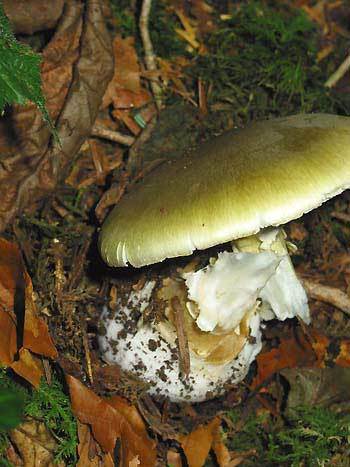
Agaricus phalloides
Amanita phalloides · Fungus · Amanitaceae
Agaricus phalloides suits acute toxic states of cholera-like collapse with extreme chilliness, violent cramps, repeated vomiting, and watery stools. The characteristic delayed onset — symptoms appearing ten to twelve hours after ingestion — combined with convulsions, mental excitement, and profound cholera-like prostration distinguishes it from related remedies.
Key symptoms
- Cholera-like picture: extreme prostration, chilliness, hippocratic face
- Violent bilious vomiting; incessant cramps in stomach
- Frequent whitish watery or bilious, bloody stools
- Suppression of urine; hoarse voice
- Cold extremities with violent cramps in legs, feet, and calves
- Cold sweat; pulse small, intermittent, barely perceptible
- Convulsions; mental excitement lasting several days
- Vertigo always on rising up; frightful pains in head
Worse (aggravation)
- Rising up (vertigo)
- Motion

A. bulbosus. Amanita bulbosa. (A small stinking fungus common in Europe and U.S.) N. O. Fungi. Tincture of fresh fungus.
Clinical
Cholera. Chorea. Cramps. Diarrhœa. Gastritis. Trismus. Urine, suppression of. Vomiting.
Characteristics
Symptoms observed in poisoning cases give a complete picture of Asiatic cholera. There is extreme prostration and chilliness; the sweat is cold; the hippocratic face is marked; the tongue is cold; and there is violent thirst. Very frequent bilious vomiting. Incessant cramps in stomach. Hard, tense abdomen. Frequent whitish watery stools; or bilious, bloody stools. The urine is suppressed; the voice is hoarse. Pulse small, intermittent, hardly perceptible. The extremities are cold, and there are violent cramps in legs, feet, and calves. Convulsions are another prominent feature. There is mental excitement, which has in some cases lasted for three days. Sometimes there is stupor, at other times consciousness remains till death.
Classical texts are in the public domain. Educational reference only — not medical advice.
