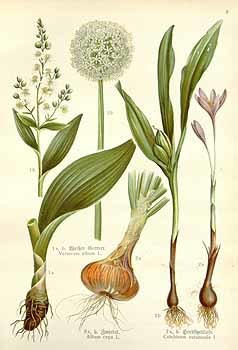
Allium cepa
Onion · Plant · Amaryllidaceae
Melancholy, anxiety, fear of pain, and dullness of mind are not uncommon in individuals who respond well to Allium cepa, but there are no marked emotional symptoms indicative of the remedy.
Allium cepa is used primarily for the treatment of coughs and colds characterized by profuse, watery catarrh that leaves the skin irritated and sore. Symptoms usually develop following exposure to cold weather and damp winds. They may be associated with hay fever, especially if accompanied by sensitivity to the scent of flowers. Allium cepa is also used to treat burning neuralgic pain that alternates from one side of the body to the other
Key symptoms
- burning catarrh
- bland discharge from the eyes
- splitting sensation in the throat
- phantom pains
- person feels worse in warm rooms
Worse (aggravation)
- Warm room
- Towards evening
- Damp cold weather
- Inspiring cold air
- Lying down at night
- Warm moist room
Better (amelioration)
- Open air
- Cold room
- Warm room (for cough)

Red Onion
A picture of coryza, with acrid nasal discharge and laryngeal symptoms, eye secretion bland; singers' cold, worse in warm room and toward evening; better in open air is presented by this remedy. Specially adapted to phlegmatic patients; colds in damp cold weather. Neuralgic pains, like a fine thread, following amputations or injuries to nerves. Traumatic chronic neuritis. Burning in nose, mouth, throat, bladder and skin. Sensation of glowing heat on different parts of the body.
Head
Catarrhal headache, mostly in forehead; worse in warm room towards evening. Thread-like pains in face. Headache ceases during menses; returns when flow disappears.
Eyes
Red. Much burning and smarting lachrymation. Sensitive to light. Eyes suffused and watery; profuse, bland lachrymation, better in open air. Burning in eyelids.
Ears
Earache, shooting in eustachian tube.
Nose
Sneezing, especially when entering a warm room. Copious, watery and extremely acrid discharge. Feeling of a lump at root of nose. Hay-fever (Sabad; Sil; Psor). Fluent coryza with headache, cough, and hoarseness. Polypus.
Stomach
Canine hunger. Pain in pyloric region. Thirst. Belching. Nausea.
Abdomen
Rumbling, offensive flatus. Pains in left hypogastrium. Colic sitting, moving about.
Rectum
Diarrhœa with very offensive flatus. Stitches in rectum; itching and rhagades in anus. Glowing heat in rectum.
Urinary
Sensation of weakness in bladder and urethra. Increased secretion of urine with coryza. Urine red with much pressure and burning in urethra.
Respiratory
Hoarseness. Hacking cough on inspiring cold air. Tickling in larynx. Sensation as if larynx is split or torn. Oppressed breathing from pressure in middle of chest. Constricted feeling in region of epiglottis. Pain extending to ear.
Extremities
Lame joints. Ulcers on heel. Painful affections of fingers about nails neuralgia of stump. Bad effects from getting feet wet. Limbs, especially arms, feel sore and tired.
Sleep
Yawning with headache and drowsiness. Gaping in deep sleep. Dreams. Wakes at 2 am.
Modalities
Worse, in the evening, in warm room. Better, in open air, and in cold room.
Relationship
Compare: Gels; Euph; Kali hyd; Aconite; Ipecac.
Complementary: Phosphor; Thuja; Puls.
Antidotes: Arn; Cham; Verat.
Dose
Third potency.

General features
: Allium cepa is used principally for "colds."
There are various phases of these "colds," in the nose, in the throat, in the larynx, in the bronchial tubes.
The patient and all the phases of his "cold," his coryza, his Ia laryngitis, his cough, all his complaints, are aggravated by warmth, are worse in a warm room, excepting the tickling in the larynx, which is sometimes aggravated by drawing in cold air.
In this way the cou is sometimes excited by cold air but the patient himself is better in cold air and sensitive to heat.
Most of the symptoms are worse in the evening, the symptoms of coryza, the "cold," and the general symptoms.

Cepa. Common Red Onion. N. O. Liliaceæ. Tincture of the onion; or of whole fresh plant gathered from July to August.
Clinical
Anus, fissure of. Ascites. Catarrh. Cold. Coryza. Cough. Diarrhœa. Facial paralysis. Feet, easily galled. Hay-fever. Hernia. Influenza. Laryngitis. Panaritium. Pneumonia. Trauma. Whitlow. Whooping-cough. Yellow fever.
Characteristics
Allium cepa covers more symptoms of common cold than any other remedy, as the well-known effect of onions in producing tears would suggest. It will cure a large proportion of cases of cold in the head, but the conditions which most particularly indicate it are: Cough, or cold, or headache < in warm room, > in open air, < again on returning to warm room. It causes burning of eyelids, nose, mouth, throat, bladder, skin. Inflammation and increased secretion of mucous membranes: neuralgic pains like a long thread; in face, head, neck, and elsewhere; < evening; towards ear from deep within head. The toothache of Cepa is > by cold air or cold washing. It is …

Onion (Liliaccae)
Acute catarrhal inflammation of mucous membranes, with increased secretion. Catarrhal dull headache, with coryza; < in the evening, > in open air; < on returning to a warm room (compare, Euph., Puls.). Headache ceases during menses; returns when flow disappears (Lach., Zinc.). Eyes: burning, biting, smarting as from smoke, must rub them; watery and suffused; capillaries injected and excessive lachrymation. Coryza: profuse, watery and acrid nasal discharge, with profuse, bland lachrymation (profuse, full of acrid tears, bland and fluent coryza, Euph.). Acrid, watery discharge dropping from tip of nose (Ars., Ars. iod.). Spring coryza: after damp northeasterly winds; discharge burns and corrodes nose and upper lip. Hay fever; in August every year; violent sneezing on rising from bed; from handling peaches. Nasal polypus (Mar. v., Sang., Sang. nit., Psor.). Catarrhal laryngitis; cough compels patient to grasp the larynx; seems as if cough would tear it. Colic: from cold by getting feet wet; over …

Nose
Copious, watery, acrid discharge from the nose, and watering bland discharge from the eyes.
Nose
Constant sneezing with profuse acrid coryza, when coming into a warm room.
Nose
Fluent coryza, headache, lachrymation, cough, heat, thirst, trembling of hands, < in evening and in warm room, > in open air.
Respiratory Organs
Severe laryngeal cough which compels the patient to grasp the larynx.
-
Copious watery discharge from the nose, and watering of the eyes.
-
Constant sneezing, with profuse acrid coryza; worse when coming into a warm room; better in the open air.

Phatak's chapter on Allium cepa is available in the app.
Read Phatak in the appClassical texts are in the public domain. Educational reference only — not medical advice.
