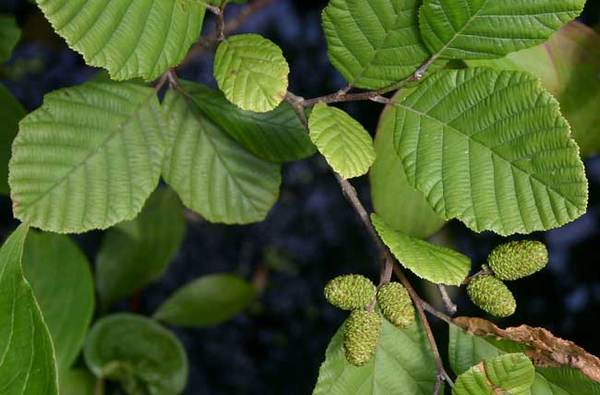
Alnus
Alnus rubra (or Alnus serrulata) · Plant · Betulaceae
Alnus is indicated in chronic scrofulous and syphilitic conditions, with alternating eruptions of the skin and mucous membrane disease as a key feature. The remedy suits patients with chronic skin affections, glandular enlargements, and rheumatic complaints of a constitutional, cachectic nature.
Key symptoms
- Leucorrhoea with erosions that bleed easily
- Amenorrhoea with burning pains from back to pubis
- Skin eruptions alternating with diseased conditions of mucous membranes
- Haematuria
- Pain in rectum after stool
- Heaviness in head as after intoxication
- Enlarged scrofulous glands

Alnus rubra, Tag Alder; and Alnus glutinosa, Common Alder of Europe. N. O. Cupuliferæ. (Not to be confounded with certain of the Rhamnaceæ, which are also popularly called "Alders.") Tinctures of the bark, and of the young shoots.
Clinical
Amenorrhœa. Glands, enlarged. Gleet. Hæmorrhage. Herpes. Impetigo. Leucorrhœa. Prurigo. Psora. Rheumatism. Scrofula. Syphilis.
Characteristics
Alnus is an unproved remedy. The bark-tincture of Alnus rubra is used by eclectics as an "alterative" in scrofulous conditions, in chronic skin affections, rheumatism, syphilis, gravel, and gleet. The plant grows in swamps and marshes. Among its indications are: Leucorrhœa with erosions which bleed easily; amenorrhœa with burning pains from back to pubis. Hæmaturia. Cooper, who has used a fresh plant tincture of A. glutinosa, gives: "Pain in rectum after stool"; and "heaviness in head as after being drunk the night before" as having been produced by it. Hale gives as particularly indicating it: "Eruptions on the skin alternating with diseased conditions of mucous membrane."
Classical texts are in the public domain. Educational reference only — not medical advice.
