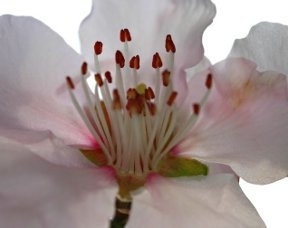
Amygdalae amarae aqua
Plant · Rosaceae
Amygdalae Amarae Aqua is indicated in acute, severe states resembling Hydrocyanic acid poisoning, with brilliant eyes devoid of expression, opisthotonos, convulsive breathing, and dark red fauces with impossible swallowing. It has been used in diphtheria, epilepsy, syncope, and asthmatic suffocation.
Key symptoms
- Excessively brilliant appearance of the eyes without corresponding mental expression
- Head drawn backward; eyes drawn to the left side
- Burning heat in laryngopharyngeal region; swallowing impossible
- Lancinating pains through the tonsils; palate and fauces dark red
- Convulsive and very short respiration with fear of suffocation
- Vomiting of undigested food and bile
- Opisthotonos and snoring
- Surface cold, clammy, pallid or blue with urticaria

Amygdalus communis. Bitter Almond. N. O. Rosaceæ. An ounce of alcohol is added to a pound of bitter almonds; then add six pounds of water-and distil down to three pounds. (Hydrocyanic acid is formed by the action of water oil the amygdaloids.)
Clinical
Asthma. Coma. Diphtheria. Epilepsy. Headache. Syncope. Tetanus. Urticaria.
Characteristics
The symptoms of Amygdala are not very distinguishable from those of Hydrocyanic acid, but these may be taken as indicating its use: An excessively brilliant appearance of the eyes without corresponding mental expression. Heaviness in forehead (also Lauro.). Dulness of l. half of the head (Hydro. ac., right). Head drawn backward. Eyes drawn to left side. Burning heat in laringo-pharyngeal region. Lancinating pains through tonsils (Farrington). Palate end fauces dark reel. Swallowing impossible. Vomiting of undigested food and bile. Convulsive and at intervals very short respiration, with fear of suffocation.─Jerking, hesitating speech: "What's─the mat─matter with me?" …
Classical texts are in the public domain. Educational reference only — not medical advice.
