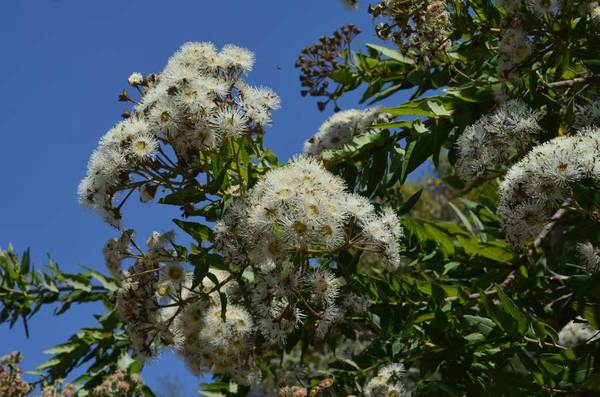
Angophora
Plant · Myrtaceae
Angophora is indicated in bowel conditions alternating between obstinate constipation and diarrhoea, with persistent bearing-down sensations, tenesmus, and bloody hard stools. The remedy picture includes flatulent distension, colicky pains, and vertigo accompanying the intestinal disorder.
Key symptoms
- Bearing-down sensation with constant inclination to stool
- Dry, hard evacuations accompanied with blood
- Obstinate constipation for nearly a week, then diarrhoea with nausea and vomiting
- Headache, nausea, flatulent distension, and colicky pains accompanying stool
- Vertigo and debility accompanying diarrhoea
- Pains and tenesmus relieved only by lying face down
Better (amelioration)
- Lying down flat on the face (pains and tenesmus relieved)

Angophora lanceolata. Metrosideros costatus. Red Gum. (Australian bush.) N. O. Myrtaceæ. Tincture or trituration of dried sap or gum.
Clinical
Constipation. Dysentery.
Characteristics
Proved by F. Kopp, Angophora (which resembles Eucalyptus in appearance) produces the following symptoms: Bearing-down and constant inclination to stool. Dry, hard evacuations, accompanied with blood; diarrhœa, headache, nausea, flatulent distension, and colicky pains. For nearly a week there was obstinate constipation; then nausea, sickness and diarrhœa, with vertigo and debility. Pains and tenesmus only > by lying down flat on the face.
Relations
Antidoted by: Ipec.
Classical texts are in the public domain. Educational reference only — not medical advice.
