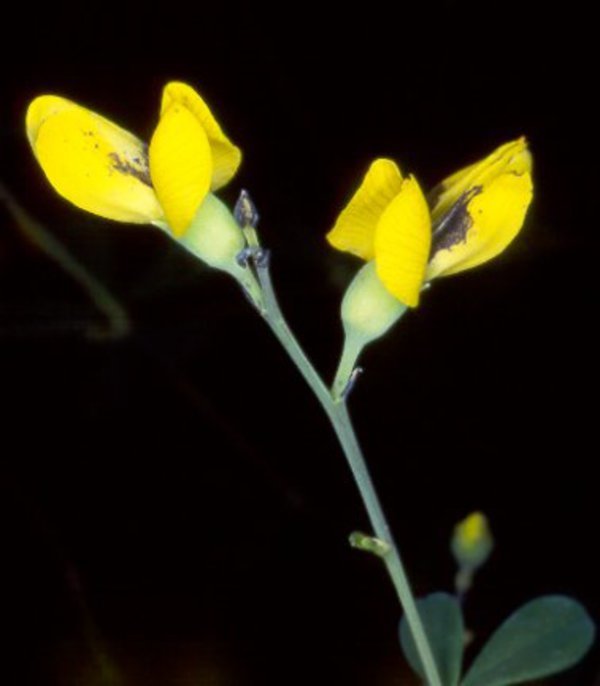
Baptisia tinctoria
Wild indigo, indigo weed, horsefly weed, rattleweed. · Plant · Fabaceae
Baptisia is prescribed almost exclusively for acute feverish illness with a characteristic set of symptoms. These include confusion or even stupor, as though drunk. The lethargy or exhaustion brought on by illness is so profound that the person even falls asleep during conversations. Nightmares and delirium are common, notably a sensation that the body is scattered in pieces. This feeling can lead to difficulty in falling asleep, as can sensations of suffocation or breathlessness.
Typical physical symptoms include foul breath, a yellowy-brown tongue, and a bitter-tasting mouth. The face may be swollen and flushed dark red, with drooping eyelids.
First developed for typhoid fever, Baptisia is now used mostly for acute fever, severe influenza, and gastrointestinal infections, as well as for sore throats and septic infections.
Key symptoms
- severe infection
- confusion and stupor
- sensation that the body is scattered in pieces
- aversion to open air
- offensive-smelling discharges
Worse (aggravation)
- Worse from humid heat and fog
- Worse indoors

Wild Indigo (BAPTISIA)
The symptoms of this drug are of an asthenic type, simulating low fevers, septic conditions of the blood, malarial poisoning and extreme prostration. Indescribable sick feeling. Great muscular soreness and putrid phenomena always are present. All the secretions are offensive-breath, stool, urine, sweat, etc. Epidemic influenza. Chronic intestinal toxæmias of children with fetid stools and eructations.
Baptisia in low dilutions produces a form of anti-bodies to the bac typhosus, viz, the agglutinins (Mellon). Thus it raises the natural bodily resistance to the invasion of the bacillary intoxication, which produces the typhoid syndrome. Typhoid carriers. After inoculation with anti-typhoid serum. Intermittent pulse, especially in the aged.
Mind
Wild, wandering feeling. Inability to think. Mental confusion. Ideas confused. Illusion of divided personality. Thinks he is broken or double, and tosses about the bed trying to get pieces together (Cajeput). Delirium, wandering, muttering. Perfect indifference. Falls asleep while being spoken to. Melancholia, with stupor.
Head
Confused, swimming feeling. Vertigo; pressure at root of nose. Skin of forehead feels tight; seems drawn to back of head. Feels too large, heavy, numb. Soreness of eyeballs. Brain feels sore. Stupor; falls asleep while spoken to. Early deafness in typhoid conditions. Eyelids heavy.
Face
Besotted look. Dark red. Pain at root of nose. Muscles of jaw rigid.
Mouth
Taste flat, bitter. Teeth and gums sore, ulcerated. Breath fetid. Tongue feels burned; yellowish-brown; edges red and shining. Dry and brown in center, with dry and glistening edges; surface cracked and sore. Can swallow liquids only; least solid food gags.
Throat
Dark redness of tonsils and soft palate. Constriction, contraction of œsophagus (Cajeput). Great difficulty in swallowing solid food. Painless sore throat, and offensive discharge. Contraction at cardiac orifice.
Stomach
Can swallow only liquids, vomiting due to spasm of œsophagus. Gastric fever. No appetite. Constant desire for water. Sinking feeling at stomach. Pain in epigastric region. Feeling of hard substance (Abies nig). All symptoms worse from beer (Kali bich). Cardiac orifice contracted convulsively and ulcerative inflammation of stomach and bowels.
Abdomen
Right side markedly affected. Distended and rumbling. Soreness over region of gall-bladder, with diarrhœa. Stools very offensive, thin, dark, bloody. Soreness of abdomen, in region of liver. Dysentery of old people.
Female
Threatened miscarriage from mental depression, shock, watching, low fevers. Menses too early, too profuse. Lochia acrid, fetid. Puerperal fever.
Respiratory
Lungs feel compressed, breathing difficult; seeks open window. Fears going to sleep on account of nightmare and sense of suffocation. Constriction of chest.
Back and Extremities
Neck tired. Stiffness and pain, aching and drawing in arms and legs. Pain in sacrum, around hips and legs. Sore and bruised. Decubitus.
Sleep
Sleepless and restless. Nightmare and frightful dreams. Cannot get herself together, feels scattered about bed. Falls asleep while answering a question.
Skin
Livid spots all over body and limbs. Burning and heat in skin (Arsenic). Putrid ulcers with stupor, low delirium and prostration.
Fever
Chill, with rheumatic pains and soreness all over body. Heat all over, with occasional chills. Chill about 11 am.Adynamic fevers. Typhus fever. Shipboard fever.
Modalities
Worse; Humid heat; fog; indoors.
Relationship
Compare: Bryonia and Arsenic may be needed to complete the favorable reaction. Ailanthus differs, being more painful. Baptisia more painless. Rhus; Muriat acid; Arsenic; Bryon; Arnica; Echinac. Pyrogen.
Baptisia confusia (Pain in right jaw and oppression in left hypochondrium, producing dyspnœa and necessity to assume erect position).
Dose
Tincture, to twelfth attenuation. Has rather short action.

Generalities
Baptisia is suitable for acute diseases. It is principally a short-acting medicine, suitable for complaints that are not long lasting. So far as we know it is not an antipsoric, does not go deep into the life.
All of its acute diseases and complaints have the appearance of Zymosis, like scarlet fever, diphtheria, typhoid, and gangrenous complaints. There is one thing that is unusual about it, it brings on this septic state more, rapidly than most other remedies.
The zymotic complaints of Ars., Phos., Rhus, and Bry., are much slower in their pace. But Baptisia is suitable for typhoids that come on rapidly, and hence it is not so often suitable in idiopathic typhoids.

Wild Indigo (United States of America.) N. O. Leguminosæ. Tincture of fresh root and its bark.
Clinical
Abortion, threatened. Apoplexy. Appendicitis. Biliousness. Brain softening. Cancer. Consumption. Diphtheria. Dysentery. Enteric fever. Eye, affections of. Gall-bladder, affections of. Gastric fever. Headache, bilious. Hectic fever. Hysteria. Influenza. Mumps. Œsophagus, stricture of. Plague. Relapsing fever. Sewer gas-poisoning. Shivering. Stomatitis. Tabes mesenterica. Tinea capitis. Tongue ulcerated. Typhus. Variola. Worms.
Characteristics
Baptisia has gained its greatest reputation as a remedy in typhoid fever, to the symptoms of which its pathogenesis strikingly corresponds. But it is only when it is used strictly in accordance with its symptoms that it will give successful results. When given as a matter of routine there are sure to be failures. Another disease in which it has proved specific in a large number of cases is epidemic influenza. The besotted countenance, bleary eyes, aching …

Wild Indigo. (Leguminosae)
For the lymphatic temperament. Great prostration, with disposition to decomposition of fluids (Pyr.); ulceration of mucous membranes. All exhalations and discharges fetid, especially in typhoid or other acute disease; breath, stool, urine, perspiration, ulcers (Psor., Pyr.). Aversion to mental exertion; indisposed, or want of power to think. Perfect indifference, don't care to do anything, inability ot fix the mind to work. Stupor; falls asleep while being spoken to or in the midst of his answer (when spoken to, answers correctly, but delirium returns at once, Arn.). Tongue: at first coated white with red papillae; dry and yellow-brown in center; later dry, cracked, ulcerated. Face flushed, dusky, dark-red, with a stupid, besotted drunken expression (Gels.). Can swallow liquids only (Bar. c.); least solid food gags (can swallow liquids only, but has aversion to them, Sil.). Painless sore throat; tonsils, soft palate and parotids dark red, swollen; putrid, offensive discharge (Diph.). …

Mind
Feels scattered about; cannot sleep because cannot get herself together.
Mind
Stupor; falls asleep while being spoken to (in fevers).
General Face
Face flushed, dusky, hot; dark red with besotted expression.
Mouth and Throat
Mouth very dry; tongue dry, brown in a streak down the center.
Mouth and Throat
Can swallow liquid food only, the least solid food gags.
Respiratory Organs
Awakes with great difficulty of breathing; lungs feel tight, compressed; must have fresh air.
Sleep and Dreams
Delirious stupor; falls asleep while answering a question, or being talked to; besotted expression.
Chill, Fever, and Sweat
Chilly all day; whole body feels sore.
-
Delirious stupor, falls asleep while answering a question or being spoken to.
-
Body feels scattered about, tosses around to get the pieces together. cannot sleep because he cannot get the pieces together.
-
Head feels large and heavy, with numbness of head and face.
-
Confusion of mind as if drunk, wild wandering feeling.
-
Face Rushed hot and dusky, or dark red with a besotted expression.
-
Tongue white with reddish papillae, followed by yellow brown coating in centre, edges dark red and shining. or dry and brown down the centre, cracked, sore and ulcerated.
-
Fauces dark red, dark putrid ulcers, tonsils and parotids swollen, can only swallow water, no pain, but great prostration.

Phatak's chapter on Baptisia tinctoria is available in the app.
Read Phatak in the appClassical texts are in the public domain. Educational reference only — not medical advice.
