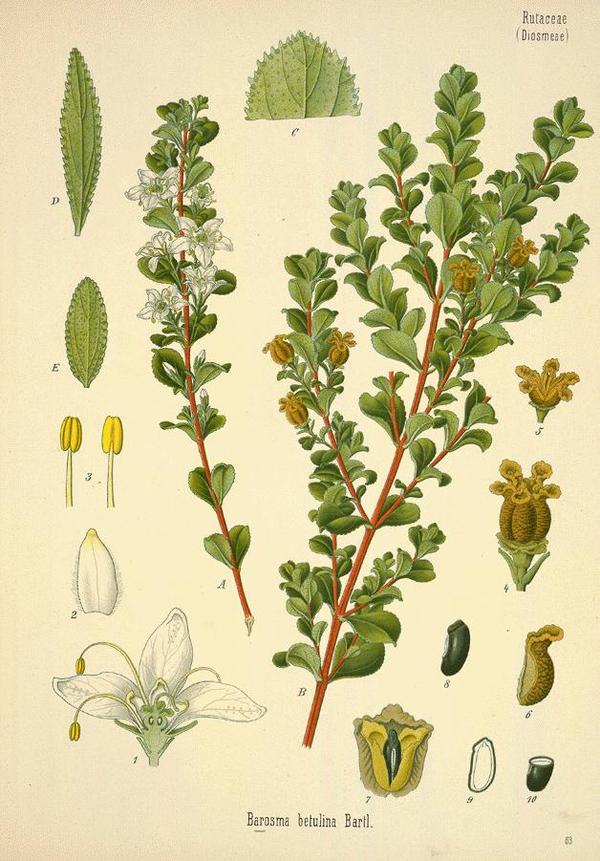
Barosma crenulatum
Agathosma crenulata (buchu) · Plant · Rutaceae
Barosma Crenulatum is indicated in chronic affections of the genito-urinary organs characterised by muco-purulent discharges with abundance of epithelium mixed with pus. The remedy suits those with spasmodic urethral stricture, gravel, and prostatic disorders. It may also be used in vaginal leucorrhoea and conditions arising from sexual excess.
Key symptoms
- Muco-purulent discharges from the genito-urinary tract
- Irritable bladder with vesical catarrh or gravel
- Prostatic disorders
- Vaginal leucorrhoea
- Undue secretions from urethral follicles from excessive venery

Buchu (BAROSMA CRENATA)
Marked specific effects on genito-urinary system; muco-purulent discharges. Irritable bladder, with vesical catarrh; prostatic disorders. Gravel. Leucorrhœa.
Relationship
Compare: Copaiva; Thuja; Populus; Chimaph. See Diosma.
Dose
Tincture or tea from leaves.

B. betulina, B. crenulata, B. sanatifolia. Buchu (South Africa). N. O. Rutaceæ (Genus, Diosmeæ). Tincture of dried leaves.
Clinical
Bladder, affections of. Calculus. Catarrh. Gravel. Leucorrhœa. Prostate, disorders of.
Characteristics
The leaves of several species of Barosma contain in vittæ a volatile oil, having a warm camphoraceous taste and an odour something like mint. There are no provings of the remedy, and the only uses made of it have been with the tincture. But it has a markedly specific effect on mucous membranes generally, and especially on the genito-urinary system, closely resembling that of Sabal ser., Populus, Copaiva, and Thuja. Hale gives as indications: chronic affections of genito-urinary organs having muco-purulent discharges, abundance of epithelium mixed with pus and mucous corpuscles. Irritable bladder, with vesical catarrh or gravel; with spasmodic stricture. Prostatic disorders. Vaginal Leucorrhœa. Undue secretions from mucous follicles of urethra, vesiculæ seminales, or prostate produced by excessive venery or self-abuse.
Classical texts are in the public domain. Educational reference only — not medical advice.
