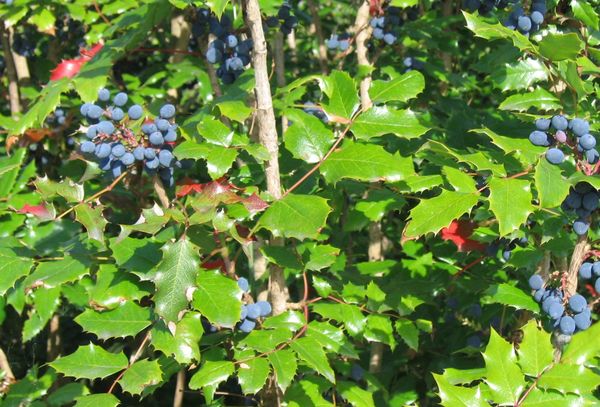
Berberis aquifolium
Mahonia aquifolium · Plant · Berberidaceae
Berberis Aquifolium suits patients with chronic syphilitic or scrofulous taint presenting predominantly with skin and hepatic manifestations. The patient is depressed, disinclined to move, drowsy in daytime, and nervous. The remedy has a reputation for rejuvenating action, stimulating all glands and improving nutrition in chronic hepatic torpor and incomplete metabolic transformation.
Key symptoms
- Pimply dry rough scaly skin with eruptions on scalp extending to face and neck
- Psoriasis and dry eczema; pruritus; acne
- Pain like iron band completely surrounding head above ears with gradually increasing compression
- Bilious headache; biliousness with waxy jaundiced appearance
- Tongue thickly coated yellow-brown feeling as if blistered
- Intense burning and soreness in spleen region
- Unhappiness and depression sometimes coming on suddenly
- Diurnal rise of temperature with flashes of heat
Worse (aggravation)
- Sleeping or moving (dizziness)
- Fasting (nausea)
Better (amelioration)
- Exercise (weakness and tired feeling)

Mountain Grape (BERBERIS AQUIFOLIUM - MAHONIA)
A remedy for the skin, chronic catarrhal affections, secondary syphilis. Hepatic torpor, lassitude and other evidences of incomplete metamorphosis; stimulates all glands and improves nutrition.
Head
Sensation of a band just above ears. Bilious headache. "Scald head". Scaly eczema.
Face
Acne. Blotches and pimples. Clears the complexion.
Stomach
Tongue thickly coated, yellowish-brown; feels blistered. Burning in stomach. Nausea and hunger after eating.
Urine
Stitching, crampy pains; thick mucus, and bright-red, mealy sediment.
Skin
Pimply, dry, rough, scaly. Eruption on scalp extending to face and neck. Tumor of breast, with pain. Psoriasis. Acne. Dry eczema. Pruritus. Glandular induration.
Relationship
Carbol acid; Euonym; Berb vulg; Hydr.
Dose
Tincture in rather material doses.

Oregon Grape. N. O. Berberidaceæ. Fluid extract or tincture of root.
Clinical
Biliousness. Bronchorrhœa. Eczema. Face, roughness of. Headache. Herpes. Leucorrhœa. Pityriasis. Psoriasis. Spleen, affections of. Stomatitis. Syphilis. Typhoid. Voice, affections of.
Characteristics
Berb. aqui. belongs to the Mahonia group of the Barberry family. It has been used by eclectics in chronic syphilis, chronic skin diseases, in scrofulous cachexia, and for removing pimples from the faces of girls. Hale reports a case of very advanced secondary syphilis cured with it, and some characteristic cases of psoriasis. In all these conditions it has been given in the Ø tincture 5 to 10 drops. J. D. W. C., in Recorder, 1896, gives personal experiences with doses of 10 to 15 drops a day. On the third day felt "nausea and thick-headedness." Later there was "straining to vomit without vomiting." Then a peculiar headache, strong compression, as if a band of iron two inches wide passed entirely round head just above ears. It kept …

Phatak's chapter on Berberis aquifolium is available in the app.
Read Phatak in the appClassical texts are in the public domain. Educational reference only — not medical advice.
