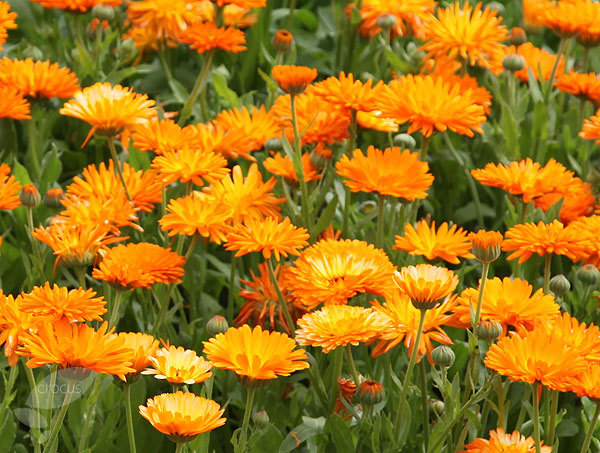
Calendula officinalis
Pot marigold, marigold. · Plant · Asteraceae
Calendula is usually given to heal and soothe cuts and broken skin. It may prevent the development of disfiguring scars from torn and jagged wounds. In addition, non-alcohol-based preparations of the remedy may soothe eczema.
Calendula is prescribed internally and externally for leg and varicose ulcers, post-operative wounds, and ruptured muscles or tendons. It may be used to treat torn perineal tissues following childbirth, joint wounds where there is loss of synovial fluid, and bleeding in the gums after a tooth extraction.
Key symptoms
- Most remarkable healing agent for open wounds and parts that will not heal
- Promotes healthy granulations and rapid healing by first intention
- Pain excessive and out of all proportion to injury
- Great disposition to take cold especially in damp weather
- Deafness worse in damp surroundings; hears best on a train
- Constitutional tendency to erysipelas
- Haemostatic after tooth extraction; remarkable power to produce local exudation
- Extremely nervous and easily frightened
Worse (aggravation)
Better (amelioration)

Marigold
A most remarkable healing agent, applied locally. Useful for open wounds, parts that will not heal, ulcers, etc. Promotes healthy granulations and rapid healing by first intention. Hæmostatic after tooth extraction. Deafness. Catarrhal conditions. Neuroma. Constitutional tendency to erysipelas. Pain is excessive and out of all proportion to injury. Great disposition to take cold, especially in damp weather. Paralysis after apoplexy. Cancer, as an intercurrent remedy. Has remarkable power to produce local exudation and helps to make acrid discharge healthy and free. Cold hands.
Head
Extremely nervous; easily frightened; tearing headache; weight on brain. Submaxillary glands swollen, painful to touch. Pain in right side of neck. Lacerated scalp wounds.
Eyes
Injuries to eyes which tend to suppuration; after operations; blenorrhœa of lachrymal sac.
Ears
Deafness; worse in damp surroundings and with eczematous conditions. Hears best on a train, and distant sounds.
Nose
Coryza in one nostril; with much green discharge.
Stomach
Hunger immediately after nursing. Bulimia. Heartburn with horripilations. Nausea in chest. Vomiting. Sinking sensation. Epigastric distention.
Respiratory
Cough, with green expectoration, hoarseness; with distention of inguinal ring.
Female
Warts at the os externum. Menses suppressed, with cough. Chronic endocervicitis. Uterine hypertrophy, sensation of weight and fullness in pelvis; stretching and dragging in groin; pain on sudden movements. Os lower than natural. Menorrhagia.
Skin
Yellow; goose-flesh. Promotes favorable cicatrization, with least amount of suppuration. Slough, proud flesh, and raised edges. Superficial burns and scalds. Erysipelas (use topically).
Fever
Coldness, great sensitiveness to open air; shuddering in back, skin feels warm to touch. Heat in evening.
Modalities
Worse, in damp, heavy, cloudy weather.
Relationship
Compare: Hamamel; Hyperic; Symph; Arn.
Compare in deafness: Ferr pic; Kal iod; Calc; Mag c; Graph.
Antidote: Chelidon; Rheum.
Complementary: Hepar.
Dose
Locally. Aqueous Calendula (Marigoldin) for all wounds, the greatest healing agent. Also as an injection in leucorrhœa; internally, tincture, to third potency. For burns sores, fissures, and abrasions, etc, use Calendula Cerate.

Calendula officinalis. Marigold. N. O. Compositæ. Tincture of leaves and flowers.
Clinical
Abscess. Balanitis. Breast, suppurating; nodosities in. Bubo. Burns. Carbuncle. Chilblains. Deafness. Eyes, inflamed. Fever. Fistula. Glandular swelling. Jaundice. Labour. Nails, pulp of, inflamed. Nipples, sore. Suppuration. Tetanus. Ulcers. Uterus, inflammation of; cancer of; offensive discharge from. Varicosis. Whitlow. Wounds.
Characteristics
Calendula belongs to the same family as those other great Vulneraries Arnica and Bellis perennis. The special kind of wounds indicating its use are lacerated wounds and suppurating wounds. It is the homœopathic antiseptic─it restores the vitality of an injured part, making it impregnable against the forces of putrefaction. Unlike Arnica it has no irritating property capable of producing erysipelas. It is therefore suitable to all cases of injury where the skin is broken. Jahr, who was in Paris during the Coup d'État of 1849, treated a number of cases of …

Marigold (Compositae)
Traumatic affections: to secure union by first intention and prevent suppuration. In all cases of loss of soft parts when union cannot be effected by means of adhesive plaster. External wounds with or without loss of substance; torn and jagged looking woulds; post-surgical operation; to promote healthy granulation and prevent excessive suppuration and disfiguring scars. Traumatic and idiopathic neuroma (Cepa); neuritis from lacerated wounds (Hyper.); exhausted from loss of blood and excessive pain. Rupture of muscles or tendons; lacerations during labor; wounds penetrating articulations with loss of synovial fluids. Wounds: with sudden pain during febrile heat; constitutional tendency to erysipelas (Psor.); old, neglected, offensive; threatening gangrene (Sal. ac.). Ulcers: irritable, inflamed, sloughing, varicose; painful as if beaten (Arn.); excessive secretion of pus. Calendula is almost specific for clean, surgical cuts or lacerated wounds, to prevent excessive suppuration.

Phatak's chapter on Calendula officinalis is available in the app.
Read Phatak in the appClassical texts are in the public domain. Educational reference only — not medical advice.
