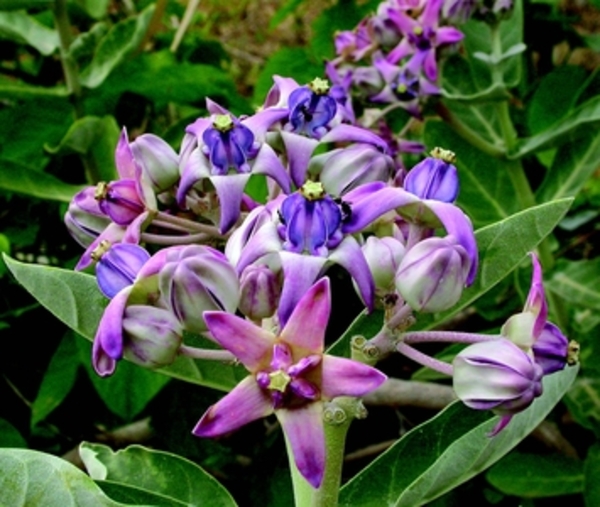
Calotropis gigantea
Plant · Apocynaceae
Calotropis Gigantea is primarily an alterative and antisyphilitic remedy suited to secondary syphilis following exhausted mercury treatment. It increases skin circulation with powerful sudorific action, heals syphilitic lesions, and rapidly restores the constitution. It has also been used in elephantiasis, leprosy, acute dysentery, and tuberculosis.
Key symptoms
- Secondary syphilis where mercury has been pushed to its limit
- Sense of warmth in the scrobiculus cordis as leading indication
- Syphilitic ulcers and skin blotches healing rapidly
- Weak, tired feeling with coldness and dizziness
- Pain and soreness of limbs, worse on movement or bearing weight
- Primary anaemia of syphilis; obesity while muscles become firmer
- Nausea, vomiting of bile; frequent urination
Worse (aggravation)
- Movement or putting weight on affected limbs

Madar Bark (CALOTROPIS)
Has been used with marked success in the treatment of syphilis following Mercury; also, in elephantiasis, leprosy, and acute dysentery. Pneumonic phthisis. Tuberculosis.
Increases the circulation in the skin; has powerful effects as a sudorific. In the secondary symptoms of syphilis, where Mercury has been used but cannot be pushed safely any farther, it rapidly recruits the constitution, heals the ulcers and blotches from the skin, and perfects the cure. Primary anæmia of syphilis. Heat in stomach is a good guiding symptom. Obesity, while flesh decreases, muscles become harder and firmer.
Relationship
Compare: Merc; Potass iod; Berb aqui; Sarsap; Ipecac.
Dose
Tincture, one to five drops; three times a day.

Calotropis gigantea. (E. India.) The root-bark is called Mudar, Mirdar, Yercum. N. O. Asclepiadaceæ. Tincture or trituration of bark of root. Tincture of the milky juice.
Clinical
Feet, pain in. Fever. Hands, pains in. Leprosy, tubercular. Lupus. Syphilis.
Characteristics
The inspissated juice, root and bark have been extensively used in the East for their emetic, sudorific, alterative, and purgative qualities. The fresh juice is considered a valuable remedy in skin affections. A short proving brought out the following symptoms: Weak, tired feeling; coldness; dizziness; pain and confusion in head; nausea and vomiting of bile; frequent micturition; pain, soreness, and redness of thigh pain in both legs, swelling of knees, stiffness and inability to walk pains in hands and feet; first left then right, pains < movement or putting weight on them. Dr. Gramm, of Philadelphia (Minn. H. Mag., Aug., 1897), has used the tincture with great success in cases of syphilis when Mercury can no longer be given; in the anæmia …
Classical texts are in the public domain. Educational reference only — not medical advice.
