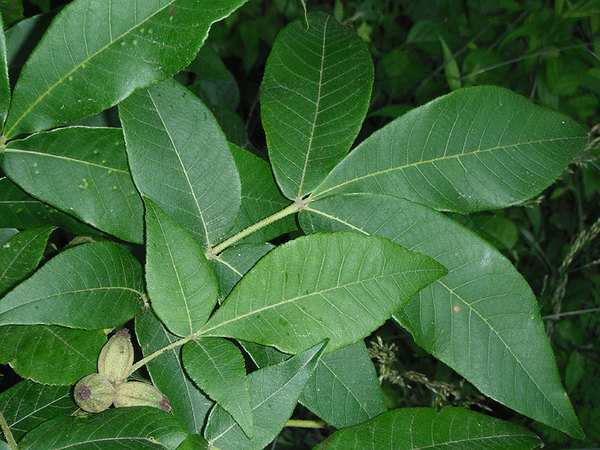
Carya alba
Carya tomentosa · Plant · Juglandaceae
Carya Alba shares antiscorbutic properties with other Juglandaceae members. It is primarily indicated in purpura and scurvy with extensive haemorrhages from all mucous surfaces and skin, accompanied by marked swelling of the extremities and general deterioration. The dark blood and tendency to bleed from the slightest cause are characteristic.
Key symptoms
- Pronounced scurvy with haemorrhage from all surfaces
- Dark blood gushing from the least skin excoriation
- Blood from gums, nose, ears, and other parts
- Gums swollen, bleeding, and turning black
- Livid spots over whole body from one inch to pin-head size
- Whole body and limbs extremely swollen
- Face clay-coloured and swollen; breath short and difficult

Shellbark, or Shagbark Hickory. N. O. Juglandaceæ. Tincture of nuts.
Clinical
Purpura. Scurvy.
Characteristics
Like Juglans Regia and Juglans Cinerea, Carya alba appears to possess antiscorbutic properties. An exclusive diet of the nuts for three or four weeks, in a girl seven years old, produced pronounced symptoms of scurvy; hæmorrhages from all surfaces; on the least excoriation of skin very dark blood gushed out. Blood gushed from gums, nose, ears, and other parts.
Relations
Compare: Arn., Carbo v., Pho., Merc., Ham., Bry., Rhus., Citrus lim., and Juglandaceæ.
6. Face
Face clay-coloured; swollen.
8. Mouth
Gums swelled, began to bleed and turn black; could not move lips without causing profuse discharge.
Classical texts are in the public domain. Educational reference only — not medical advice.
