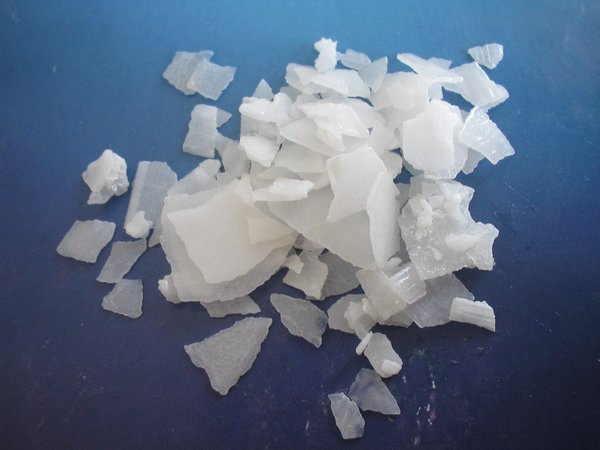
Causticum
Causticum Hahnemanni · Potassium hydrate,Causticum Hahnemanni · Human-made/chemical
Those for whom Causticum may be most helpful tend to be serious and introspective. They feel the effect of grief for prolonged periods and may become mentally weakened, absent-minded, hopeless, anxious, and prey to fears or fanciful ideas. Forgetfulness and a need to check on their fears and fancies can lead to a compulsive need to check and recheck everything they do. Acutely sympathetic to the sufferings of others, they tend to react strongly to others’ distress or to any perceived injustices; at best sympathetic and idealistic, they are often politically active.
These people frequently have a tendency to feel chilly and to be affected by changes in the weather, by cold, dry weather, and by getting wet. Causticum is most often prescribed for weakness, which may progress to paralysis, of the nerves and muscles, especially of the bladder, larynx, vocal cords, upper eyelids, and the right side of the face. Muscle weakness may show both as twitching and as stiffness that causes mobility problems.
Key symptoms
- oversensitivity
- intolerance of injustice
- gradual paralysis
- raw, burning pain
- person feels worse for cold, dry, windy weather
Worse (aggravation)
- Dry, cold winds
- Clear, fine weather
- Evening and night
- Cold air
- Motion
Better (amelioration)
- Warmth of bed; warm air
- Damp, wet weather
- Cold drinks

Hahnemann's Tinctura acris sine Kali
Manifests its action mainly in chronic rheumatic, arthritic and paralytic affections, indicated by the tearing, drawing pains in the muscular and fibrous tissues, with deformities about the joints; progressive loss of muscular strength, tendinous contractures. Broken down seniles. In catarrhal affections of the air passages, and seems to choose preferably dark-complexioned and rigid-fibered persons. Restlessness at night, with tearing pains in joints and bones, and faint-like sinking of strength. This weakness progresses until we have gradually appearing paralysis. Local paralysis, vocal cords, muscles of deglutition, of tongue, eyelids, face, bladder and extremities. Children are slow to walk. The skin of a Causticum person is of a dirty white sallow, with warts, especially on the face. Emaciation due to disease, worry, etc, and of long standing. Burning, rawness, and soreness are characteristic.
Mind
Child does not want to go to bed alone. Least thing makes it cry. Sad, hopeless. Intensely sympathetic. Ailments from long-lasting grief, sudden emotions. Thinking of complaints, aggravates, especially hæmorrhoids.
Head
Sensation of empty space between forehead and brain. Pain in right frontal eminence.
Face
Paralysis of right side. Warts. Pain in facial bones. Dental fistula. Pain in jaws, with difficulty in opening mouth.
Eyes
Cataract with motor disturbances. Inflammation of eyelids; ulceration. Sparks and dark spots before eyes Ptosis (Gels). Vision impaired, as if film were before eyes. Paralysis of ocular muscles after exposure to cold.
Ears
Ringing, roaring, pulsating, with deafness; words and steps re-echo; chronic middle-ear catarrh; accumulation of ear-wax.
Nose
Coryza, with hoarseness. Scaly nose. Nostrils ulcerated. Pimples and warts.
Mouth
Bites inside of cheek from chewing. Paralysis of tongue, with indistinct speech. Rheumatism of articulation of lower jaw. Gums bleed easily.
Stomach
Greasy taste. Aversion to sweets. Feels as if lime were burned in stomach. Worse after eating fresh meat; smoked meat agrees. Sensation of ball rising in throat. Acid dyspepsia.
Stool
Soft and small, size of goose-quill (Phos). Hard, tough, covered with mucus; shines like grease; small-shaped; expelled with much straining, or only on standing up. Pruritus. Partial paralysis of rectum. Rectum sore and burns. Fistula and large piles.
Urine
Involuntary when coughing, sneezing (Puls). Expelled very slowly, and sometimes retained. Involuntary during first sleep at night; also from slightest excitement. Retention after surgical operations. Loss of sensibility on passing urine.
Female
Uterine inertia during labor. Menses cease at night; flow only during day (Cycl; Puls). Leucorrhœa at night, with great weakness (Nat mur). Menses delay, late (Con. Graph; Puls).
Respiratory
Hoarseness with pain in chest; aphonia. Larynx sore. Cough, with raw soreness of chest. Expectoration scanty; must be swallowed. Cough with pain in hip, especially left worse in evening; better, drinking cold water; worse, warmth of bed. Sore streak down trachea. Mucus under sternum, which he cannot quite reach. Pain in chest, with palpitation. Cannot lie down at night. Voice re-echoes. Own voice roars in ears and distresses. Difficulty of voice of singers and public speakers (Royal).
Back
Stiffness between shoulders. Dull pain in nape of neck.
Extremities
Left-sided sciatica, with numbness. Paralysis of single parts. Dull, tearing pain in hands and arms. Heaviness and weakness. Tearing joints. Unsteadiness of muscles of forearm and hand. Numbness; loss of sensation in hands. Contracted tendons. Weak ankles. Cannot walk without suffering. Rheumatic tearing in limbs; better by warmth, especially heat of bed. Burning in joints. Slow in learning to walk. Unsteady walking and easily falling. Restless legs at night. Cracking and tension in knees; stiffness in hollow of knee. Itching on dorsum of feet.
Skin
Soreness in folds of skin, back of ears, between thighs. Warts large, jagged, bleeding easily, on tips of fingers and nose. Old burns that do not get well, and ill effects from burns. Pains of burns. Cicatrices freshen up; old injuries reopen. Skin prone to intertrigo during dentition.
Sleep
Very drowsy; can hardly keep awake. Nocturnal sleeplessness, with dry heat, inquietude.
Relationship
According to the careful investigations of Dr. Wagner of Basel, Causticum corresponds to Ammon causticum 4x. Causticum does not agree with Phosphorus; the remedies should not be used after each other. Diphtherotoxin follows, causticum in chronic bronchitis.
Antidote: Paralysis from lead-poisoning.
Complementary: Carbo; Petrosel.
Compare: Rhus; Arsenic; Amm phos (facial paralysis).
Modalities
Worse, dry, cold winds, in clear fine weather, cold air; from motion of carriage. Better, in damp, wet weather; warmth. Heat of bed.
Dose
Third to thirtieth attenuation. In chronic ailments and especially in paralytic states, the higher potencies once or twice a week.
Causticum is a very searching medicine, suitable in old, broken down constitutions, suffering from chronic diseases.
Only occasionally is it indicated in acute diseases. Its complaints are such as are progressive, slow, and accompanying a declining state of the economy.
Muscular power
Gradual decrease of muscular power, a paralysis. Paralysis of the oesophagus, paralysis of the throat, such as occurs after diphtheria; paralysis of the upper eyelids; paralysis of the bladder; paralysis of the limbs, of the lower limbs; great lassitude, muscular relaxation, indescribable fatigue and heaviness of the body. And there is a tremulousness, a quivering, jerking, twitching of the muscles, twitching in sleep.

Tinctura acris sine Kali. Potassium Hydrate. Obtained by distilling a mixture of slaked lime and a solution of potassium sulphate. Tincture with spirit.
Clinical
Acne rosacea. Agalactia. Amaurosis. Apoplexy. Arthritis deformans. Bladder, affections of. Bronchitis. Burns. Cataract. Chorea. Coccygodynia. Constipation. Convulsions. Cough. Deafness. Dentition. Diphtheritic paralysis. Ears, otorrhœa. Emaciation. Enuresis. Epilepsy. Eyes, affections of. Facial paralysis. Fistula. Fistula dentalis. Goître. Hæmorrhoids. Headache. Heart affections. Heel, blistered. Herpes zoster. Hip disease. Hydrogenoid constitution. Impotence. Influenza. Intermittent fever. Intertrigo. Laryngitis. Lead poisoning. Leucorrhœa. Locomotor ataxy. Menière's disease. Menstruation, disorders of. Myalgia. Nails, crippled. Neuralgia. Nose, crusts in; acne on. Paralysis. Pemphigus. Pregnancy. Prostatitis. Ptosis. Rheumatism. Scabies. Scrofula. Skin, eruptions of. Small-pox. Stammering. Syphilis. Tendons, contracted. Throat, affections …
Hahnemann's (Tinctura acris sine Kali)
Adapted to persons with dark hair and rigid fibre; weakly, psoric, with excessively yellow, sallow complexion; subject to affections of respiratory and urinary tracts. Children with dark hair and eyes, delicate, sensitive, skin prone to intertigo during dentition (Lyc.), or convulsions with eruption of teeth (Stan.). Disturbed functional activity of brain and spinal cord, from exhausting disease or severe mental shock, resulting in paralysis. Rawness or soreness: of scalp, throat, respiratory tract, rectum, anus, urethra, vagina, uterus (as if bruised, Arn.; as if sprained, Rhus). Melancholy mood: sad, hopeless; from care, grief, sorrow; with weeping, "the least thing makes the child cry.". Intense sympathy for sufferings of others. Ailments: from long-lasting grief and sorrow (Phos. ac.); from loss of sleep, night watching (Coc., Ign.); from sudden emotions, fear, fright, joy (Coff., Gels.); from anger or vexation; from suppressed eruptions. Children slow in learning to …
General Face
One of the first remedies for paralysis of the entire one-half of the face.
Sight and Eyes
Cannot keep the upper eyelids up, they are nearly paralyzed, and will fall down over the eyes.
Sight and Eyes
Upper eyelids will drop; patient can’t keep them up.
Hearing and Ears
Roaring and buzzing in the ears; words and steps re-echo in the ears.
Mouth and Throat
Sensation of tension and pain in the jaws so that she could only with difficulty open the mouth, and also could not eat well because a tooth seemed too long.
Mouth and Throat
A white coating on both sides.
Mouth and Throat
Speechlessness from paralysis of the organs of speech.
-
Inclination to close the eyes, lids seem heavy, even paralysis of upper eyelids.
-
Paralysis of one side of the face.
-
Involuntary urination, at night when asleep, when coughing, when sneezing, or blowing the nose.
-
Hoarseness, worse mornings and evenings, with scraping in the throat.
-
Cough in paroxysms, causing painful. sore sensation in a streak down along the trachea
-
Cough with pains In hip, and involuntary discharge of urine.
-
The laryngeal muscles refuse their service; cannot speak a loud word.

Phatak's chapter on Causticum is available in the app.
Read Phatak in the appClassical texts are in the public domain. Educational reference only — not medical advice.
