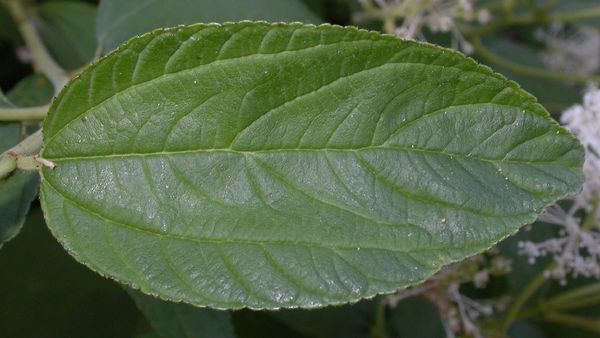
Ceanothus americanus
New Jersey tea. · Plant · Rhamnaceae
Ceanothus is most suitable for people who feel apathetic and lack energy. They may be depressed by a fear of being unable to work due to illness.
The classic symptom picture is one of lethargy, with swelling, tenderness, and pain in the spleen. There may be such deep pain on the left side of the body that it is impossible to lie on this side. Further symptoms include palpitations, chilliness, a right-sided headache, and shortness of breath. The symptoms may be associated with serious blood or lymph disorders such as leukemia or Hodgkin’s disease. The remedy is also used for those who experience great nervous excitement, with chilliness and a loss of appetite. Their nerves may be so badly shaken that they can barely hold a knife and fork.They may find it difficult to sleep, and may experience dreams of snakes and robbers.
Key symptoms
- Enormous enlargement of the spleen
- Deep-seated pain all up the left side; splenitis
- Unable to lie on left side
- Leucaemia with violent dyspnea
- Profuse menses with yellow, weakening leucorrhoea
- Constant urging to urinate; green, frothy, bile-containing urine
- Worse from motion and lying on left side
Worse (aggravation)
Better (amelioration)

New Jersey Tea (CEANOTHUS)
This remedy seems to possess a specific relation to the spleen. Ague cake of malaria. A left-sided remedy generally. Anæmic patients where liver and spleen are at fault. Chronic bronchitis with profuse secretion. Marked blood pressure, reducing powers. Active hemastatic, materially reducing the clotting of blood.
Abdomen
Enormous enlargement of the spleen. Splenitis; pain all up the left side. Deep-seated pain in left hypochondrium, hypertrophy of spleen. Leucæmia. Violent dyspnœa. Menses profuse, and yellow weakening leucorrhœa. Unable to lie on left side. Pain in liver and back.
Rectum
Diarrhœa; bearing down in abdomen and rectum.
Urine
Constant urging to urinate. Green; frothy; contains bile, sugar.
Relationship
Compare: Tinospora cordifolia (a Hindoo medicine for chronic cases of fever with enlarged spleen). Polymnia uvedalia-Bearsfoot--(acute splenitis with tenderness over left hypochondriac region; spleen enlarged, ague cake. Vascular atony, tissues sodden, flabby and non-elastic. Enlarged glands; influences all ductless glands). Ceanothus thrysiflorus-California Lilac--(Pharyngitis, tonsillitis, nasal catarrh, diphtheria. Tincture internally and as a gargle).
Compare: Berberis; Myrica; Cedron; Agaricus (spleen).
Modalities
Worse, motion, lying on left side.
Dose
First attenuation. Locally as hair tonic.

New Jersey Tea, or Red-root. N. O. Rhamnaceæ. Tincture of fresh leaves.
Clinical
Diarrhœa. Heart, disordered. Intermittent fever. Jaundice. Leucorrhœa. Leucocythœmia. Menses, suppressed. Side, pain in. Spleen, affections of.
Characteristics
Burnett, following Hale, is our chief authority for Ceanothus. It has been recently proved by I. C. Fahnestock (Hom. News, March, 1900), but its place had already been made clear by clinical use; and definite clinical symptoms have been observed. Ceanothus is a spleen remedy par excellence; deep-seated pain in left hypochondrium; pain and fulness in left side; cutting pain. Pain, inflammation, enlargement of spleen, either alone or with other affections, indicate its use; chilliness, principally down back; shivering; rigors; must sit over fire; < in cold weather. Low spirits with splenic affection. Headache, right side, with spleen pain. Diarrhœa and dysentery (compare Cascara and other Rhamneæ) have been frequently observed in patients taking Cean. for …

Phatak's chapter on Ceanothus americanus is available in the app.
Read Phatak in the appClassical texts are in the public domain. Educational reference only — not medical advice.
