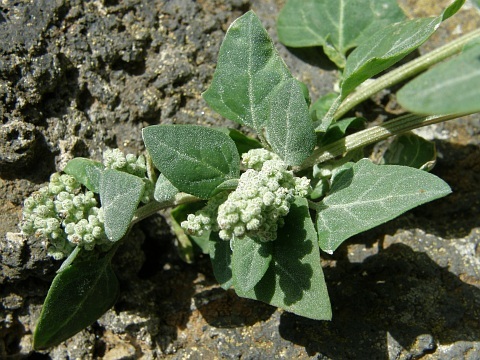
Chenopodium vulvaria
Plant · Amaranthaceae
Chenopodium vulvaria affects predominantly the left side, with characteristic cold saliva and cooling sensations in the abdomen. The remedy suits persons with constipation, nocturnal enuresis, and peculiar pricking restlessness.
Key symptoms
- Pain beneath right scapula, pressing wedge-like, worse when sitting
- Constipation with external piles
- Nocturnal enuresis
- Constant cold saliva with cooling sensation in abdomen
- Dull muffled obstructed feeling in ears
- Restlessness from pricking pains
- Stitches in spleen and pain in right knee on walking
- Feeling of dulness and fullness in many parts
Worse (aggravation)
- Sitting worsens pain in back
- Walking causes stitches in spleen and pain in right knee
Better (amelioration)
- Bending backwards relieves back pain

Stinkender Gänsefuss. N. O. Chenopodiaceæ. Tincture of fresh plant.
Clinical
Constipation. Enuresis. Scapula, pain under. Spleen pain.
Characteristics
Chenop. v. has an odour of decaying fish, and contains Trimethylamene. It constantly gives off ammonia. It has been proved, and seems to affect the left side more than the right, but the following recalls the characteristic of Chen. anth.: Pain in middle of back on right side of spinal column, increasing gradually to a pressing wedge-like pain, beneath right scapula, < when sitting. There is also a pain over spine of left scapula. Pressure on the left side of the head. Constipation with external piles. Nocturnal enuresis. Sensations of dulness and fulness appear in many parts. Cold saliva; cooling sensation in abdomen. There is restlessness caused by pricking pains. Sitting < pain in back; this is > by bending backwards. Walking < stitches in spleen and pain in right knee.
Classical texts are in the public domain. Educational reference only — not medical advice.
