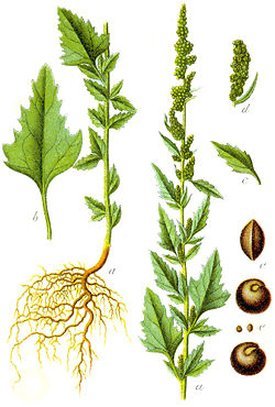
Chenopodium anthelminticum
Dysphania ambrosioides (syn. Chenopodium ambrosioides var. anthelminticum) · American wormseed, Jesuit’s tea, Mexican tea, Jerusalem oak. · Plant · Amaranthaceae
The classic use of Chenopodium is in treating the effects of a stroke, particularly if they involve right-sided paralysis.
Typical symptoms include repeating words or using inappropriate words, or repeating the same actions over and over again. The limbs may spasm and contract, and the hands may flex. These symptoms may be accompanied by very heavy breathing with a rattling sound, as if there is a ball rolling loose in the trachea. The remedy is also used to treat right-sided migraines with giddiness, loss of sight, roaring in the ears, and dull pain in the liver area that may extend to the right shoulder blade.
Key symptoms
- Intense pain between angle of right shoulder-blade near spine
- Torpor of auditory nerve; comparative deafness to voice
- Great sensitiveness to low-pitched sounds like passing vehicles
- Aural vertigo; Meniere's disease
- Symptoms of apoplexy with right hemiplegia and aphasia
- Buzzing in ears; enlargement of tonsils
- Copious yellow foaming urine with acrid sensation in urethra
Worse (aggravation)
Better (amelioration)

Jerusalem Oak
Characteristic pain in scapula very marked. Symptoms of apoplexy, right hemiplegia, and aphasia. Stertorous breathing (Opium). Sudden vertigo. Meniere's disease. Affections of auditory nerves (Nat salicyl). Oil of Chenopodium for hookworm and roundworm.
Ears
Torpor of auditory nerve. Hearing better for high-pitched sounds. Comparative deafness to sound of voice, but great sensitiveness to sound, as of passing vehicles and also a shrinking from low tones. Buzzing in ears. Enlargement of tonsils. Aural vertigo.
Back
Intense pain between angle of right shoulder-blade near spine, and through the chest.
Urine
Copious, yellow, foaming urine, with acrid sensation in urethra. Yellowish sediment (Chel).
Relationship
Compare: Opium; China; Chelid.
Dose
Third potency. Oil of Chenopodium for hookworm, 10 minim doses every 2 hours for 3 doses; also Carbon tetrachloride.

Worm-seed. N. O. Chenopodiaceæ. Tincture of fresh plant. Solution of oil of seed.
Clinical
Aphasia. Apoplexy. Asthma. Cerebral deafness. Convulsions. Dropsy. Epilepsy. Headache. Hemicrania. Hemiplegia. Leucorrhœa. Menses, suppressed. Paralysis. Scapula, pain in. Tinnitus. Tonsillitis.
Characteristics
The most characteristic pain of Chenopodium is a dull pain below the angle of right scapula, and nearer the spine than the analogous pain of Chelidonium. Chenopodii glauci Aphis (see Aphis) has a similar pain below angle of left scapula. Several cases of poisoning have been reported in which all the symptoms of apoplexy and consequent right hemiplegia with aphasia were reproduced. Stertorous breathing, with a very peculiar rattle as of a ball rolling loose in the trachea. Heavy breathing with flapping of cheeks. Other symptoms are: Vanishing of sight and roaring in ears with (right) hemicrania. Roaring in ears as of cannons going off, also ringing; deafness. Subacute and chronic enlargement of tonsils in …

Phatak's chapter on Chenopodium anthelminticum is available in the app.
Read Phatak in the appClassical texts are in the public domain. Educational reference only — not medical advice.
