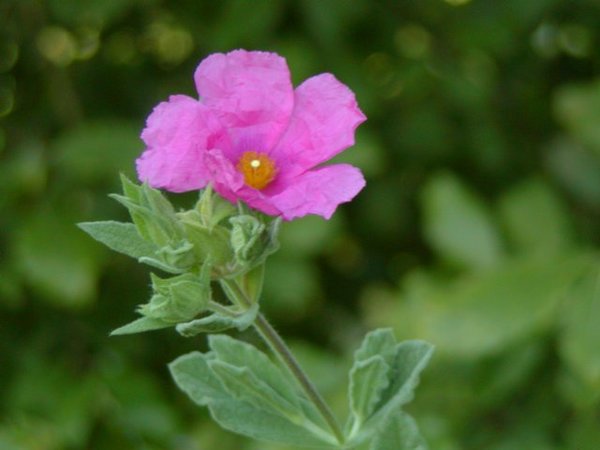
Cistus canadensis
Crocanthemum canadense · Frostweed, Canadian rock rose. · Plant · Cistaceae
Cistus is most appropriate for those who are frightened and stressed. Mental stress often aggravates their physical symptoms. Extremely sensitive to cold air, they tend to feel cold sensations all over the body. Their illnesses are generally affected by the seasons, becoming worse in winter.
Cistus is used mainly for frequent colds, tonsillitis, upper respiratory tract infections, chronic or recurrent sinusitis, and allergic rhinitis. Typical symptoms include thick, yellowy catarrh, a runny nose, and violent sneezing. The throat is dry and feels sore if even small amounts of cold air are inhaled.
Another key symptom associated with Cistus is glandular swelling and hardening, particularly in the neck, and possibly with concurrent respiratory symptoms. It may be due to infection or even cancer.
Key symptoms
- Merc cor; Caust; Staph; Kreos
- very dry
- cold air passing over parts causes pain
- cold air
- Cool feeling
Worse (aggravation)
Better (amelioration)

Rock Rose
A deep-acting anti-psoric remedy, with marked action in glandular affections, herpetic eruptions, chronic swellings, when patient is extremely sensitive to cold. Sensation of coldness in various parts. Scrofulous ophthalmia. Poisoned wounds, bites, phagedenic ulcers. Malignant disease of the glands of the neck. Cistus has affinity for naso-pharynx; aborts colds that center in posterior nose. Sniffling.
Face
Itching, burning, and crusts on right zygoma. Lupus, caries; open, bleeding cancer. Tip of nose painful.
Mouth
Scorbutic swollen gums. Mouth feels cold; putrid, impure breath. Pyorrhea (Merc cor; Caust; Staph; Kreos). Hurts to protrude the tongue.
Ears
Watery discharge; also fetid pus. Tetter on and around ears, extending to external meatus.
Throat
Spongy feeling; very dry and cold air passing over parts causes pain. Breath, tongue, and throat feel cold. Uvula and tonsils swollen. A small, dry spot in throat; must sip water frequently. Hawking of mucus. Swelling and suppuration of glands of throat. Head drawn to one side by swellings in neck. Sore throat from inhaling the least cold air. Heat and itching in throat.
Stomach
Cool feeling in stomach before and after eating. Cool feeling in whole abdomen. Desire for cheese.
Stool
Diarrhœa from coffee and fruit, thin, yellow, urgent; worse in morning.
Chest
Coldness in chest. The neck is studded with tumors. Induration of mammæ. Hæmorrhage from lungs.
Extremities
Sprained pain in wrist. Tips of fingers sensitive to cold. Tetter on hands. Cold feet. Syphilitic ulcers on lower limbs, with hard swelling around. White swelling.
Sleep
Cannot sleep from coldness in throat.
Female
Induration and inflammation of mammæ. Sensitive to cold air. Bad smelling leucorrhœa.
Respiratory
Asthmatic after lying down (trachea feels narrow), preceded by formication.
Skin
Itching all over. Small, painful pimples; lupus. Glands inflamed and indurated. Mercurio-syphilitic ulcers. Skin of hands hard, thick, dry, fissured; deep cracks. Itching of swollen hands and arms; general itching which presents sleep. Hemicrania.
Modalities
Worse, slightest exposure to cold air; mental exertion, excitement. Better after eating.
Relationship
Antidotes: Rhus; Sepia.
Compare: Conium; Carbo; Calc; Arg n.
Dose
First to thirtieth attenuation. Locally as a wash to arrest fetid discharges.
This remedy is an antipsoric, a deep-acting remedy. It runs very close to Calcarea, but is milder in its action. It has the same exhaustion from exertion, dyspnoea, sweating and coldness that we find in Calcarea.
What will forcibly call your attention to a remedy will be the curing of a bad and typical case. I remember the first time my attention was decidedly called to Cistus.
I had put it on my list to study from time to time and had come to the conclusion that it was only a side issue, until a young lady of nineteen years of age fell under my observation.
Glands
The glands of the neck were large and hard, the parotids especially; she had foetid otorrhoea; her eyes were inflamed and suppurating; there were fissures at the corners of the eyes; her lips were cracked and bleeding, and she had salt rheum at the ends of the fingers.

Helianthemum canadense. Rock-rose. Ice-plant. Frost-weed. N. O. Cistaceæ. Tincture of whole plant.
Clinical
Bone affections. Cancer. Diarrhœa. Erysipelas. Follicular pharyngitis. Glandular swellings. Hip-joint disease. Hospital gangrene. Lupus. Panaritium. Parotitis. Scorbutus. Scrofula. Sore-throat. Ulcers. Zona.
Characteristics
Cistus is a very ancient remedy for scrofulous affections, and also in scorbutic states and gangrenous ulcerations. The provings and homœopathic uses confirm its suitability in these respects and bring out clearer indications. It is most suited to scrofulous subjects who are very sensitive to cold air. "Sensitive to cold air" runs through the pathogenesis and also feelings of coldness, of which its peculiar property of favouring the formation of ice about its roots in early winter is strangely suggestive. Cold feelings: in larynx; in abdomen. "Inhaling the slightest cold air causes sore-throat, which he has not when inhaling in a warm room." Inhaled air feels cool. Cold breath. …

Phatak's chapter on Cistus canadensis is available in the app.
Read Phatak in the appClassical texts are in the public domain. Educational reference only — not medical advice.
