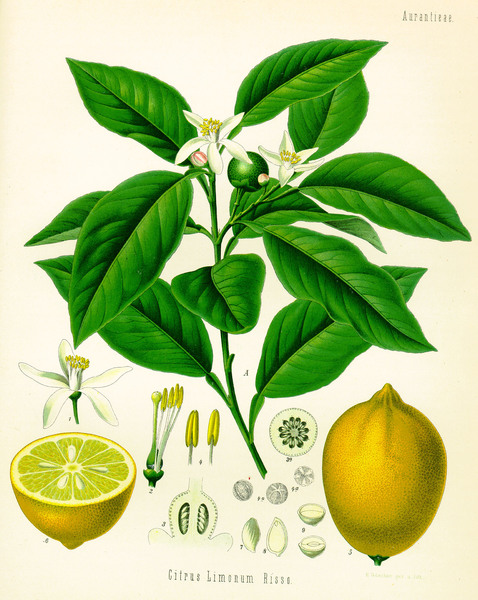
Citrus limonum
Citrus limon · Plant · Rutaceae
Citrus limonum suits patients with disorders of the circulation and blood, including tendency to haemorrhage, dropsies, and weakness. There is a pronounced affinity for the spleen and the joints, with bruised feelings and herpetic skin conditions.
Key symptoms
- Daily headache
- Faintness and weak pulse
- Haemorrhages and dropsies
- Inflammation and painful enlargement of the spleen with dyspnoea
- Stiffness in the joints, particularly in the fingers
- Bruised feeling, particularly in the feet
- Herpetic eruptions
- Antidote to Stramonium and animal poisons

Lemon. N. O. Rutaceæ. Expressed juice.
Clinical
Cancer. Constipation. Convulsive fits (Stramonium and other poisonings). Diarrhœa. Dropsy. Dysentery. Dyspnœa. Hæmorrhage. Rheumatism. Scurvy. Splenitis. Sunstroke.
Characteristics
In the observations with this plant the expressed juice of the fruit has been used containing citric acid. Lemon-juice and citric acid are traditional remedies for and preventives of sea-scurvy. That their action is homœopathic has been proved by the occurrence of scurvy from the excessive use of the acid when taken for other purposes. Used as a local application (in one part of citric acid to eight of water) it has relieved the pains of cancer. It has a powerful effect on the circulation and on the blood itself, producing faintness, weak pulse, hæmorrhages, and dropsies. Inflammation and painful enlargement of the spleen; dyspnœa. Daily headache. Stiffness in the joints, particularly in the fingers; bruised feeling, particularly in the feet. Herpetic eruptions.
Classical texts are in the public domain. Educational reference only — not medical advice.
