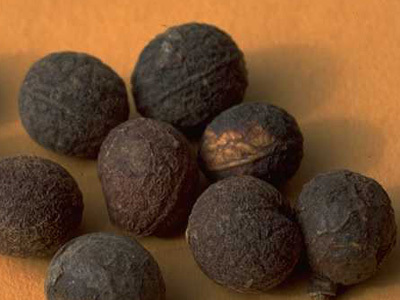
Cocculus indicus
Anamirta cocculus · Indian cockle · Plant · Menispermaceae
Cocculus is most effective for those whose concern for others makes them feel at the end of their tether. They may become severely exhausted, possibly leading to fainting, insomnia, and stupor. This state is common in those who have spent long periods of time nursing a sick relative.
This remedy has a strong affinity with central nervous system disorders, especially vertigo, dizziness, nausea, sea- and travel- sickness, vomiting, and hypersensitivity to touch. Nervous oversensitivity may lead initially to agitation and dizziness, and possibly develop into more serious conditions such as muscle weakness, spasms in the legs, and gradual paralysis.
Key symptoms
- Painful contracture
- effects of night-watching
- for light-haired females
- hollowness
- Profound sadness
- in occiput
- worse, opening mouth
Worse (aggravation)
Better (amelioration)

Indian Cockle (COCCULUS)
Within the sphere of action of Cocculus are many spasmodic and paretic affections, notably those affecting one-half of the body. Affects the cerebrum, will not cure convulsive seizures proceeding from the spinal cord (A. E. Hinsdale) Painful contracture of limbs and trunk; tetanus. Many of the evil effects of night-watching are relieved by it. It shows a special, attraction for light-haired females, especially during pregnancy, causing much nausea and backache. Unmarried and childless women, sensitive and romantic girls, etc. All its symptoms are worse riding in a carriage or on shipboard; hence its use in seasickness. Sensation of hollowness, or emptiness, as if parts had gone to sleep. Feels too weak to talk loud.
Mind
Capricious. Heavy and stupid. Time passes too quickly; absorbed in reveries. Inclination to sing irresistible. Slow of comprehension. Mind benumbed. Profound sadness. Cannot bear contradiction. Speaks hastily. Very anxious about the health of others.
Head
Vertigo, nausea, especially when riding or sitting up. Sense of emptiness in head. Headache in occiput and nape; worse, lying on back of head. Sick headache from carriage riding, cannot lie on back part of head. Pupils contracted. Opening and shutting sensation, especially in occiput. Trembling of head. Pain in eyes as if torn out of head.
Face
Paralysis of facial nerve. Cramp-like pain in masseter muscle; worse, opening mouth. Prosopalgia in afternoon, with wide radiations of pain.
Stomach
Nausea from riding in cars, boat, etc, or looking at boat in motion; worse on becoming cold or taking cold. Nausea, with faintness and vomiting. Aversion to food, drink, tobacco. Metallic taste. Paralysis of muscles preventing deglutition. Dryness of œsophagus. Seasickness (Resorcin. 1x). Cramp, in stomach during and after meal. Hiccough and spasmodic yawning. Loss of appetite. Desire for cold drinks, especially beer. Sensation in stomach as if one had been a long time without food until hunger was gone. Smell of food disgusts (Colch).
Abdomen
Distended, with wind, and feeling as if full of sharp stones when moving; better, lying on one side or the other. Pain in abdominal ring, as if something were forced through. Abdominal muscles weak; it seems as if a hernia would take place.
Female
Dysmenorrhœa, with profuse dark menses. Too early menses, clotted, with spasmodic colic. Painful pressing in uterine region, followed by hæmorrhoids. Purulent, gushing leucorrhœa between menses; very weakening, can scarcely speak. So weak during menstruation, scarcely able to stand.
Respiratory
Sensation of emptiness and cramp in chest. Dyspnœa as from constriction of trachea, as if irritated by smoke. Choking constriction in upper part of œsophagus, oppressing breathing and inducing cough.
Back
Cracking of cervical vertebræ when moving head. Paralytic pain in small of the back. Pain in shoulder and arms as if bruised. Pressure in scapula and nape. Stiffness on moving shoulders.
Extremities
Lameness; worse by bending. Trembling and pain in limbs. Arms go to sleep. One-sided paralysis; worse after sleep. Hands are alternately hot and cold; numbness and cold sweat now of one, now of the other hand. Numb and unsteady. Knees crack on motion. Lower limbs very weak. Inflammatory swelling of knee. Intensely painful, paralytic drawing. Limbs straightened out, painful when flexed.
Sleep
Spasmodic yawning. Coma vigil. Constant drowsiness. After loss of sleep, night-watching, nursing.
Fever
Chill, with flatulent colic, nausea, vertigo, coldness of lower extremities, and heat of head. Sweat general. Nervous form of low fever. Chilliness, with perspiration, and heat of skin.
Modalities
Worse, eating, after loss of sleep, open air, smoking, riding, swimming, touch, noise, jar; afternoon. Menstrual period. After emotional disturbance.
Relationship
Antidotes:; Coffee; Nux.
Compare: Picrotoxin-alkaloid of Cocculus--(epilepsy, attacks in the morning on leaving horizontal position, hernia, locomotor ataxia, night-sweats); Symphoricarpus (morning sickness); Petrol; Puls; Ignat.
Dose
Third to thirtieth potency.

We will study the general system and The mind as usual. Cocculus slows down all the activities of the body and mind, producing a sort of paralytic weakness. Behind time in all its actions.
Slowly
All the nervous impressions are slow in reaching the centres. If you pinch this patient on the great toe he wants a minute and then says "oh," instead of doing it at once. In response to questions he answers slowly, after apparent meditation, but it is an effort to meditate.
And so with all nervous manifestations, thought, muscular activity, etc. He cannot endure any muscular exertion, because he is weak; he is tired. First comes this slowness, then a sort of visible paralytic condition, and then complete paralysis. This may be local or general. There are certain causes which produce these effects. A wife nursing her husband, a daughter nursing her father, becomes worn out by the anxiety, worry and loss of sleep.

Cocculus Indicus. N. O. Menispermaceæ. A tincture is prepared from the powdered seeds, which contain a crystallisable principle Picrotoxine (which see), a powerful poison.
Clinical
Anger, effects of. Bones, affections of. Cerebro-spinal meningitis. Chorea. Colic. Convulsions. Debility. Faintness. Fear, effects of. Hæmorrhoids. Headache. Hernia. Intermittent fever. Knee, weakness of; cracking in. Memory, weak. Mental excitement, effects of. Menstrual headache. Menstruation, painful. Overstrain, bodily or mental. Palpitation. Paralysis. Parotitis. Phthiriasis. Rheumatism. Riding in carriage, effects of. Sea-sickness. Sleep, affections from loss of. Somnolence. Spasms. Spinal irritation. Tympany. Vertigo. Vomiting.

Cocculus Indicus (Menispermaccae)
For women and children with light hair and eyes, who suffer severely during menstruation and pregnancy; unmarried and childless women. Adapted to book-worms; sensitive, romantic girls with irregular menstruation; rakes, onanists and persons debilitated by sexual excesses. Nausea or vomiting from riding in carriage, boat or railroad car (Arn., Nux m.), or even looking at at a boat in motion; sea- sickness; car-sickness. Headache: in nape and occiput; extending to the spine; as if tightly bound by a cord; with nausea, as if at sea; at each menstrual period; < lying on back of head. Sick-headache from carriage, boat or train riding. Diseases peculiar to drunkards. Loss of appetite, with metallic taste (Mer.). Time passes too quickly (too slowly, Arg. n., Can. I.). Great lassitude of the whole body; it requires exertion to stand firmly; feels too weak to talk loudly. Bad effects: from loss of sleep, mental excitement and nigh watching; feel weak if they lose but one hour's …

Head
The symptoms of the head are all aggravated by talking, laughing, crying, walking, smoking, riding, or drinking coffee.
Head
Violent headache; is unable to lie on back of the head; is forced to lie on the side; unable to bear the least light; noise excites nausea and vomiting.
Head
Paroxysms of vertigo as from intoxication, with nausea.
Stomach
Nausea while riding in a boat, cars, carriage, etc.; aversion to food, and loathing when merely looking at it.
Abdomen
Flatulent colic, with sensation as if sharp stones rubbed together at every movement.
Abdomen
Emptiness and sensation of hollowness in abdomen.
Female Sexual Organs
Discharge of bloody mucus from uterus during pregnancy.
-
Anxiety as if she had committed a great crime, startles easily.
-
Very sensitive mood, everything worries her.
-
Choking constriction in upper part of throat, which impedes breathing and provokes cough.
-
Excessive nausea and other affections caused by the motion of a carriage, swing or ship.
-
During the menses so weak that can scarcely stand or talk.
-
Intolerance of open air whether cold or warm.
-
Hysteria and other nervous troubles arising from over anxiety, night watching and consequent loss of sleep.
-
Sensation of hollowness in one or more cavities of the body, especially the abdomen.

Phatak's chapter on Cocculus indicus is available in the app.
Read Phatak in the appClassical texts are in the public domain. Educational reference only — not medical advice.
