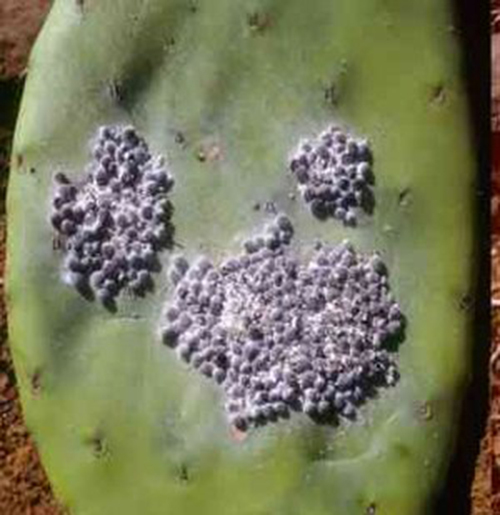
Coccus cacti
Dactylopius coccus · Animal
Coccus cacti is suited to individuals with spasmodic respiratory conditions, particularly whooping cough, and catarrhal affections of the bladder with urinary gravel. There is a characteristic tendency to thick, viscid, tenacious mucus in the respiratory tract alongside renal and bladder complaints.
Key symptoms
- Spasmodic and whooping cough ending with vomiting of tough white mucus that strangles
- Accumulation of thick viscid mucus expectorated with great difficulty
- Tickling in larynx; sensation of a crumb behind larynx requiring constant swallowing
- Brushing teeth causes cough
- Suboccipital soreness worse after sleep and exertion
- Urging to urinate; brick-red sediment; urinary calculi and haematuria
- Lancinating pains from kidney to bladder
- Menses too early, profuse, black, and thick
- Early morning or afternoon sadness
- Walking against wind takes breath away
Worse (aggravation)
- After sleep and exertion (suboccipital soreness)
- Lying on back (headache)
- Walking against wind (breathing)
- First waking (suffocative cough with tough mucus)
Better (amelioration)
- Head held high relieves headache

Cochineal
The clinical application of the symptoms of this remedy, place it among the medicines for spasmodic and whooping coughs, and catarrhal conditions of the bladder; spasmodic pains in kidneys, with visceral tenesmus. Anuria, anasarca, ascites.
Mind
Early morning or afternoon sadness.
Head
Suboccipital soreness; worse after sleep and exertion. Headache, worse from lying on back, better with the head high. Dull pain over right eye in morning. Sensation of a foreign body between upper lid and eyeball. Distress from cinders lodged in eye.
Respiratory
Constant hawking from enlarged uvula; coryza, with inflamed fauces; accumulation of thick viscid mucus, which is expectorated with great difficulty. Tickling in larynx. Sensation of a crumb behind larynx, must swallow continually; brushing teeth causes cough. Fauces very sensitive. Suffocative cough; worse, first waking, with tough, white mucus, which strangles. Spasmodic morning cough. Whooping cough attacks end with vomiting of this tough mucus. Chronic bronchitis complicated with gravel; large quantities of albuminous, tenacious mucus, are expectorated. Walking against wind takes breath away.
Heart
Sensation as if everything were pressed toward the heart.
Urinary
Urging to urinate; brick-red sediment. Urinary calculi, hæmaturia, urates, and uric acid; lancinating pains from kidney to bladder. Deep-colored, thick urine. Dysuria.
Female
Menses too early, profuse, black and thick; dark clots, with dysuria. Intermittent menstruation; flow only in evening and at night. Large clots escape when passing water. Labia inflamed.
Modalities
Worse, left side, after sleep, touch, pressure of clothing, brushing teeth, slightest exertion. Better, walking.
Relationship
Compare: Canth; Cact; Sars.
Dose
Lower triturations.

There is a little remedy and will be a relief after the study of so many difficult ones. With fuller proving it will doubtless show itself a deep-acting constitutional remedy.
Although it has cured some deep-seated chronic troubles, it has been used chiefly in acute affections. This is only because of the scantiness of its provings and our lack of knowledge concerning it in a general way.
Very few mental symptoms have been brought out. Its use, so far as demonstrated, is mostly in catarrhal conditions of the air passages, and whooping cough, with copious, ropy, jelly-like mucus.
Great quantities of this mucus form in the nose, in the throat, in the air passages generally, and in the vagina. The routine practitioner, whenever be sees thick, ropy, gelatinous mucus, thinks only of Kali bi.

Cochineal. N. O. Hemiptera. An insect infesting cactus plants. The dried bodies of the female insects are used for making a tincture or trituration. They also constitute a well-known dye. (Coccus Cacti has sometimes been confounded with Coccinella septempunctata, both insects being known as "Cochenille" in French.)
Clinical
Asthma. Backache. Catarrh. Gonorrhœa. Gravel. Hæmorrhages. Heart, affections of. Impotence. Irritation. Labia, inflammation of. Menorrhagia. Nephritis. Phthisis. Spasms. Tinnitus. Uric acid diathesis. Whooping-cough.
Characteristics
Coccus cacti acts more especially on mucous membranes. It compares with Cantharis in its action on the renal organs, and with Cactus in causing hæmorrhages, in disturbing the heart and in causing lancinating, stitching, and pricking sensations. Itching, sticking and biting in various parts of the skin; red spots and itching pimples. Sensations of irritation predominate, especially in throat and respiratory organs, eyes and urino-genital organs. In the …

Respiratory Organs
Cough, with expectoration of large quantities of viscid albuminous mucus.

Phatak's chapter on Coccus cacti is available in the app.
Read Phatak in the appClassical texts are in the public domain. Educational reference only — not medical advice.
