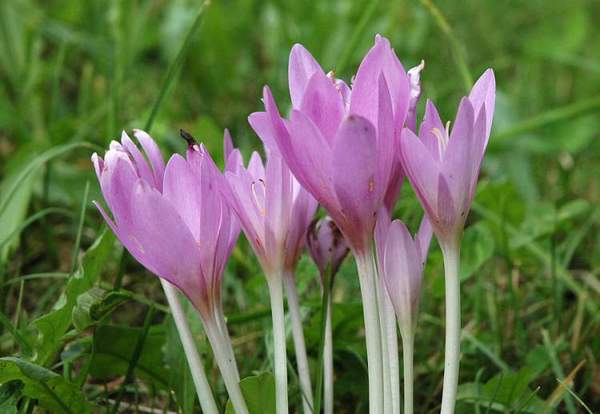
Colchicum autumnale
Meadow saffron, fall crocus, naked ladies. · Plant · Colchicaceae
Those who respond well to Colchicum are typically weak and restless. They may be depressed or irritable, and have poor concentration and memory, so that they appear dazed even though they may answer questions correctly. There is a marked absence of any apprehension and no discernible fear of death.
The key symptoms linked with Colchicum focus on the muscle tissues and joint membranes, especially the membranes in the small joints. The joints may be painful, hot, and swollen, and the muscles extremely relaxed and even limp. Arthritic joint pain or gout may be so severe that it causes screaming if the joints are touched or jolted. There may be a twitching, tingling sensation all over the body.
Colchicum is also considered a useful remedy for ulcerative colitis and for nausea with colicky pains and painful distension of the abdomen. Illness is typically accompanied by a feeling of icy coldness in the stomach.
In addition to any other symptoms, the body may feel cold inside, with extreme oversensitivity to external stimuli such as bright lights, strong odors, physical contact, and even other people’s behavior.
Key symptoms
- There is always great prostration
- coldness
- smell of food causes nausea even to fainting
- great coldness in stomach. Craving for various things
- icy coldness in stomach
Worse (aggravation)
Better (amelioration)

Meadow Saffron (COLCHICUM)
Affects markedly the muscular tissues, periosteum, and synovial membranes of joints. Has specific power of relieving the gouty paroxysms. It seems to be more beneficial in chronic affections of these parts. The parts are red, hot, swollen. Tearing pains; worse, in the evening and at night and from touch; stubbing the toes hurts exceedingly. There is always great prostration, internal coldness, and tendency to collapse. Effects of night watching and hard study. Shocks as from electricity through one half of body. Bad effects from suppressed sweat. Dreams of mice.
Head
Headache chiefly frontal and temporal, but also occipital and in nape of neck, worse afternoon and evening.
Eyes
Pupils unequal; left pupil contracted. Variations in visual acuity. Lachrymation worse in open air; violent tearing pain in eyes. Dim vision after reading. Spots before eyes.
Ears
Itching in ears; sharp, shooting pains below right tragus.
Face
Pain in facial muscles, moving about. Tingling and œdematous swelling; cheeks red, hot, sweaty. Very irritable with the pains (Cham). Pain behind angle of right lower jaw.
Stomach
Dry mouth, tongue burns, gums and teeth pain. Thirst; pain in stomach and flatulence. The smell of food causes nausea even to fainting, especially fish. Profuse salivary secretion. Vomiting of mucus, bile and food; worse, any motion; great coldness in stomach. Craving for various things, but is averse to then when smelling them, seized them with nausea. Gouty gastralgia. Burning or icy coldness in stomach and abdomen. Thirst for effervescent, alcoholic beverages. Pain in transverse colon.
Abdomen
Distention of abdomen, with gas, inability to stretch out legs. Borborygmi. Pain over liver. Cæcum and ascending colon much distended. Fullness and continuous rumbling. Ascites.
Stool
Painful, scanty, transparent, jelly-like mucus; pain, as if anus were torn open, with prolapse. Autumnal dysentery; stools contain while shreddy particles in large quantities. Ineffectual pressing; feels feces in rectum, but cannot expel them.
Female
Pruritus of genitals. Cold feeling in thigh after period. Sensation of swelling in vulva and clitoris.
Urine
Dark, scanty or suppressed; bloody, brown, black, inky; contains clots of putrid decomposed blood, albumin, sugar.
Heart
Anxiety in region of heart. Impulse not felt. Pericarditis, with severe pain, oppression and dyspnœa, pulse threadlike. Sound of heart become weaker, pulse of low tension.
Extremities
Sharp pain down left arm. Tearing in limbs during warm weather, stinging during cold. Pins and needles in hands and wrists, fingertips numb. Pain in front of thigh. Right plantar reflex abolished. Limbs, lame, weak, tingling. Pain worse in evening and warm weather. Joints stiff and feverish; shifting rheumatism; pains worse at night. Inflammation of great toe, gout in heel, cannot bear to have it touched or moved. Tingling in the finger nails. Knees strike together, can hardly walk. Œdematous swelling and coldness of legs and feet.
Back
Aching in lumbar and lumbo-sacral region. Dull pain across loins. Backache, better, rest and pressure.
Skin
Blotchy papular rash on face. Pink spots on back, chest and abdomen. Urticaria.
Modalities
Worse, sundown to sunrise; motion, loss of sleep, smell of food in evening, mental exertion. Better, stooping.
Relationship
Antidotes: Thuja; Camph; Coccul; Nux; Puls.
Compare: Colchicine (intestinal catarrh with shreddy membranes; convulsive jerkings of right hand; rheumatic fever, gout, endo and pericarditis, pleurisy, arthritis, deformans in early stages; intense pain of rheumatism 3x trit). Also, Carbo; Arnica; Lilium; Arsen; Verat.
Dose
Third to thirtieth attenuation.
It is rather singular that traditional medicine used Colchicum so much for gout. In all the old books it was recommended for this malady. The provings corroborate the fact that Colchicum fits into many conditions of gout.
Rheumatism
Acute rheumatism and uric acid diathesis; rheumatic complaints in general, with swelling and without swelling. But traditional medicine does not tell us what kind of gout to give it in or what kind of rheumatism.
It was really the medicine of experience. "if it is gout, try Colchicum."
The question of what was to be done with the patient when the remedy failed never came up.
It was
"Give the prescription and keep at it," and drugs were administered until the patient, steadily growing worse, passed from one doctor's hands, to another's. It is true that Colchicum fits into the gouty state. Spells of cold, wet weather will slack up the flow of urine, make it scanty, or decrease the quantity of solids in the urine.

Colchicum autumnale. Meadow Saffron. N. O. Melanthaceæ of the Liliaceæ. Tincture of the bulb dug in spring.
Clinical
Appendicitis. Asthma. Cataract. Cholera. Colic. Cough. Cramp. Debility. Diabetes. Diarrhœa. Dropsy. Dysentery. Eye, affections of. Feels, painful. Gout. Heart affections of. Ileus. Intermittent fever. Intestinal catarrh. Lumbago. Myalgia. Nephritis (rheumatic and gouty). Pericarditis. Proctalgia. Prostatitis. Rectum, prolapse of. Rheumatism. Stiff-neck. Tongue, sensibility lost. Typhlitis. Typhoid fever.
Characteristics
Colchicum is best known as a remedy in gout and rheumatism, and the provings show its specific relation thereto. It acts on muscles, bones, and joints. It causes extreme relaxation of the muscular system─the head falls forward on the chest; or falls back when the patient is raised from the pillow; arms fall helpless by the side. Stitching, jerking, drawing pains in muscles; periosteum, and joints. Extreme disinclination to move; < from motion. Mind befogged; but …

Meadow Saffron. (Liliaceae)
Adapted to the rheumatic, gouty diathesis; persons of robust vigorous constitution; diseases of old people. External impressions, light, noise, strong odors, contact, bad manners, make him almost beside himself (Nux); his sufferings seem intolerable. Ailments: from grief or misdeeds of others (Staph.). Pains are drawing, tearing, pressing; light or superficial during warm weather; affect the bones and deeper tissues, when air is cold; pains go from left to right (Lach.). Smell painfully acute; nausea and faintness from the odor of cooking food, especially fish, eggs or fat meat (Ars., Sep.); bad effects from night watching (Coc.). Aversion to food; loathing even the sight of still more the smell of it. The abdomen is immensely distended with gas, feeling as if it would burst. Burning, or icy coldness in stomach and abdomen. Autumnal dysentery, discharges from bowels contain white shreddy particles in large quantities; white mucus; "scrapings of intestines" (Canth., Carb. ac.). …
-
Articular rheumatism; shifting from one point to another; great sensitiveness to touch; worse from motion; teasing pains, always worse at night.
-
Metastasis of gout or rheumatism to internal organs, especially the heart, with severe cardiac pains; weaker heart action; thread-like. scarcely perceptible pulse; great oppression and dyspnoea.
-
Dysentery, especially in gouty or rheumatic subjects, with stools of gelatinous or membranous mucus, or containing white, shreddy particles.
-
Gastric disturbances, especially gastralgia, associated with gout or rheumatism or following suppressed gout, always nausea with disgust for food, the smell of food being especially repugnant.

Phatak's chapter on Colchicum autumnale is available in the app.
Read Phatak in the appClassical texts are in the public domain. Educational reference only — not medical advice.
