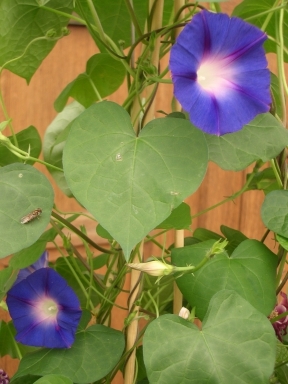
Convolvulus duartinus
Plant · Convolvulaceae
A remedy suited to patients with moral weakness, daytime drowsiness, and reverie-like states. Limb numbness and rheumatic pains are notable features. Symptoms are generally worse in the morning and better after a cold bath.
Key symptoms
- Reveries and moral weakness in daytime
- Vertigo with faintness
- Burning in frontal region ceasing after cold bath
- Inflammation of left eye with pain in left temple
- Numbness of arms, worse when hanging down
- Dreams of dead persons and quarrelling
- Drowsiness in daytime
- Violent colic with drawing pains in abdomen
Worse (aggravation)
- Worse in the morning
- Worse when arms hang down
Better (amelioration)
- Better after cold bath

Ipomœa bona-nox. Morning Glory. N. O. Convolvulaceæ. Tincture of Flowers.
Clinical
Eye, inflammation of. Headache. Rheumatism. Vertigo.
Characteristics
Convol. d. was proved under Mure, and some symptoms that are peculiar have been recorded: Reveries in daytime. Numbness in limbs. Dreams of dead persons. Symptoms are < in morning and > after cold bath.
1. Mind
Moral weakness.─Reveries in the daytime.
2. Head
Vertigo with faintness.─Burning in frontal region, ceasing after a cold bath.─Pain in frontal region with heat at root of nose.─Pain in l. temple (corresponding to inflamed l. eye).
3. Eyes
Inflammation of l. eye.
8. Mouth
Toothache.─Swelling of gums.─Tongue feels swollen.
Classical texts are in the public domain. Educational reference only — not medical advice.
