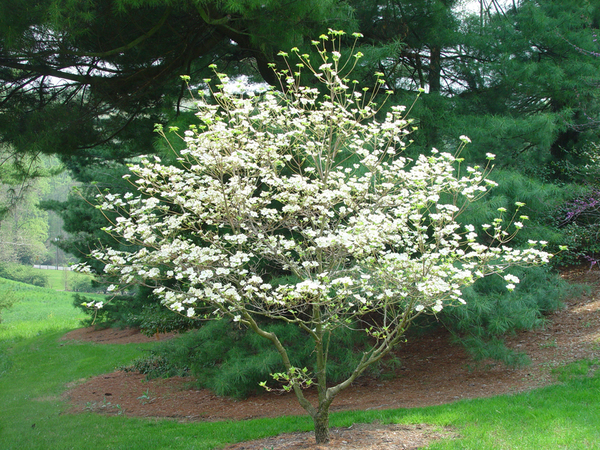
Cornus florida
Plant · Cornaceae
Cornus florida is indicated in chronic intermittent fevers, especially where quinine has been overused, with a characteristic prodrome of drowsiness and dull headache days before the paroxysm. Acid dyspepsia with heartburn is a concomitant. Severe neuralgic pains with a sensation as if the body would break in two are characteristic.
Key symptoms
- Obstinate intermittents where quinine has been abused
- Drowsiness and sluggish flow of ideas for days before chill
- Chill with cold clammy skin, followed by fever with thirst, then sweat
- Violent headache with stupor and vomiting during fever
- Neuralgic lightning pains up left side of trunk as if broken in two
- Acid pyrosis and painful, slow digestion with heartburn
- Hunger soon after eating; desire for sour things
- Stitches in chest worse on deep breathing
Worse (aggravation)
- Worse from deep breathing (chest pains)

Dogwood. N. O. Cornaceæ. Tincture of fresh bark.
Clinical
Dyspepsia. Intermittent fever. Pneumonia.
Characteristics
Hale commends Corn. f. in obstinate intermittents where quinine has been abused and where the following group of symptoms is present: For days before chill sleepiness; sluggish flow of ideas; dull, heavy headache. Paroxysms attended with nausea; vomiting and sometimes watery or bilious diarrhœa. In the chill, cold, clammy skin; in the fever, violent headache, with throbbing, stupor, confusion of intellect and vomiting. He also commends it in old cases of dyspepsia where the chief symptom is acid pyrosis. Corn. f., which has had a separate proving, has some very remarkable neuralgic pains in arms, chest, and trunk, and a sensation as if broken in two. It has been used successfully in a case of pneumonia on the indication of the stitches in the chest.
Classical texts are in the public domain. Educational reference only — not medical advice.
