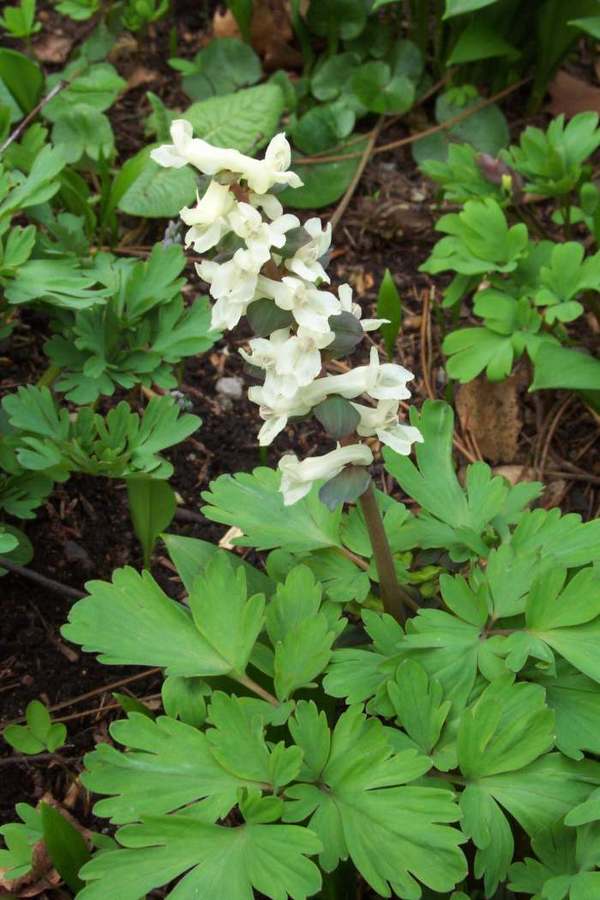
Corydalis formosa
Dicentra formosa · Plant · Papaveraceae
Corydalis has a specific clinical relationship to syphilitic manifestations including Hunterian chancre, syphilitic nodes, falling of hair, and syphilitic or scrofulous ulcerations of scalp and fauces. It is also indicated in gastric catarrh with profuse mucous secretion, coated tongue, fetid breath, and loss of appetite, analogous to Hydrastis.

Turkey-pea (CORYDALIS - DICENTRA CANADENSIS)
Syphilitic affections. Ulcers of mouth and fauces. Cancer cachexia pronounced. Gummata and night-pains. Chronic diseases, with atony. Tongue clean, broad, and full. Tissues flabby, doughy, cold. Gastric catarrh (Hydrast).
Skin
Dry, scaly scabs on face of old people. Lymphatic glands swollen.
Relationship
Nit ac; Kali iod; Fluor ac.
Dose
Tincture, twenty drops three times a day.

Corydalis formosa. Wild Turkey-pea. Stagger-weed. N. O. Fumariaceæ. Tincture of bulbous root gathered when plant is in flower. Trituration of dried root. Triturations of Corydalin.
Clinical
Gastric catarrh. Scrofula. Syphilis. Ulcerations.
Characteristics
This is an unproved remedy, but clinical experience has revealed a specific relation to the manifestations of syphilis: Hunterian chancre; syphilitic nodes; falling of the hair; syphilitic and scrofulous ulcerations of scalp; syphilitic and non-syphilitic ulcerations of fauces─all these have been reported cured by it. Hale also commends it in: Scrofulous dyscrasia; obstinate skin diseases; cachexia of intermittents with enlargement of liver and spleen. In massive doses it has cured, according to eclectic authorities: "A derangement of the stomach, attended with profuse morbid secretion of mucus, there being always a coated tongue, with fetor of the breath, and loss of appetite and digestion." It is therefore indicated, as Hale remarks, in gastric catarrh, being …
Classical texts are in the public domain. Educational reference only — not medical advice.
