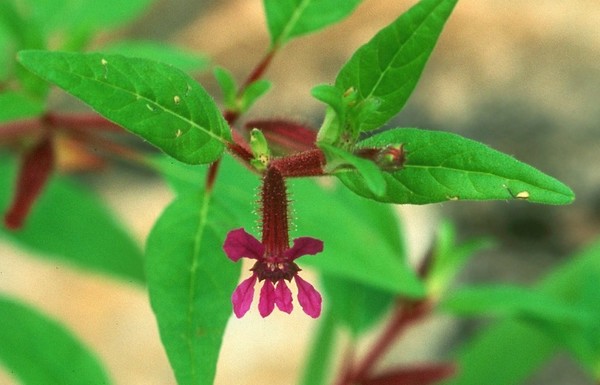
Cuphea viscosissima
Plant · Lythraceae
Cuphea is indicated for childhood cholera infantum arising from hyper-acidity of the stomach, with vomiting of curdled milk and frequent green, watery, acid stools, or for dysenteric stools with great tenesmus, high fever, and restlessness. The child is fretful, feverish, and cannot retain food. It is not useful in ordinary diarrhea from cold.

Flux-weed (CUPHEA)
Vomiting of undigested food. Cholera infantum, much acidity; frequent green, watery, acid stools. Tenesmus and great pain. High fever; restlessness, and sleeplessness. Obstinate constipation.
Relationship
Compare: Aethusa; Coto-Para-coto Bark--(intestinal catarrh, chronic, copious, exhausting diarrhœa and dysentery; colliquitine sweats of phthisis and chronic diarrhœa).
Typha latifolia-Cat-tail flag (diarrhœa, dysentery, summer complaint of children. Tincture and first attenuation).
Dose
Tincture.

Lythrum. petiolatum. Waxweed. Fluxweed. Red Pennyroyal. N. O. Lythraceæ (Loosestrifes). Decoction or tincture of fresh plants collected in July or August.
Clinical
Cholera infantum. Dysentery.
Characteristics
This is a popular remedy in some parts of U.S. for summer diarrhœa and dysentery, as one of its names, "Fluxweed," would imply. The entire plant has a clammy, sticky feel, and contains tannin. It was first introduced to homœopathic practice by Dr. A. A. Roth, of Frederick, Maryland, who was induced to try it in his practice by a lady patient (H. R., iii. 242), and his experience has been confirmed by S. G. A. Brown (Med. Cent.). Dr. Roth gave from 5 to 10-drop doses, according to age. The two chief forms on which it is successful are: (1) Cases arising from acidity of milk or food; vomiting of undigested food or curdled milk, with frequent green, watery, acid stools, varying in number from five to thirty a day; child fretful and feverish; can retain nothing on stomach; food seems to pass right through …
Classical texts are in the public domain. Educational reference only — not medical advice.
