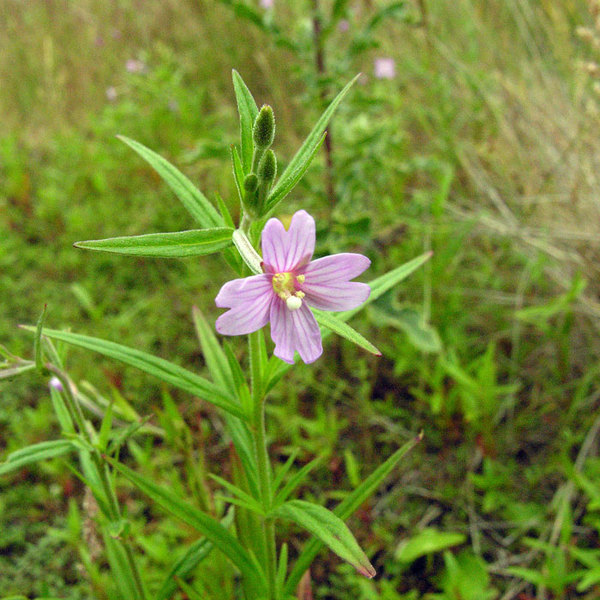
Epilobium palustre
Plant · Onagraceae
Epilobium Palustre suits acute throat conditions with dysphagia and laryngeal soreness combined with fever and headache. The excessive salivation that almost chokes the patient is characteristic. The related species has produced epileptiform convulsions in poisoning cases.
Key symptoms
- Throat beginning to fill up in the morning
- Unable to swallow water by noon; dysphagia
- Larynx sore to pressure with hard lumps externally on each side
- Excessive ptyalism with saliva threatening to choke the patient
- Headache with fever
- Hard chill lasting an hour followed by high fever with aching all over
- Red face and red urine

Epilobium lineare. Willow Herb. N. O. Onagraceæ.
Clinical
Dysphagia. Fever. Larynx, affections of. Ptyalism. Throat, sore.
Characteristics
Epil. p. was proved by Dr. J. S. Wright, a tincture of the root being used. Symptoms of filling up of throat, inability to swallow, fever and headache were produced. A boy poisoned with the flowers of Epil. hirsutum had strong epileptiform convulsions in rapid succession.
2. Head
Headache with fever.
6. Face
Face red.
8. Mouth
Ptyalism.─Dull and sleepy but could not sleep, the saliva would choke him.
9. Throat
In morning throat began filling up; at noon could not swallow water; larynx sore to pressure with hard lumps on each side externally.
Classical texts are in the public domain. Educational reference only — not medical advice.
