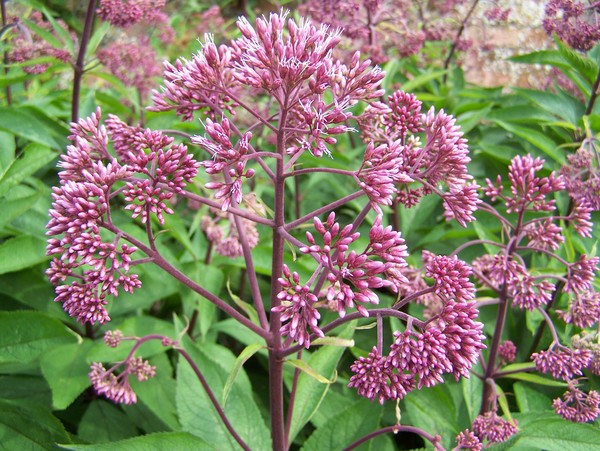
Eupatorium purpureum
Eutrochium purpureum · Plant · Asteraceae
Eupatorium purpureum is an excellent remedy for renal dropsy, albuminuria, and irritable bladder conditions. It suits patients with impotency and sterility combined with prominent kidney and urinary tract symptoms.
Key symptoms
- Albuminuria, diabetes insipidus, and strangury
- Irritable bladder with deep dull pain in kidneys
- Burning in bladder and urethra on urinating
- Haematuria with constant urging and bladder feeling dull
- Enlarged prostate with vesical irritability in women
- Chills and pains running upwards; chill commencing in back
- Left-sided headache with vertigo, worse in afternoon and cold air
- Violent shaking chill with bone pains
- Homesickness; impotency and sterility
Worse (aggravation)
- Headache worse in the afternoon and evening
- Worse in cold air

Queen of the Meadow
Albuminuria, diabetes, strangury, irritable bladder, enlarged prostate are a special field for this remedy. Excellent in renal dropsy. Chills and pains run upwards. Impotency and sterility. Homesickness.
Head
Left-sided headache with vertigo. Pain from left shoulder to occiput. Sick headache beginning in morning, worse afternoon and evening, worse in cold air.
Urinary
Deep, dull pain in kidneys. Burning in bladder and urethra on urinating. Insufficient flow; milky. Strangury. Hæmaturia. Constant desire; bladder feels dull. Dysuria. Vesical irritability in women. Diabetes insipidus.
Back
Weight and heaviness in loins and back.
Female
Pain around left ovary. Threatened abortion. External genitals feel as though wet.
Fever
No thirst during chill, but much frontal ache. Chill commences in back. Violent shaking, with comparatively little coldness. Bone-pains.
Relationship
Compare: Senecio; Cannab sat; Helon; Phos ac; Triticum; Epigea.
Dose
First potency.

Joe Pye Weed. Trumpet Weed. Gravel root. Queen of the Meadow. N. O. Compositæ. Tincture of the root.
Clinical
Albuminuria. Calculi. Cystitis. Diabetes. Dropsy. Enuresis. Gravel. Headache. Home-sickness. Hysteria. Impotence. Indigestion. Intermittent fever. Renal colic. Rheumatism. Sciatica. Strangury. Throat, sore. Urine, retention of. Vomiting.
Characteristics
The fever symptoms of E. purpureum resemble those of E. perfoliatum, but E. purpur. has many more symptoms in the urinary and sexual regions. The general soreness is less marked with purpureum. Both have chills beginning in the back, those of purpureum (as also the pains) run upwards, and with them there is much shaking and comparatively little coldness. Bone pains, nausea, and vomiting accompany fever. Sweat is slight. Restless, tossing, moaning, unable to lie down. The common name, "gravel root," indicates the traditional use of the drug, and in the hands of eclectics it has done good work in cases of irritable bladder, diabetes insipidus, …
Chill, Fever, and Sweat
Chill begins in small of back and spreads.

Phatak's chapter on Eupatorium purpureum is available in the app.
Read Phatak in the appClassical texts are in the public domain. Educational reference only — not medical advice.
