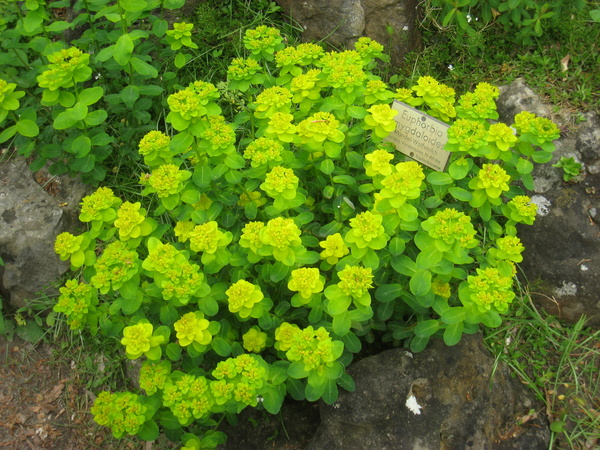
Euphorbia amygdaloides
Plant · Euphorbiaceae
Euphorbia amygdaloides is suited to patients with burning intestinal symptoms, peculiar olfactory illusions (smell of mice), and rheumatic complaints aggravated by heat. Symptoms tend to travel from right to left.
Key symptoms
- Illusion of smell — strong odour of mice in the nose
- Seething sensation backwards and forwards in head extending down back
- Burning in back of throat relieved by cold water
- Rheumatic pains coming on when heated
- Diarrhoea and dysentery with spasm and prolapse of anus
- Restlessness all night turning about half awake and half asleep
- Burning pain in left antrum extending to orbit and head
- Tired weak feeling during and after walking
- Symptoms go from right to left
Worse (aggravation)
- Worse in the evening
- Worse from walking
- Rheumatic pains worse when heated
Better (amelioration)
- Cold water relieves burning in back of throat
- Better after eating
- Seething in head goes off during sleep

Wood Spurge. N. O. Euphorbiaceæ. Tincture of plant.
Clinical
Antrum, pain in. Anus, spasm of; prolapse of. Debility. Diarrhœa. Dysentery. Hæmorrhoids. Skin, eruptions of. Smell, illusion of. Spleen, affections of. Throat, soreness of.
Characteristics
Euphorb. amyg. has the same general characteristics as Euphorbium, producing irritation and burning sensations of the intestinal tract, with vomiting and diarrhœa and skin affections. Peculiar symptoms are: An illusion of smell, "odour of mice", and seething sensation in the head and thigh. Rheumatic pains come on when heated. Cold water relieves burning in back of throat (burning < from cold water Caps.). Symptoms go from right to left. Malaise; tired weak feeling during and after walking. Restlessness all night, turning about half awake and half asleep. Many symptoms are < evening; < walking; > after eating. For comparisons see under Euphorbium.
Classical texts are in the public domain. Educational reference only — not medical advice.
