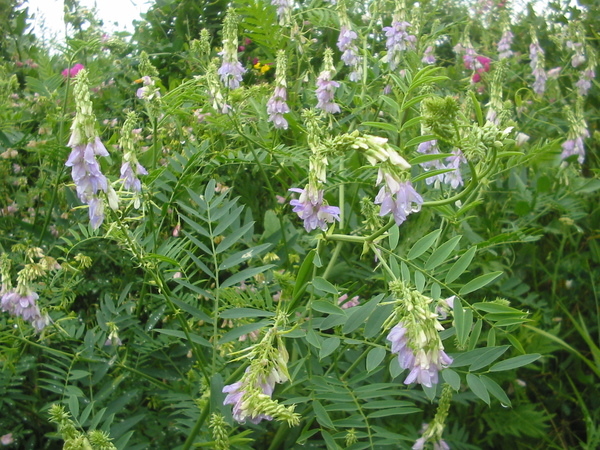
Galega
Galega officinalis · Plant · Fabaceae
Galega is indicated in nursing women with insufficient lactation and in debilitated individuals with chronic backache and impaired nutrition. The remedy acts as an excellent reconstructive in anemia and nutritional deficiency states. It is best suited to patients with functional kidney-region backache without structural pathology.
Key symptoms
- Deficient or absent breast milk requiring galactogogue action
- Backache located in the kidneys without signs of kidney disease
- General debility with impaired nutrition and anemia
- Increased appetite and improved nutrition under treatment

Galega officinalis. Goat's Rue. N. O. Leguminosæ. Aqueous extract, Infusion, or Tincture of whole fresh plant.
Clinical
Backache. Debility. Kidney ache. Lactation.
Characteristics
Galega, as its name implies, has an ancient reputation as a milk-gland stimulant. The Galegæ are nearly related to Glycyrrhiza, the well-known source of liquorice. Carron de la Carrière (H. W., xxvii. 79) tested its action on the milk glands of nursing women and found it rapidly increased the quantity and quality of the milk and increased the woman's appetite. Dorretta (H. W., xxix. 177) gave Galega (he calls it "Galega vera," but doubtless it is Goat's-rue), in liquid extract of the leaves, for a common form of backache, which he located in the kidneys, though it is unaccompanied by any sign of kidney disease. The medicine he says is also a most excellent reconstructive in cases of anæmia and impaired nutrition.
Classical texts are in the public domain. Educational reference only — not medical advice.
