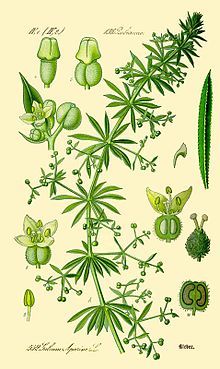
Galium aparine
Plant · Rubiaceae
Galium Aparine is indicated for individuals with chronic urinary and skin conditions, particularly those with a tendency to cancerous or scrofulous diathesis. The patient may have nodulated tumors, especially of the tongue, or chronic ulcers that fail to granulate. It acts as a diuretic and has clinical evidence for dissolving gravel and calculi.
Key symptoms
- Urinary disorders with dysuria and cystitis
- Gravel, calculi, and dropsical conditions
- Cancerous ulcers and nodulated tumors of the tongue
- Power to suspend or modify cancerous action
- Inveterate skin affections and scurvy
- Favors healthy granulation on ulcerated surfaces

Goose-Grass
Galium acts on the urinary organs, is a diuretic and of use in dropsies, gravel and calculi. Dysuria and cystitis. Has power of suspending or modifying cancerous action. Has clinical confirmation of its use in cancerous ulcers and nodulated tumors of the tongue. Inveterate skin affections and scurvy. Favors healthy granulations on ulcerated surfaces.
Dose
Fluid extract; half-dram doses, in cup of water or milk, three times a day.

Galium aparine. Cleavers. Goose-grass. N. O. Galiaceæ (considered by some a sub-order of Rubiaceæ). Tincture and infusion of fresh plant. Extract. Poultices.
Clinical
Bladder, irritability of. Calculus. Cancer. Gravel. Psoriasis. Ulcers.
Characteristics
Galium has had no proving, but it is a popular remedy for cancer given internally and used externally; and also for scrofulous swellings and ulcers. It is further used as a diuretic and as a solvent for gravel and stone. It has cured a case of nodulated tumour of the tongue diagnosed to be cancer (see Hale); and a case of psoriasis of the hand (left) has been reported cured. Substantial doses were given in each case, and in the latter poultices of the herb were used as well.
Classical texts are in the public domain. Educational reference only — not medical advice.
