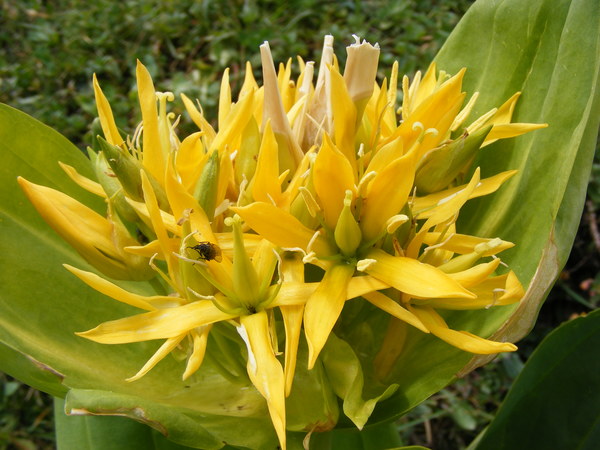
Gentiana lutea
Plant · Gentianaceae
Gentiana Lutea suits individuals with chronic gastric disturbances marked by alternating ravenous hunger and anorexia, with inflation, tension, and constriction throughout the digestive tract. The patient is typically dull, morose, and generally dejected, with weakness and febrile tendencies. It is particularly suited to dyspeptic conditions in debilitated individuals needing digestive toning.
Key symptoms
- Ravenous hunger alternating with diminished appetite
- Inflation and tension in the stomach and abdomen
- Vertigo worse on rising or motion, better in open air
- Frontal headache better from eating and open air
- Acid risings with nausea and weight in stomach
- Symptoms worse in the afternoon, after eating, and on motion
- Sensations of constriction throughout alimentary tract
Worse (aggravation)
- Worse in the afternoon
- Worse after eating
- Worse from motion
Better (amelioration)
- Better in open air
- Better from eating (headache)

Yellow Gentian
Stomach symptoms marked. Acts as a tonic, increasing appetite.
Head
Vertigo, worse, rising or motion; better open air. Frontal headache, better eating and open air. Brain feels loose, head tender. Aching in eyes.
Throat
Dry. Thick saliva.
Stomach
Acid risings, ravenous hunger, nausea, weight and aching in stomach. Inflation and tension of stomach and abdomen (Pothos). Colic, umbilical region sensitive to touch. Flatulence.
Relationship
Compare: Gentiana quinque flora (intermittent fever; dyspepsia, cholera infantum, weakness); Gentiana cruciata (throat symptoms in addition to similar stomach symptoms; dysphagia; vertigo with headache; pressing inward sensation in eyes; constricted throat and head and abdomen. Distention, fullness and tightness in abdomen. Creeping over body as from fleas). Hydrast; Nux.
Dose
First to third attenuation.

Yellow Gentian. N. O. Gentianaceæ. Tincture of root.
Clinical
Anorexia. Biliousness. Colic. Debility. Diarrhœa.─Dyspepsia. Fever. Gout. Headache. Stomach, disorders of. Throat, constriction of.
Characteristics
The Yellow Gentian is the source of the well-known "tonic" of allopathic practice. In the homœopathic provings (by Watzke, Buchner, and others) the chief symptoms have been noted in the alimentary sphere, and among them, "ravenous hunger," as, well as "diminished appetite." It has thus some claim to be a It positive tonic," as it may cause increased appetite in the healthy. It has: dry mouth; bitter or earthy taste; nausea; vomiting; colic; diarrhœa with yellow stools (it is the yellow Gentian); rheumatic pains; sensations of constriction are marked and common. Weakness, dull feeling, morose mood; febrile condition. The symptoms are < in the afternoon; after eating; on motion.
Classical texts are in the public domain. Educational reference only — not medical advice.
