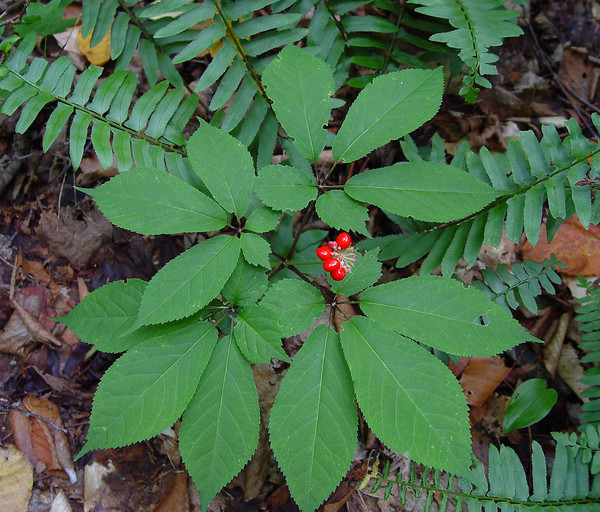
Ginseng quinquefolium
Panax quinquefolius · Plant · Araliaceae
Suited to patients with rheumatic and paralytic tendencies, particularly affecting the lower limbs and spine. The remedy is indicated in dark-complexioned individuals with joint stiffness, crackling, and a sensation of tightness or swelling in the extremities. Sexual debility with rheumatic complaints after emissions is characteristic.
Key symptoms
- Lumbago, sciatica, and rheumatic pains
- Paralytic weakness of extremities
- Stiff, contracted joints with heaviness of lower limbs
- Vertigo with gray spots before eyes and semi-lateral headache
- Tonsillitis in dark-complexioned persons resembling Belladonna
- Rheumatic pains after frequent emissions; weakness of genital organs
- Crackling in joints with coldness in back and spine
- Burning heat in tips of fingers; hands feel swollen
Worse (aggravation)
- Open air worsens mouth, lips, and respiratory symptoms
- Talking aggravates dryness of mouth and lips
- Night aggravates digging pains in limbs
- Bending or turning body aggravates
- Descending stairs worsens vertigo
- Sitting aggravates symptoms
Better (amelioration)
- At dinner improves mouth and respiratory symptoms
- Walking improves tightness of chest
- Emission of flatus relieves abdominal distension

Aralia Quinquefolia-Wild Ginseng-Panax (GINSENG)
Said to be a stimulant to the secretory glands, especially salivary. Acts on the lower part of the spinal cord. Lumbago, sciatica, and rheumatism. Paralytic weakness. Hiccough. Skin symptoms, itching pimples on neck and chest.
Head
Vertigo, with gray spots before eyes; semi-lateral headache; occipital; difficult opening of eyelids; objects appear double.
Throat
Tonsillitis, just like Bellad, but in dark-complexioned people.
Abdomen
Tense, painful, rumbling. Pain in right side. Loud gurgling in ileo-cæcal region. Perityphlitis.
Male
Rheumatic pains after frequent emissions. Weakness of genital organs. Voluptuous tickling at end of urethra. Sexual excitement. Pressure in testicles.
Extremities
Hands feel swollen. Skin feels tight. Contraction. Coldness in back and spine. Bruised pain in small of back and thighs; nightly digging in right lower limb to toes. Burning heat in tips of fingers. Eruption on upper inner thighs. Stiff, contracted joints, heaviness of lower limbs. Crackling in joints. Stiffness in back.
Relationship
Compare: Aral; Coca. Hedera-Ivy-mental depression and skin irritation antidoted by Gunpowder.
Dose
Tincture, to third potency.

Panax quinquefolium. (L.); Aralia quinquefolia (Grey). Schinseng. N. O. Araliaceæ. Trituration and tincture of the root.
Clinical
Appendicitis. Debility. Headache. Lumbago. Rheumatism. Sciatica. Sexual excitement.
Characteristics
The symptoms of the Chinese and the American Ginseng are taken together, as the two are probably identical. The name is said to signify "the resemblance of a man" or man's thigh. The root is forked like that of the mandrake. Fabulous prices are given for it in Manchuria, as much as £40 per pound being paid for certain qualities of it. The wild Ginseng of Siberia is said to be the best. The natives along the Ussuri river use it boiled for headaches, colds, fevers, stomach pains. In America it is a domestic remedy for the after-pains of labour. The shape of the root might indicate an action on the pelvis and lower limbs, and J. H. Henry (H. R., xi. 493) says it acts on the lower part of the spinal marrow; is indicated by "bruised pains in small of back and thighs (on rising from bed), …
Classical texts are in the public domain. Educational reference only — not medical advice.
