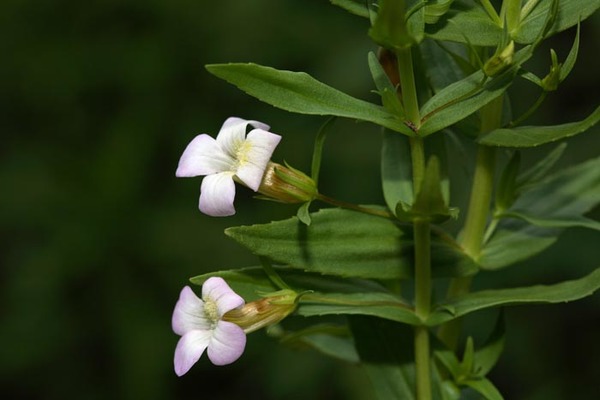
Gratiola officinalis
Hedge hyssop, herb of grace. · Plant · Plantaginaceae
Gratiola is most suited to those who appear irritable, haughty, and possibly excessively proud. They may develop mental symptoms if they drink coffee regularly over a long period of time, as well as physical symptoms such as migraine, sciatica, and a high libido. A high sex drive, frequent masturbation, and nymphomania are primary conditions that may be helped by Gratiola, particularly in women. In addition, the remedy is prescribed for gastrointestinal problems such as cramps in the pit of the stomach, and pressing pain after eating, as if a stone is rolling from side to side in the stomach. Eating may be followed by a strange sense of emptiness in the stomach. There may be green, frothy, watery diarrhea that is expelled with great force.
Key symptoms
- Gastro-intestinal complaints especially in females; considered the Nux vomica of females
- Diarrhoea: green, frothy water forcibly evacuated without pain
- Vertigo during and after meals; sensation of hunger and emptiness after meals
- Dyspepsia with much distension of stomach
- Nymphomania; menses too profuse, premature, and too long
- Mental troubles from overweening pride
- Worse from drinking too much water
Worse (aggravation)
Better (amelioration)

Hedge Hyssop (GRATIOLA)
Acts especially on gastro-intestinal tract. Chronic catarrhal conditions, leucorrhœa and gonorrhœa. Obstinate ulcers. Useful in mental troubles from overweening pride. Especially useful in females. Nux symptoms in females often met by Gratiola.
Head
Sick headache. Rush of blood with vanishing of sight. Sensation as if brain was contracting and head became smaller. Tightness in forehead, with wrinkles in skin. Eyes dry, burn. Myopia.
Stomach
Vertigo during and after meals; hunger and feeling of emptiness after meals. Dyspepsia, with much distention of the stomach. Cramps and colic after supper and during night, with swelling of abdomen and constipation. Dysphagia for liquids.
Stool
Diarrhœa; green, frothy water, followed by anal burning, forcibly evacuated without pain. Constipation, with gouty acidity. Hæmorrhoids, with hypochondriasis. Rectum constricted.
Sleep
Insomnia.
Female
Nymphomania. Menses too profuse, premature, and too long. Leucorrhœa.
Modalities
Worse, drinking too much water.
Relationship
Compare: Dig; Euph; Tab; Cham; Ammon pic; Nux vom.
Dose
Second to third potency.

It is a great remedy for nervous prostration; marked lassitude, with mental and bodily weakness. It is closely related to Coffeaand Nux**vomicaand especially useful for the weakness of the will and neuralgic pains in coffee drinkers. In hypochondria and in the female it has melancholia and nymphomania. Convulsive conditions without loss of consciousness.
Complaints are better in the open air, but he is chilly in a warm room (like Pulsatilla); complaints predominate on the left side; constant vaporous exhalations from the body. Catarrhal conditions of the stomach and intestines with spasmodic ailments.
There is a lack of will power and aversion to work; mental depression and capriciousness; he is very irritable and hypochondriacal; fear of the future. Complaints from pride. Bad effects from coffee and alcohol; nervous complaints associated with stomach and bowel troubles.

Gratiola officinalis. Hedge Hyssop. "The Herb of Grace." N. O. Scrophulariaceæ (grows in moist places). Tincture of fresh plant before flowering.
Clinical
Cholera. Coccygodynia. Constipation. Cramps. Diarrhœa. Dropsy. Eyes, affections of. Gastralgia. Gout. Hæmorrhoids. Headache. Hydrocephalus. Hypochondriasis. Hysteria. Mania. Masturbation. Mesenteric glands, affections of. Neuralgia. Nymphomania. Tetanus. Vision, disordered.
Characteristics
Gratiola is one of the most important members of the great Scrophularian group─Digit., Euphras., Tabac., Scroph.─and should be carefully studied with these. A large proportion of the effects of Gratiola are expended on the gastro-intestinal tract. It is an inodorous plant, of bitter taste, and very poisonous, causing violent colic, diarrhœa, bloody stools, enteritis, jaundice, trembling of extremities, convulsions, cramps, excitement and disordered condition of the sexual powers, and death. Symptoms of a fully developed, rapid attack of Asiatic cholera are produced. On …

Anus and Stool
Diarrhoea of yellow, or greenish yellow watery stools, forcibly evacuated, and followed by burning in the anus.

Phatak's chapter on Gratiola officinalis is available in the app.
Read Phatak in the appClassical texts are in the public domain. Educational reference only — not medical advice.
