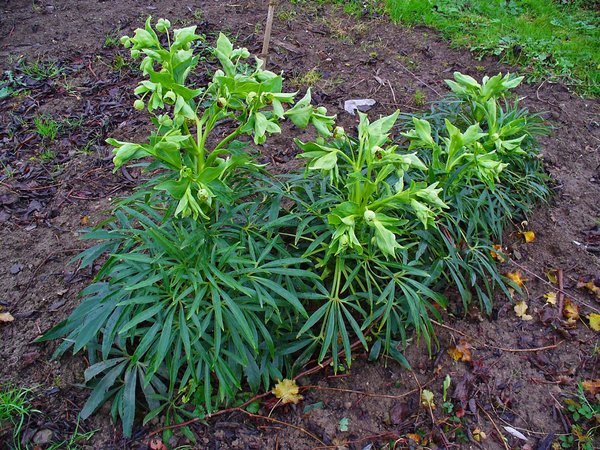
Helleborus foetidus
Plant · Ranunculaceae
Helleborus foetidus is a violent narcotico-acrid poison whose primary action involves the nervous system, skin, and gastrointestinal tract. In fatal poisoning death has occurred in convulsions. Characteristic features include choleraic vomiting, exfoliation of skin, hair, and nails, and disordered vision, with the notable modality that anxiety is relieved after vomiting.
Key symptoms
- Dreadful anxiety relieved after vomiting
- Choleraic symptoms with nausea and vomiting of food
- Skin, hair, and nails exfoliate
- Disordered vision with difficulty reading by candlelight
- Thumping pain below and behind left ear
- Smarting and excoriation of mouth and throat
- Taste of manure with yellow-coated tongue
- Stiff neck; scarlatina-like skin peeling
Worse (aggravation)
- Evening, by candlelight (visual difficulties)
- Inhaling fumes of the plant
Better (amelioration)
- After vomiting (anxiety relieved)

Bear's foot. N. O. Ranunculaceæ. Tincture of the root.
Clinical
Cholera. Hair, failing off. Nails, falling off. Scarlatina. Skin, peeling. Stiff-neck.
Characteristics
The effects of Hel. f. have been observed on several persons. It is a violent narcotico-acrid poison, and in fatal poisoning cases death has taken place in convulsions. The vision is disordered; choleraic symptoms occur; skin, hair, and nails exfoliate. The anxiety is > after vomiting.
Relations
Compare: Verat. alb. (copious liquid stools); Hell. n., Hell. v., Colch.
1. Mind
Dreadful anxiety; > after vomiting.
3. Eyes
Great difficulty in reading, in evening, by candle-light; the sensation is as when the light flickers from a draught of air; cannot follow the lines.
Classical texts are in the public domain. Educational reference only — not medical advice.
