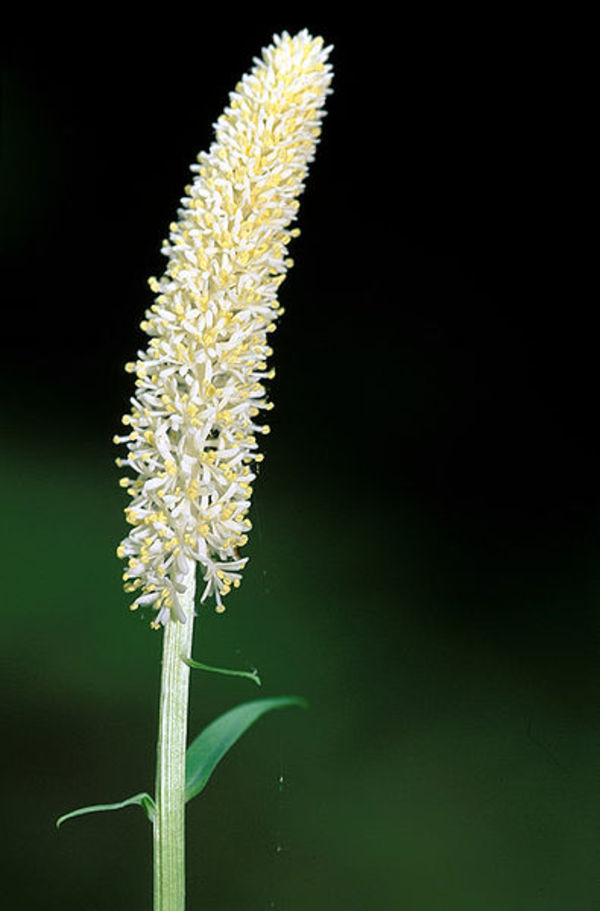
Helonias dioica
Chamaelirium luteum · False unicorn root, devil’s bit, fairy wand, blazing star.,Chamaelirium luteum · Plant · Melanthiaceae
Characteristically, those who respond to Helonias are melancholy and depressed, and have a tendency to feel better when mentally or physically occupied.
Helonias is used primarily for women’s problems accompanied by severe fatigue. This exhaustion or enervation is often caused by excessive physical or mental exertion or is, conversely, the result of a hedonistic lifestyle.
It may also be associated with the extreme physical demands of frequent pregnancies or terminations. There is extreme sensitivity to and awareness of the uterus. Problems of the female reproductive system that may be treated with Helonias include suppressed menstruation, uterine prolapse with a sensation of weakness and dragging in the sacrum and pelvis, and a congested feeling in the kidneys, as if the menstrual flow has moved to that area. The remedy may also be used to treat edema (retention of fluid in the tissues) after uterine hemorrhage.
Key symptoms
- Consciousness of the womb; sensation of weight and dragging in sacrum and pelvis
- Tired, backachy women with great languor and prostration
- Prolapse of uterus with weakness and atony
- Menses too frequent, too profuse; leucorrhoea
- Patient better when mentally occupied and doing something useful
- Aching and burning across lumbar region; can trace outlines of kidneys by burning
- Profound melancholia; irritable, cannot endure contradiction
- Diabetes mellitus and insipidus; constant tenderness over kidneys
Worse (aggravation)
Better (amelioration)

Unicorn-root (HELONIAS - CHAMAELIRIUM)
Sensation of weakness, dragging and weight in the sacrum and pelvis, with great languor and prostration, are excellent indications for this remedy. There is a sensitiveness expressed as a consciousness of a womb. Tired, backachy females. The weakness shows itself also in a tendency to prolapse and other malposition of the womb. The menses are often suppressed and the kidneys congested. It seems as if the monthly congestion, instead of venting itself as it should through the uterine vessels, had extended to the kidneys. With it all, there is a profound melancholia. Patient must be doing something to engage the mind. Remember it, for women with prolapsus from atony, enervated by indolence and luxury (better when attention is engaged-hence when the doctor comes), or for those worn out with hard work; tired, strained muscles burn and ache; sleepless. Diabetes mellitus, and insipidus. Constant aching and tenderness over kidneys.
Mind
Profound melancholy. Patient is better when kept busy, with mind engaged, when doing something. Irritable; cannot endure the least contradiction.
Head
Burning sensation on top. Headache, better mental exertion.
Back
Pain and weight in back; tired and weak. Aching and burning across the lumbar region; can trace outlines of kidneys by constant burning. Boring pain in lumbar region, extending down legs. Great languor, better exercising.
Female
Dragging in sacral region, with prolapse, especially after a miscarriage. Pruritus vulvæ. Backache after miscarriage (Kali c). Weight and soreness in womb; conscious of womb. Menses too frequent, too profuse. Leucorrhœa. Breasts swollen, nipples painful and tender. Parts hot, red, swollen; burn and itch terribly. Albuminuria during pregnancy. Debility attending the menopause.
Urine
Albuminous, phosphatic; profuse and clear, saccharine. Diabetes.
Extremities
Sensation as if a cool wind streamed up calves of legs. Feet feel numb when sitting.
Modalities
Better, when doing something (mental diversion). Worse, motion, touch.
Relationship
Compare: Agrimonia-Cockleburr--(painful kidneys, impaired digestion and menstrual difficulties; Bronchorrhœa and catarrh of bladder. Cough with profuse expectoration attended with expulsion of urine. Tincture 1-10 gtt). Aletris; Lilium; Puls; Senecio; Stannum.
Dose
Tincture, to sixth attenuation.

Helonias dioica, Pursh; H. lutea, Ait.; Chamœlirium luteum, Gray; C. Carolinianum, Willd.; Veratrum luteum, Linn.; Ophiostachys virginica, Delile. False Unicorn, Devil's Bit, Blazing Star. N. O. Melanthaceæ. Tincture of the root. Triturations of the resinoid Helonin.
Clinical
Albuminuria. Amenorrhœa. Anæmia. Breasts, affections of. Chlorosis. Debility. Diabetes. Dysmenorrhœa. Impotence. Kidneys, pains in. Leucorrhœa. Lochia, prolonged. Menopause. Menorrhagia. Metrorrhagia. Pruritus vulvæ. Rheumatism. Splenalgia. Sterility. Uterus, affections of.
Characteristics
Helonias, like Aletris, to which it is a botanical ally, and with which it has been often confounded (both have been called "Unicorn plant," or "Unicorn root," "Star Grass," and "Blazing Grass," or "Blazing Star"), is a uterine remedy of great power. It has an extensive range of action, as its provings show, but the organ predominantly affected is the uterus. It has been called with justice a "uterine tonic," and one of the keynote indications for …
Unicorn Plant. (Melanthaceae.)
For women: with prolapsus from atony, enervated by indolence and luxury; worn out with hard work, mental or physical; overtaxed muscles burn and ache; so tired cannot sleep. Always better when occupied, when not thinking of the ailment (Cal. p., Oxal. ac.). Restless, must be continually moving about. Irritable, fault finding; cannot endure least contradiction or receive least suggestion (Anac.). Profound melancholy; deep, mental depression. Diabetes: first stages; urine profuse, clear saccharine; lips dry, stick together; great thirst; restlessness; emaciation; irritable and melancholy. Albuminuria: acute or chronic; during pregnancy, with great weakness, languor, drowsiness, unusually tired, yet knows no reason. Menses: too early, too profuse, from uterine atony in women enfeebled by loss of blood; when patients lose more blood than is made in intermenstrual period; breasts swollen, nipples painful and tender (Con., Lac c.). Flow passive, dark, clotted, offensive. Sensation of soreness …

Urinary Organs
Weariness, languor, weight in the region of the kidneys, with profuse, clear light-colored or albuminous urine.
Female Sexual Organs
A consciousness of a womb, feels it more when she moves, it is so sore and tender.
Female Sexual Organs
Dragging weakness in the sacral region, with prolapsus uteri from atony, and profound mental gloom.
Neck and Back
Burning and tired feeling in lumbar and sacral regions.
- Uterine disease with great fatigue and prostration; burning or tired, dragging, aching feeling in the lumbar and sacral regions.

Phatak's chapter on Helonias dioica is available in the app.
Read Phatak in the appClassical texts are in the public domain. Educational reference only — not medical advice.
