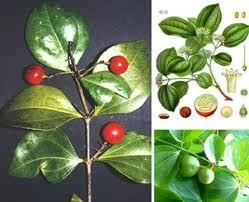
Hoang-nan
Plant · Loganiaceae
Hoang-nan is a plant of the Strychnos family with strong action on the nervous system and skin. Vinegar appears to modify its virulence and is the vehicle for its traditional preparation; alcohol is forbidden during treatment. It has been extensively used in Tonquin for leprosy, hydrophobia, and snake-bites.
Key symptoms
- Fatigue and general indisposition after ingestion
- Vertigo with tingling of hands and feet
- Involuntary movements of the jaw
- Tetanic convulsions beginning in the hind legs spreading to whole body
- Skin affections: boils, carbuncles, pustular eczema, leprosy
- Prurigo and syphilitic skin conditions
- Paralysis; albuminuria
- Hydrophobia; ulcers
Worse (aggravation)
- Alcohol (increases virulence; forbidden during treatment)
Better (amelioration)
- Vinegar (modifies virulence)

Strychnos gaultheriana, Pierre. (Tonquin). N. O. Loganiaceæ. Tincture of dried bark.
Clinical
Albuminuria. Boils. Carbuncles. Eczema, pustular. Hydrophobia. Leprosy. Paralysis. Prurigo. Syphilis. Ulcers.
Characteristics
Hoang-nan is a plant indigenous to Tonquin, where it has a great reputation as a remedy for leprosy, hydrophobia, snake-bites, and diseases of the skin. In an article by Sir Sherston Baker (Brit. Med. Journ., March 30, 1889-H. W., xxiv. 371), it is stated that the medicine called Hoang-nan is a powder, and contains l.5 parts Alum, l.5 parts Realgar, 2.5 Hoang-nan. But it is added that the last is the most important, and can be employed alone. The plant belong to the Strychnos family, and contains both Strychnia and Brucea, the latter in preponderating quantity. The red dust of the bark contains the most active properties. The native method of preparing the medicine is by moistening the mixture of the three powders with a little vinegar, and forming the paste into pills of …
Classical texts are in the public domain. Educational reference only — not medical advice.
