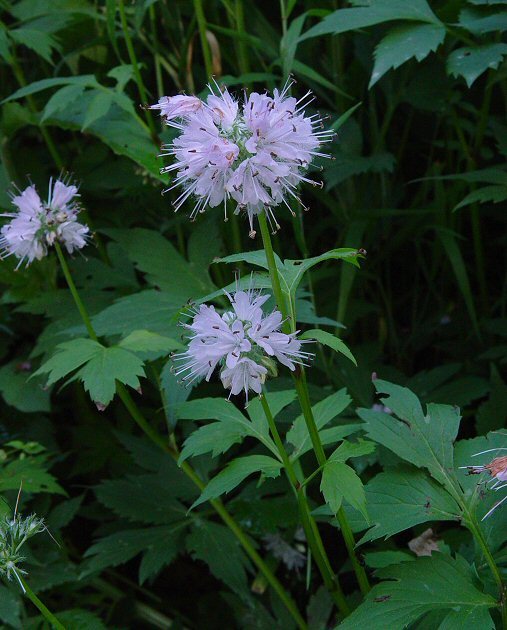
Hydrophyllum virginianum
Plant · Boraginaceae
Hydrophyllum virginianum acts primarily on the eyes, producing intense burning, lachrymation, swollen eyelids, and fiery red sclerotics within minutes of contact with the plant. The older writers used it as an antidote to Rhus poisoning. It requires further proving but should prove a good adjunct to Euphrasia in eye conditions.
Key symptoms
- Eyes begin to water and burn within minutes of contact with the plant
- Eyelids swollen; sclerotics fiery red
- Sensitivity to light; continuous lachrymation
- Eyelids agglutinated in the morning
- Catarrhal inflammation of the eyes
Worse (aggravation)
- Handling flowers or plant (contact-induced eye symptoms)
- Light (photophobia)

Virginian Waterleaf. N. O. Hydrophyllaceæ. Tincture of fresh plant in flower.
Clinical
Eyes, inflammation of. Rhus poisoning.
Characteristics
The Hydrophyllaceæ are nearly allied to the Borages. They grow among moist, shady rocks, and they derive their name from the circumstance that in spring a small quantity of water is held in the cavity of each leaf. The older writers speak of Hydrophyl. v. as an antidote to Rhus poisoning. The only homœopathic experience on record is that of Dr. Hoyt, of Indiana, which is recorded by Hale. Ten minutes after gathering a cluster of the beautiful blue flowers, Hoyt noticed his eyes began to water and burn, with slight itching, By the time he reached home he was suffering severely, eyelids swollen, sclerotics fiery red, some sensitiveness to light. The symptoms continued through afternoon and evening and kept him awake some time. In the morning, the lids were agglutinated and eyes sensitive to light. The burning and smarting were less, but lachrymation remained, and it was …
Classical texts are in the public domain. Educational reference only — not medical advice.
