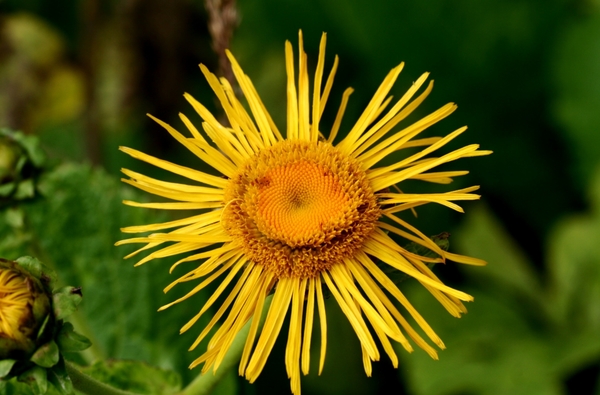
Inula helenium
Plant · Asteraceae
Inula suits patients with pronounced bearing-down sensations in the pelvic organs combined with marked respiratory symptoms of tickling laryngeal cough. Women with dysmenorrhoea, violent backache, and labour-like pains compelling them to remain lying are especially indicated. A psoric background with engorged glands and leucorrhoea may be present.
Key symptoms
- Violent tickling in larynx producing dry cough, worse lying down and at night
- Pressing and dragging toward rectum and genitals as in labour
- Sensation as of something alive moving about internally
- Urine smells of violets
- Menses too early and painful with violent backache compelling patient to lie down
- Bearing-down pains in pelvic organs with urging to stool
- Cough with abundant thick expectoration, general languor and debility
- Stitches behind sternum and substernal pain
Worse (aggravation)
- At night
- Lying down (cough worse)
- Motion
- After eating
Better (amelioration)
- Remaining lying down (uterine pain)

Scabwort (INULA)
A mucous membrane medicine. Bearing-down sensations in pelvic organs and bronchial symptoms are most marked. Substernal pain. Diabetes.
Head
Vertigo on stooping; throbbing after eating, pressure in temples and forehead.
Respiratory
Dry cough; worse at night and lying down; larynx painful. Chronic bronchitis; cough, with much thick expectoration, with languor and weak digestion. Stitches behind sternum. Teasing cough with much and free expectoration. Palliative in tubercular laryngitis.
Female
Menses too early and painful. Labor-like pains; urging to stool; dragging in genitals, with violent backache. Itching of legs during menses, chattering of teeth from cold during menstruation. Moving about in abdomen, stitches in genitals. Chronic metritis.
Rectum
Pressing toward rectum as of something extruding.
Urinary
Frequent urging to urinate; passes only in drops. Violet odor (Tereb).
Extremities
Pain in right shoulder and wrist; tearing in left palm, unable to double fingers; pain in lower limbs, feet and ankles.
Relationship
Compare: Crocus; Ignatia; Arum dracontium (loose cough worse at night on lying down).
Dose
First to third potency.

Inula helenium. Elecampane. Scabwort. N. O. Compositæ. Tincture of fresh root dug in autumn of the second year. (The juice of the root was proved.)
Clinical
Backache. Cough. Cramp. Dysmenorrhœa. Erysipelas. Leucorrhœa. Rectum, pain in. Sciatica. Toothache.
Characteristics
Inula is a "perennial plant with a stem from three to four feet high; large saw-toothed leaves tapering to a stalk; and large heads of yellow flowers. The root has an aromatic camphor-like taste, due to the presence of a crystalline substance called Helenin, allied in chemical constitution to Kreosote. It also contains a quantity of starchy material, called Inulin, which differs from ordinary starch in being coloured yellow by Iodine. Elecampane was formerly much used as an aromatic tonic, and as a stimulant of all the secreting organs, likewise in coughs, dyspepsia," &c. This quotation from the Treasury of Botany well sums up the chemistry and ancient medical history of the plant as handed down from the time of Dioscorides. Ben …
Classical texts are in the public domain. Educational reference only — not medical advice.
