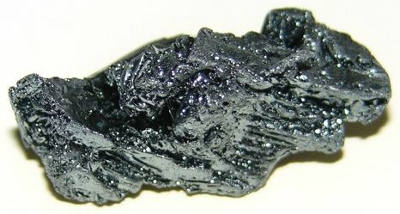
Iodium
Iodine (element) · Iodine. · Mineral
Those for whom Iodum is most suitable are talkative, with a marked mental restlessness and irritability due to anxiety, and sudden urges to engage in exhausting activities. Their behavior is obsessive, with a compulsion to keep frantically busy, yet in a disorganized, forgetful way. Despite causing physical and mental fatigue, this frenzy is preferable to inactivity, when frightening thoughts heighten anxiety.
Iodum is given for symptoms caused by an overactive thyroid gland (hyperthyroidism) and the accelerated metabolism it causes. Psychological symptoms may include eating disorders and anxiety that may manifest as violent rages if meals are not ready as soon as hunger is felt.
Physical symptoms include protruding eyes and eye pain linked with hyperthyroidism; nausea with a clean tongue and excess salivation, great thirst, respiratory problems, enlarged glands, and excessive sweating. These people tend to feel the heat and constantly try to keep cool, preferring cool clothing and finding warm surroundings uncomfortable.
Key symptoms
- loss of weight with increased appetite
- heat intolerance
- lack of thirst
- enlarged glands that then waste away
- anxiety and restlessness
Worse (aggravation)
- Warmth; warm room aggravates, iodine is warm and hates heat
- Stooping; vertigo worse from stooping
- Rest; anxiety and symptoms worse when quiet
- Warm surroundings; worse in heated rooms
Better (amelioration)
- Eating; better after eating despite ongoing hunger
- Cool air; iodine craves cold air and cool surroundings
- Motion; movement generally ameliorates
- Being busy; must keep occupied to feel better

Iodine (IODUM)
Rapid metabolism: Loss of flesh great appetite. Hungry with much thirst. Better after eating. Great debility, the slightest effort induces perspiration. Iod individual is exceedingly thin, dark complexioned, with enlarged lymphatic glands, has voracious appetite but gets thin. Tubercular type.
All glandular structures, respiratory organs, circulatory system are especially affected; they atrophy. Iodine arouses the defensive apparatus of the system by assembling the mononuclear leucocytes whose phagocytic action is marked, at a given point. Lead poisoning. Tremor. Iodine craves cold air.
Acute exacerbation of chronic inflammation. Arthritis deformans. Acts prominently on connective tissue. The plague. Goitre. Abnormal vaso-constriction, capillary congestion followed by œdema, ecchymosis, hæmorrhages, and nutritive disturbances are the pathological conditions at the basis of its symptomatology. Sluggish vital reaction, hence chronicity in many of its aspects. Acute catarrh of all mucous membranes, rapid emaciation, notwithstanding good appetite, and glandular atrophy call for this remedy, in numerous wasting diseases and in scrofulous patients. Acute affections of the respiratory organs. Pneumonia, rapid extension. Iodine is warm, and wants cool surroundings. Weakness and loss of breath going upstairs. Adenoid vegetations. Tincture internally and locally to swollen glands and rattlesnake bites.
Mind
Anxiety when quiet. Present anxiety and depression, no reference to the future. Sudden impulse to run and do violence. Forgetful. Must be busy. Fear of people, shuns every one. Melancholy. Suicidal tendency.
Head
Throbbing; rush of blood, and feeling of a tight band. Vertigo; worse from stooping, worse in warm room. Chronic, congestive headache of old people (Phos).
Eyes
Violent lachrymation. Pain in eyes. Pupil dilated. Constant motion of eyeballs. Acute dacryocystitis.
Nose
Sneezing. Sudden violent influenza. Dry coryza becomes fluent in open air, also a fluent hot coryza with general heat of skin. Pain at root of nose and frontal sinus. Nose stopped up. Tendency to ulceration. Loss of smell. Acute nasal engorgement associated with high blood pressure.
Mouth
Gums loose and bleed easily. Foul ulcers and salivation. Profuse, fetid ptyalism. Tongue thickly coated. Offensive odor from mouth.
Throat
Larynx feels constricted. Eustachian deafness. Thyroid enlarged. Goitre, with sensation of constriction. Swollen submaxillary glands. Uvula swollen.
Stomach
Throbbing at pit of stomach. Ravenous hunger and much thirst. Empty eructations, as if every particle of food were turned into gas. Anxious and worried if he does not eat (Cina; Sulph). Loss flesh, yet hungry and eating well (Abrot).
Abdomen
Liver and spleen sore and enlarged. Jaundice. Mesenteric glands enlarged. Pancreatic disease. Cutting pain in abdomen.
Stool
Hæmorrhage at every stool. Diarrhœa, whitish, frothy, fatty. Constipation, with ineffectual urging; better by drinking cold milk. Constipation alternating with diarrhœa (Ant cr).
Urine
Frequent and copious, dark yellow-green (Bovista), thick, acrid with cuticle on surface.
Male
Testicles swollen and indurated. Hydrocele. Loss of sexual power, with atrophied testes.
Female
Great weakness during menses (Alum; Carbo an; Coccul; Hæmatox). Menstruation irregular. Uterine hæmorrhage. Ovaritis (Apis; bell; Lach). Wedge-like pain from ovary to uterus. Dwindling of mammary glands. Nodosities in skin of mammæ. Acrid leucorrhœa, thick, slimy, corroding the linen. Wedge-like pain in the right ovarian region.
Respiratory
Hoarse. Raw and tickling feeling provoking a dry cough. Pain in larynx. Laryngitis, with painful roughness; worse during cough. Child grasps throat when coughing. Right-sided pneumonia with high temperature. Difficult expansion of chest, blood-streaked sputum; internal dry heat, external coldness. Violent heart action. Pneumonia. Hepatization spreads rapidly with persistent high temperature; absence of pain in spite of great involvement, worse warmth; craves cool air. Croup in scrofulous children with dark hair and eyes (Brom opposite). Inspiration difficult. Dry, morning cough, from tickling in larynx. Croupy cough, with difficult respiration; wheezy. Cold extends downwards from head to throat and bronchi. Great weakness about chest. Palpitation from least exertion. Pleuritic effusion. Tickling all over chest. Iod cough is worse indoors, in warm, wet weather, and when lying on back.
Heart
Heart feels squeezed. Myocarditis, painful compression around heart. Feels as if squeezed by an iron hand (Cactus) followed by great weakness and faintness. Palpitation from least exertion. Tachycardia.
Extremities
Joints inflamed and painful. Pain in bones at night. White swelling. Gonorrhœal rheumatism. Rheumatism of nape and upper extremities. Cold hands and feet. Acrid sweat of feet. Pulsation in large arterial trunks. Rheumatic pains, nightly pains in joints; constrictive sensations.
Skin
Hot, dry, yellow and withered. Glands enlarged. Nodosities. Anasarca of cardiac disease.
Fever
Flushes of heat all over body. Marked fever, restlessness, red cheeks, apathetic. Profuse sweat.
Modalities
Worse, when quiet, in warm room, right side. Better, walking about, in open air.
Relationship
Yatren. Iod pathogenesis is similar to that of Carbol acid. Antidotes: Hepar; Sulph; Gratiola.
Complementary: Lycopod; Badiaga.
Compare: Brom; Hepar; Mercur; Phosph; Abrot; Nat mur; Sanic; Tuber.
Dose
The crude drug in saturated solution may be required. Third to thirtieth potency. Ioduretted solution of Potass iod (35 grains Potassa and 4 grains Iodine to 1 oz of water, 10 drops three times a day) expels tapeworms dead.
Locally the most powerful, least harmful and easily managed microbicide. Ideal agent to keep wounds clean and disinfected. Bites of insects, reptiles, etc. Gunshot wounds and compound fractures, excellent. Great skin disinfectant.
Anxiety
This remedy in all of its complaints whether acute or chronic, has a peculiar kind anxietythat is felt both in mind and body.
It seems also that this state of anxiety is attended with a thrill that goes throughout his frame unless he removes it by motion or change of position. The anxiety comes on when trying to keep still, and the more he tries to keep still the more the anxious state increases. While attempting to keep still, he is overwhelmed with impulses, impulses to tear things, to kill himself, to commit murder, to do violence.
He cannot keep still and so he walks night and day. This remedy carries the same feature with it into the Iodide of Potassium, so that it makes the Iodide of Potassiumpatient walk. But there is this difference, the Kali iod. patient can walk long distances without fatigue, and the walking only seems to wear off his anxiety, whereas in Iodine there is great exhaustion; he becomes extremely exhausted from walking and sweats copiously even from slight exertion.

Iodium. Iodine. An element. l. (AM. 126.53). Tincture.
Clinical
Appetite, disordered. Atrophy. Brain, atrophy of. Breasts, affections of. Cancer. Chilblains. Chyluria. Constipation. Consumption. Coryza. Cough. Croup. Debility. Diabetes. Diarrhœa. Diphtheria. Emaciation. Enteric fever. Galactorrhœa. Goître Hæmorrhoids. Headaches. Heart, hypertrophy of; affections of. Hiccough. Hydrocephalus. Iritis. Jaundice. Joints, affections of. Lactation, disordered. Laryngitis Leucorrhœa. Liver, affections of. Lymphatic swellings. Melancholia. Mollities ossium. Ovaries, affections of; dropsy of. Ozæna. Prostate gland, enlarged. Rheumatic gout. Rheumatism. Salivation. Scars. Seborrhœa. Sterility. Syphilis. Tabes mesenterica. Throat, affections of. Uterus, affections of. Voice, affections of. Vomiting. Worms.
Iodine. (The Element)
Persons of scrofulous diathesis, with dark or black hair and eyes; a low cachetic condition, with profound debility and great emaciation (Abrot.). Great weakness and loss of breath on going upstairs (Calc.); during menses (Alum, Carbo an., Coc.). Ravenous hunger; eats freely and well, yet loses flesh all the time (Abrot., Nat. m., Sanic., Tub.). Empty eructations from morning to nigh, as if every particle of food was turned into air (Kali c.). Suffers from hunger, must eat every few hours; anxious and worried if he does not eat (Cina, Sulph.); feels > while eating or after eating, when stomach is full. Itching: low down in the lungs, behind the sternum, causing cough; extends through bronchi to nasal cavity (Coc. c., Con., Phos.). Hypertrophy and induration of glandular tissue - thyroid, mammae, ovaries, testes, uterus, prostate or other glands - breasts may dwindle and become flabby. Hard goitre, in dark haired persons (light haired, Brom.); feels > after eating. Palpitation, …
Stomach
Very hungry, must eat every few hours, which > all her bad feelings.
Stomach
Great emaciation, though they eat much and often.
Female Sexual Organs
Thick yellow leucorrhoea, so corroding that it eats holes in the linen.
Generalities
Marasmus, atrophy, or general emaciation. Especially mammae, in dark complexioned persons.
Generalities
Great emaciation with good appetite; always hungry, but growing poor no matter how much he eats; mammae dwindle and hand down.
Constitution and Temperament
Scrofulous diathesis; dark hair and eyes; low cachetic condition, with profound debility and great emaciation.
-
Vertigo; throbbing in the head and all over the body; tremor of the heart; fainting; worse immediately after rising from a seat, or bed; or by sitting or lying down after slight exercise.
-
Teeth yellow and easily blunted by vegetable acids.
-
The mammae dwindle away and become flabby.
-
Membranous, croup, with wheezing and sawing respiration, dry, barking cough; child grasps the throat with the hand.
-
Constant heavy oppressive pain in the region of the heart, with sharp, quick, piercing movable pains, and great precordial anxiety.
-
Emaciation, skin dirty yellow; great debility and prostration.

Phatak's chapter on Iodium is available in the app.
Read Phatak in the appClassical texts are in the public domain. Educational reference only — not medical advice.
