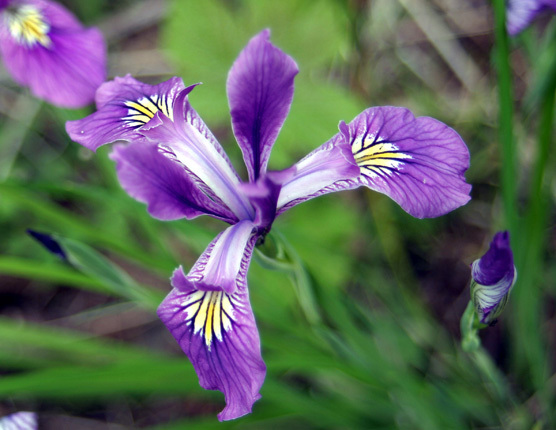
Iris tenax
Plant · Iridaceae
Iris tenax suits patients with a homesick, gloomy mental state intensifying at midnight, combined with dry mouth, burning throat, and severe ileo-caecal tenderness suggesting perityphlitis or appendicitis. The prostration is extreme, compelling bed rest.
Key symptoms
- Absence of saliva with dry mouth (xerostomia)
- Intense burning in mouth and throat from the tincture
- Mental gloom and homesickness increasing toward midnight
- Tender spot over the ileo-caecal region suggesting appendicitis
- Desperate exhaustion compelling patient to remain in bed
- Hard chill followed by rise in temperature
- Acute abdominal pains with disturbed bowels for ten days
Worse (aggravation)
- On waking and in morning (gone feeling, scalp burning, most symptoms)
- 2 p.m. (chill)
Better (amelioration)
- Cool pillow (temple pain)
- Sucking in cold air (burning in mouth and throat)
- Hot applications (bowel pain)
- Cup of tea (vomiting)
- Sweet oil and camphor (burning in mouth)
- After midnight (burning in mouth better)

Iris minor. ("Grows very luxuriantly in the clay ground and on the hillsides" of Oregon. The fibre of the plant is so strong that it is used by Indians for making cord, and weaving into bags, &c.). N. O. Iridaceæ. Tincture of the lower or bulbous stems. Tincture of whole plant.
Clinical
Appendicitis. Fever. Headache. Home-sickness. Intermittents. Mania. Perityphlitis. Sleeplessness. Stomatitis. Vomiting. Xerostoma.
Characteristics
Dr. George Wigg, of Portland, Oregon, proved Iris tenax in the latter part of 1885 (Med. Adv. xvii. 235, Amer. Hom., April, 1888; H. W., xxxv. 364). He published the proving under the name of Iris minor. This, as Heath has shown, is a local name only, its true botanical name being Iris tenax (H. W., xxx. 332). Dr. Wigg (æt. 44) took gtt. v. to 1x. of the strong tincture. A female prover took repeated doses of Ir. t. 2x and 3x. The order in which the symptoms occurred in Dr. Wigg's case is roughly as follows: In fifteen minutes burning in mouth and throat. This passed …
Classical texts are in the public domain. Educational reference only — not medical advice.
