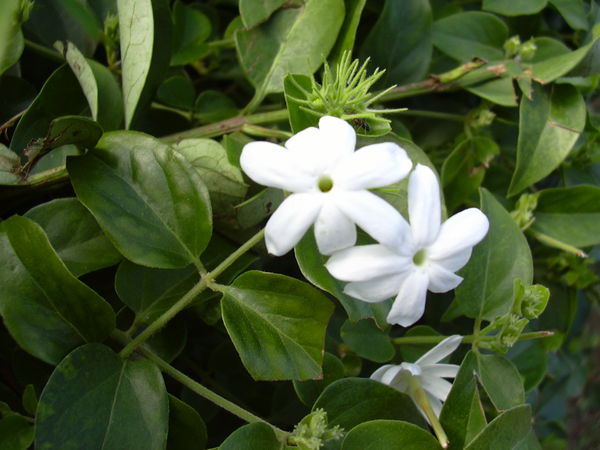
Jasminum
Plant · Oleaceae
Jasminum has been studied only from a single poisoning case and its picture is one of severe central nervous system toxicity: coma, convulsions, and tetanic rigidity following ingestion of the berries.
Key symptoms
- Convulsions progressing to tetanus after ingestion of red berries
- Comatose state with perfect insensibility
- Vomiting preceding convulsions
- Symptoms progress from above downwards and from left to right
Better (amelioration)
- Bath (convulsive symptoms ameliorated)

Jasminum officinale. White Jessamine. N. O. Jasminaceæ. (Lindley. Some botanists include the jasmines in the Oleaceæ.) Tincture of red berries.
Clinical
Convulsions. Tetanus.
Characteristics
The only observation on this plant is one made by W. H. Hull on a boy who ate the red berries. They produced a comatose state, vomiting and convulsions ending in tetanus. [Jasminum must not be confounded with Gelsemium, the "Yellow jessamine," or "Carolina jessamine," which belongs to a different order of plants. "Gelsomino" is the Italian for jessamine, and it is probably from this that the word Gelsemium is derived; and this will also account for the spelling Gelseminum, which has sometimes been used.] The Treasury of Botany states that the bitter leaves of J. floribundum are used in Abyssinia against tapeworm; and the bitter root of J. angustifolium, powdered and mixed with the powdered root of Acorus calamus, is considered in India an excellent application in ringworm. Jasmin. offic. has not been used …
Classical texts are in the public domain. Educational reference only — not medical advice.
