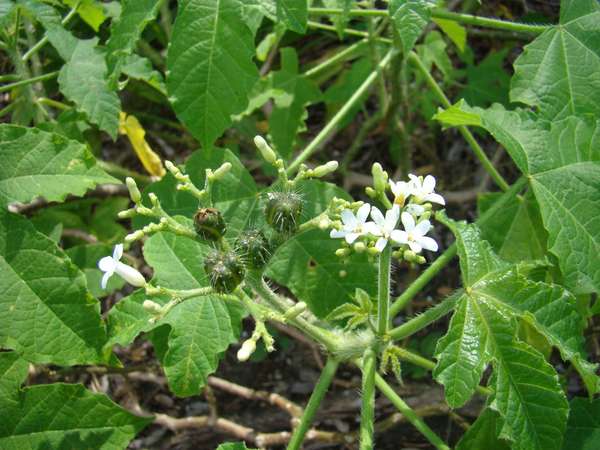
Jatropha urens
Cnidoscolus urens · Plant · Euphorbiaceae
Jatropha urens is a minor remedy known only from a poisoning observation. It is potentially indicated in cardiac paresis and oedema from toxic causes, based on its primary action of suddenly stopping circulation and causing collapse.
Key symptoms
- Numbness and swelling of the lips from contact with plant stings
- Cardiac paresis: circulation stopped with rapid loss of consciousness
- Oedema

Spurge nettle. Tread-softly. (Southern United States.). N. O. Euphorbiaceæ. Tincture of fresh plant.
Clinical
Cardiac paresis. Œdema.
Characteristics
According to Allen this is the most poisonous plant known. He quotes from the Kew Gardens Quarterly (December, 1851) the experience of Mr. Smith, who touched his wrist against the fine bristly stings of the plant whilst reaching over it. He experienced these symptoms: numbness and swelling of the lips. The action of the poison was on the heart; circulation stopped, and Mr. Smith soon fell unconscious, the last thing he remembered being cries of, "Run for the doctor!" Other Jatrophas are J. Glauca or glandulifera of the East Indies, the seeds of which when crushed yield an oil which is used as an external application in rheumatism; and J. Podagrica, which has a curious nodulated gouty-looking stem.
Classical texts are in the public domain. Educational reference only — not medical advice.
