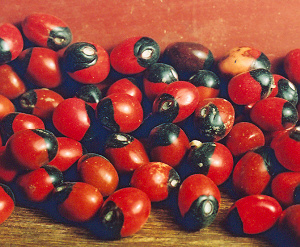
Jequirity
Abrus precatorius · Plant · Fabaceae
Jequirity is primarily an ophthalmic remedy for granular lids and chronic ophthalmia, acting by producing an acute therapeutic inflammation that destroys granulations. It has also been applied to epithelioma and lupus. The intensity of the therapeutic inflammation can be regulated by the strength of the solution.
Key symptoms
- Granular ophthalmia treated by inducing severe conjunctivitis that destroys granulations
- Intense inflammation of lids spreading to face, neck, and chest
- Purulent or diphtheritic conjunctivitis induced therapeutically
- Epithelioma and lupus of the skin

Abrus precatorius. Indian Liquorice. N. O. Leguminosæ. Tincture or trituration of the seeds.
Clinical
Epithelioma. Granular lids. Lupus. Ophthalmia. Ulcers.
Characteristics
Abrus precatorius is a climbing plant, a native of India, but has been introduced to the Western tropics, and its use as an eye remedy was discovered by the natives of Brazil, who gave it the name Jequirity. It has "small nearly globose seeds, which are of a brilliant scarlet colour, with a black scar indicating where they were attached to the pods" (Treas. of Bot.). These are used for necklaces; and as a standard of weight under the name of Raté. The roots are used in the same manner as liquorice roots. The method of its employment in eye affections is as follows: Thirty-two grains of the powdered seeds are allowed to soak for twenty-four hours in a thousand grammes of water. The patient (with granular ophthalmia) bathes his eyes with the filtered product thrice daily for three days, at the end of which time he has become the subject …
Classical texts are in the public domain. Educational reference only — not medical advice.
